
Reimagining the Hacienda
From Colonial Roots to Regenerative Purpose
Once a symbol of power and extraction, the hacienda was long defined by the hands it worked and the wealth it drained from the land. But at Viatura Hacienda Xtojil, that narrative is being rewritten.
Here, among the living henequén fields of Yucatán, the ruins of the past have not been erased — they've been reimagined. What was once a place of exploitation is now a sanctuary of restoration, where history is honored, nature is protected, and community leads the way. This is not just a hacienda — it is a living promise that travel can heal, reconnect, and redefine.
A New Legacy Among Ancient Roots
How a 19th-century henequén estate became a sanctuary of restoration
Among the sun-drenched fields of southeastern Yucatán, where the wind still whispers in Mayan and henequén plants sway in the heat, a sleeping story has been brought back to life. Once a cornerstone of the region's henequén boom, Hacienda Xtojil — like so many others — bore witness to a past rooted in exploitation. But where others saw ruins, they saw roots. A foundation not just of stone, but of memory, tradition, and untapped potential.
For two years, Grupo Presidente led a respectful restoration of this 19th-century estate. It was not a reconstruction, but a dialogue with time — preserving original stone floors, centuries-old walls, and even the historic water mill, which now hums back to life as both symbol and function. The result is not just a retreat, but a redefinition: a new kind of hacienda, rooted in healing the land, honoring its people, and restoring balance between humans and nature.
Set within the heart of the historic community of Sotuta de Peón, just 40 minutes from Mérida, Viatura Hacienda Xtojil is a natural sanctuary where every element — from design to experience — honors Yucatán's cultural and ecological legacy. Surrounded by fields of living henequén, known as "the green gold" of the region, guests are invited not only to rest, but to reconnect: with themselves, with the land, and with the community that has cultivated it for generations.
Here, luxury is redefined. Not in opulence, but in belonging. In walking barefoot on earth-soaked paths, breathing in the scent of agave, and sleeping among native flora in one of 15 eco-conscious glamping suites. Each space is built with local materials — reclaimed wood, stone, and hand-woven textures — merging seamlessly into the land's contours. The result is not just sustainable architecture, but a living ecosystem designed for rest and transformation.
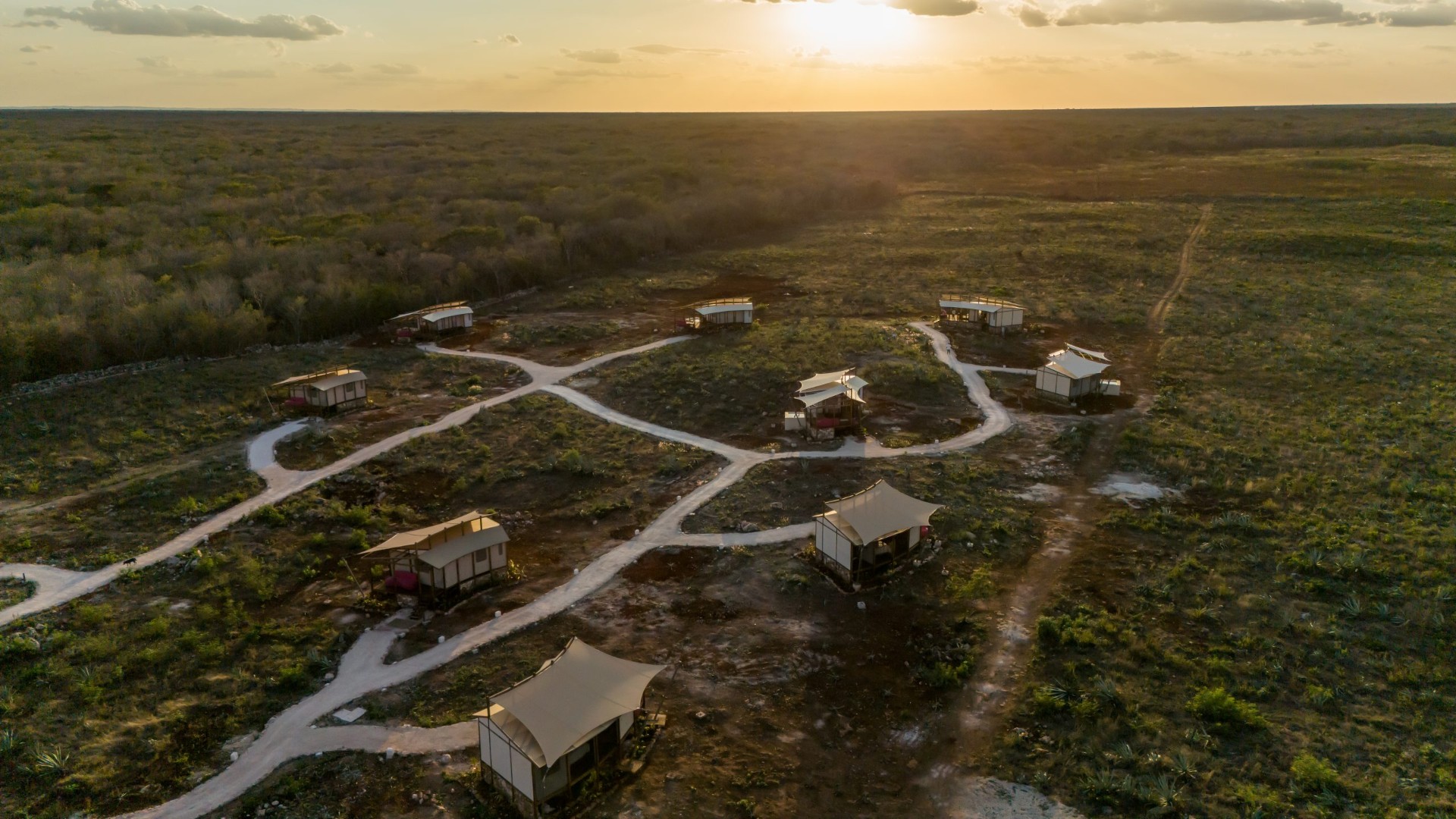
Aerial view of the 15 eco-conscious glamping suites at sunset, spread across the henequén fields.
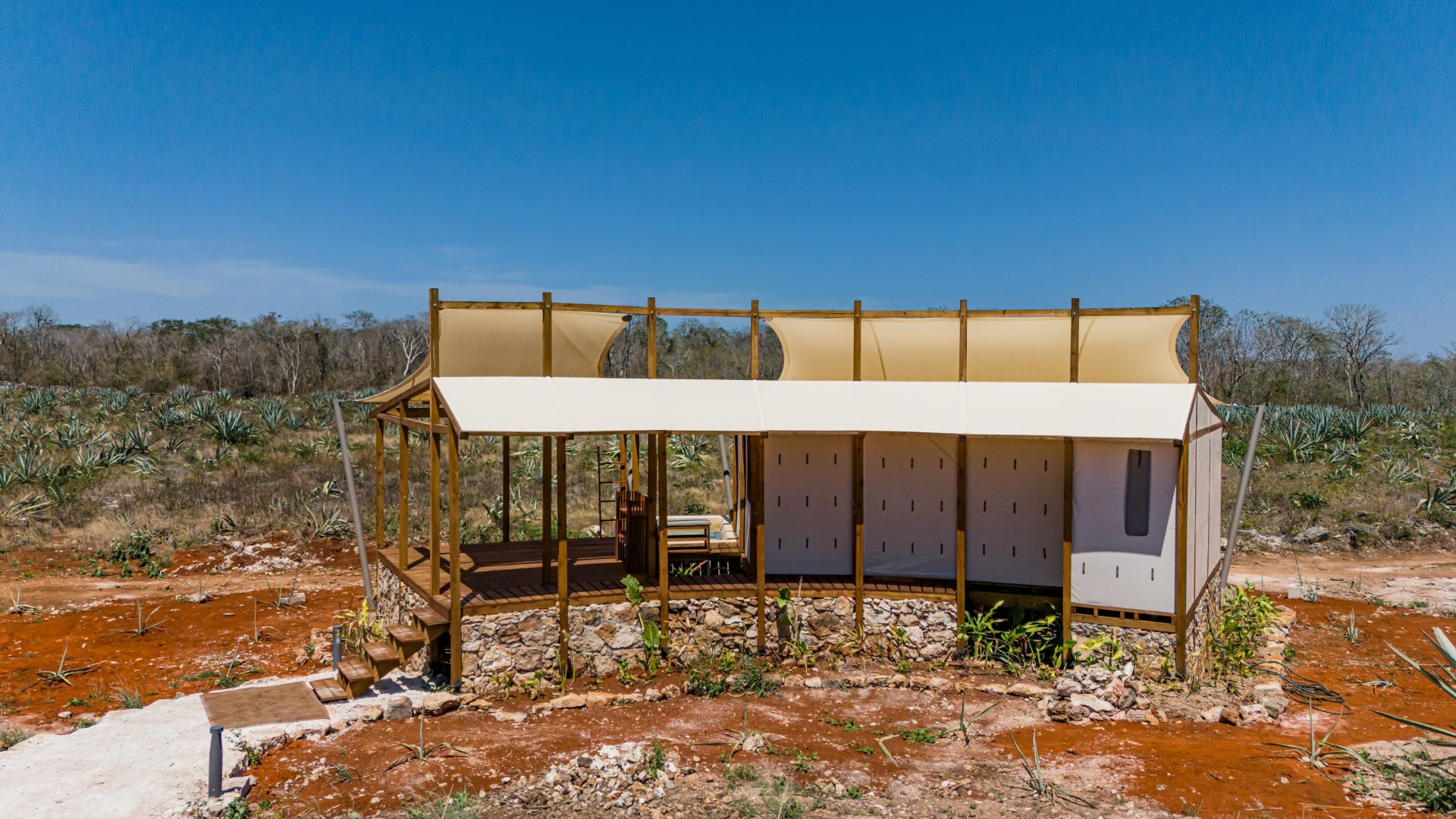
Tented suites built with reclaimed wood, stone and hand-woven textures — architecture that merges into the land.
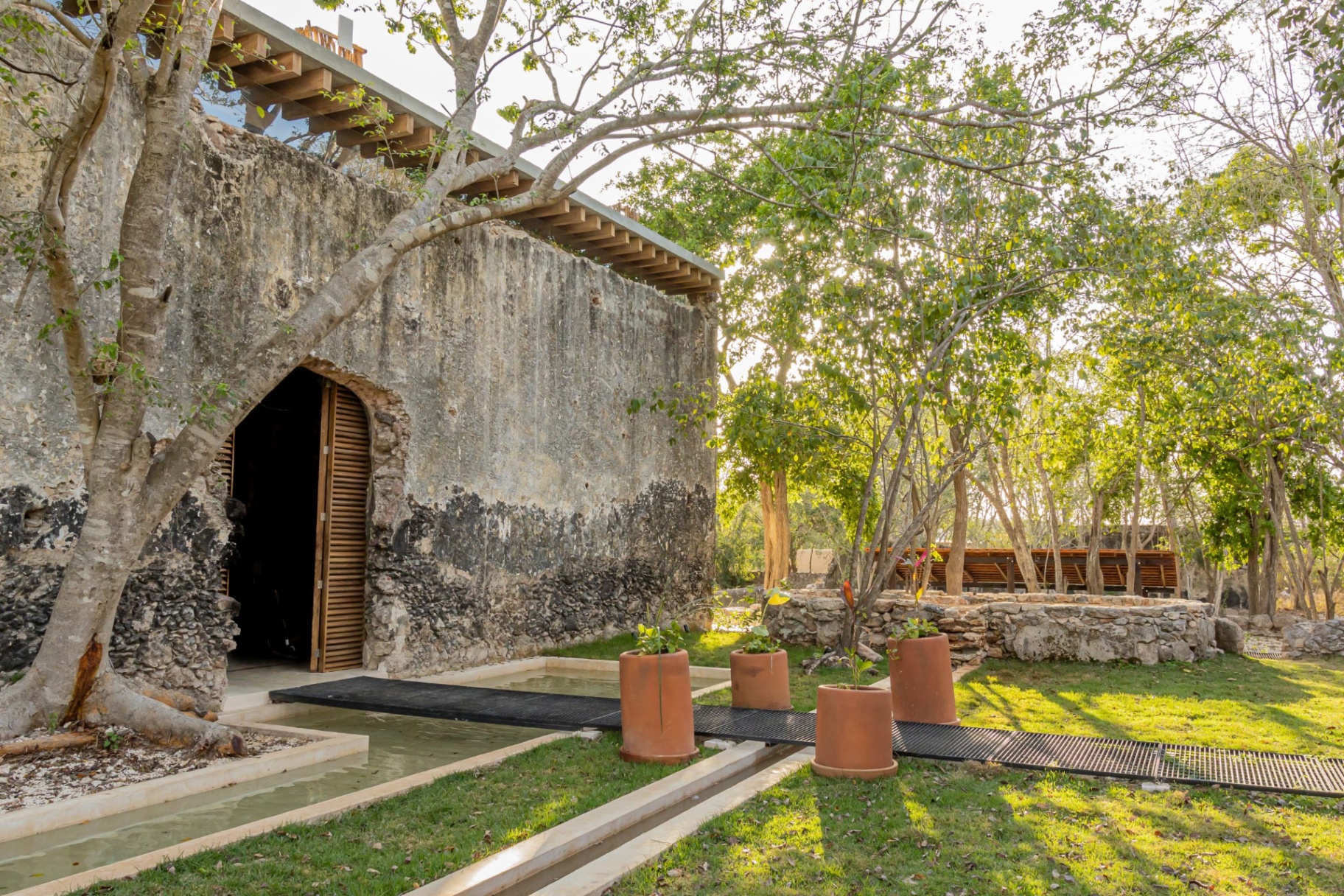
The restored 19th-century chapel — one of the estate's original stone structures preserved through a two-year restoration.
Rooted in Tradition, Enriched by Connection
Living culture, shared authorship, real friendships
Viatura Xtojil is more than serene landscapes. It's a space of living culture. Guests are immersed in the soul of Yucatán through traditions shared by the very communities who have shaped the land for centuries. From the deeply spiritual experience of a temazcal ceremony guided by Mayan shamans to honey harvesting with stingless bees, every experience is an opportunity to witness — and be part of — a vibrant, resilient way of life.
The people behind Viatura Hacienda Xtojil understand that true, lasting experiences are not born from luxury alone, but from meaningful relationships and authentic connection. That's why 70% of the experiences they offer are created in collaboration with Native communities — an intentional decision to invest time and resources into supporting the people who have long shaped this land.
What begins as a moment of cultural exchange often grows into something far more enduring. Guests leave not only with memories of breathtaking landscapes and immersive adventures, but with the deep, human bonds formed through shared stories, traditions, and genuine friendship.
Preserving the Yucatán, Together
Where hospitality becomes citizen science
At Viatura Hacienda Xtojil, the connection between guests and nature extends far beyond quiet appreciation — it becomes active participation. Through the use of the iNaturalist Citizen Science app, visitors are invited to become part of the conservation story by documenting local wildlife, plants, and ecological changes. With each observation, guests contribute valuable data that supports broader environmental research and helps scientists monitor biodiversity, track species patterns, and assess the health of the region's ecosystems.
This collaborative approach not only deepens the guest experience — fostering a more intimate understanding of the land — but also empowers travelers to play a direct role in protecting it. Every photograph, every entry, becomes a small act of stewardship. At Viatura, conservation is not just a value; it's a shared responsibility, reminding us that the preservation of this rich, living landscape depends on all who walk its paths.
Even the culinary experience is part of the narrative. The hacienda's restaurant blends traditional Yucatecan flavors with modern techniques, all sourced locally. Meals are served in the restored original hacienda building, where stone walls whisper history and the present feels deeply grounded in place.
Nearby, Hacienda Sotuta de Peón — known as the living hacienda — continues the legacy of henequén, where the fiber is still extracted by hand. Together, these two properties form a bridge between the past and a conscious, intentional future. A future where the hacienda is no longer a symbol of exploitation, but a beacon of community, sustainability, and cultural preservation.
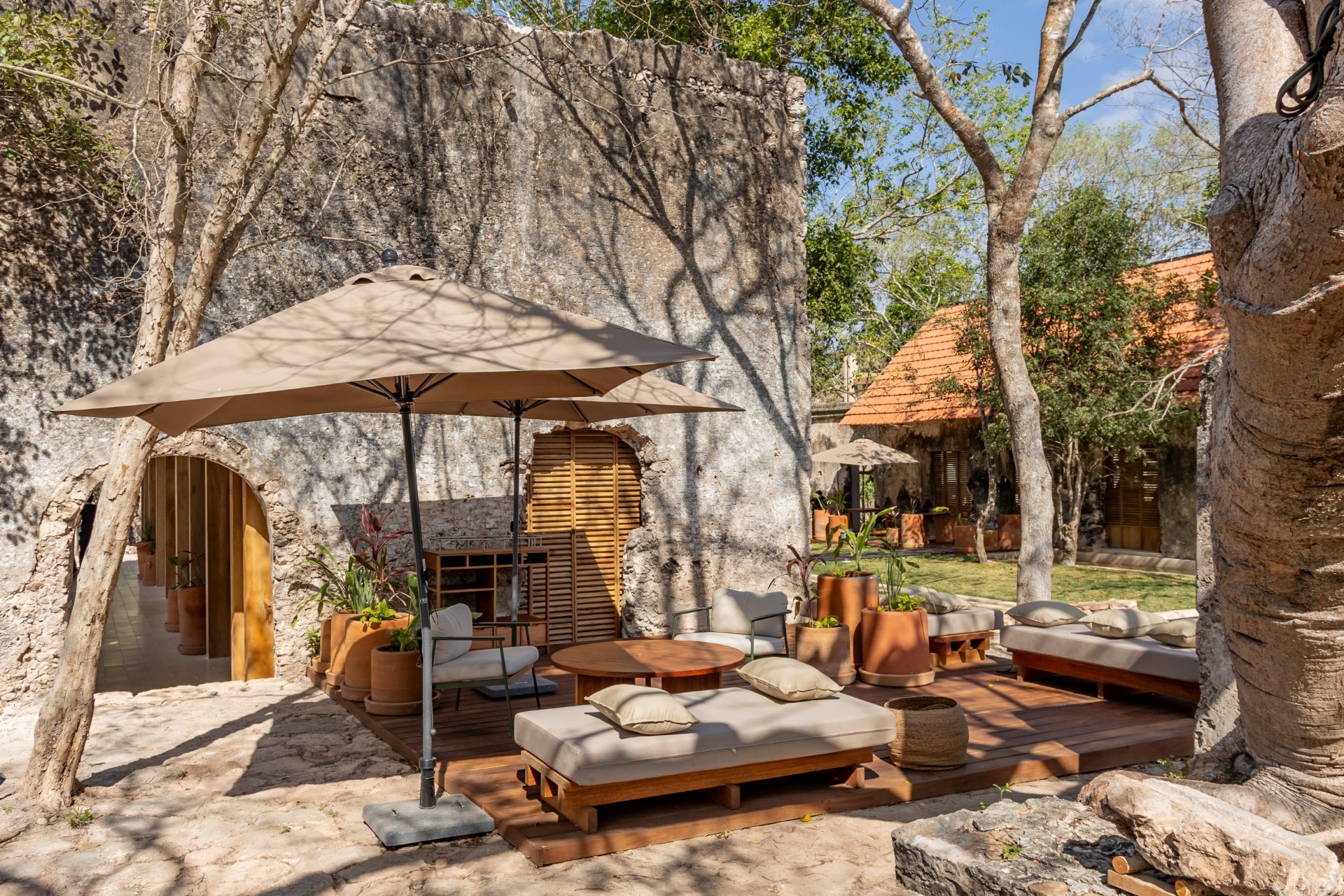
The restored courtyard where meals are served — stone walls that carry the estate's history into every dinner.
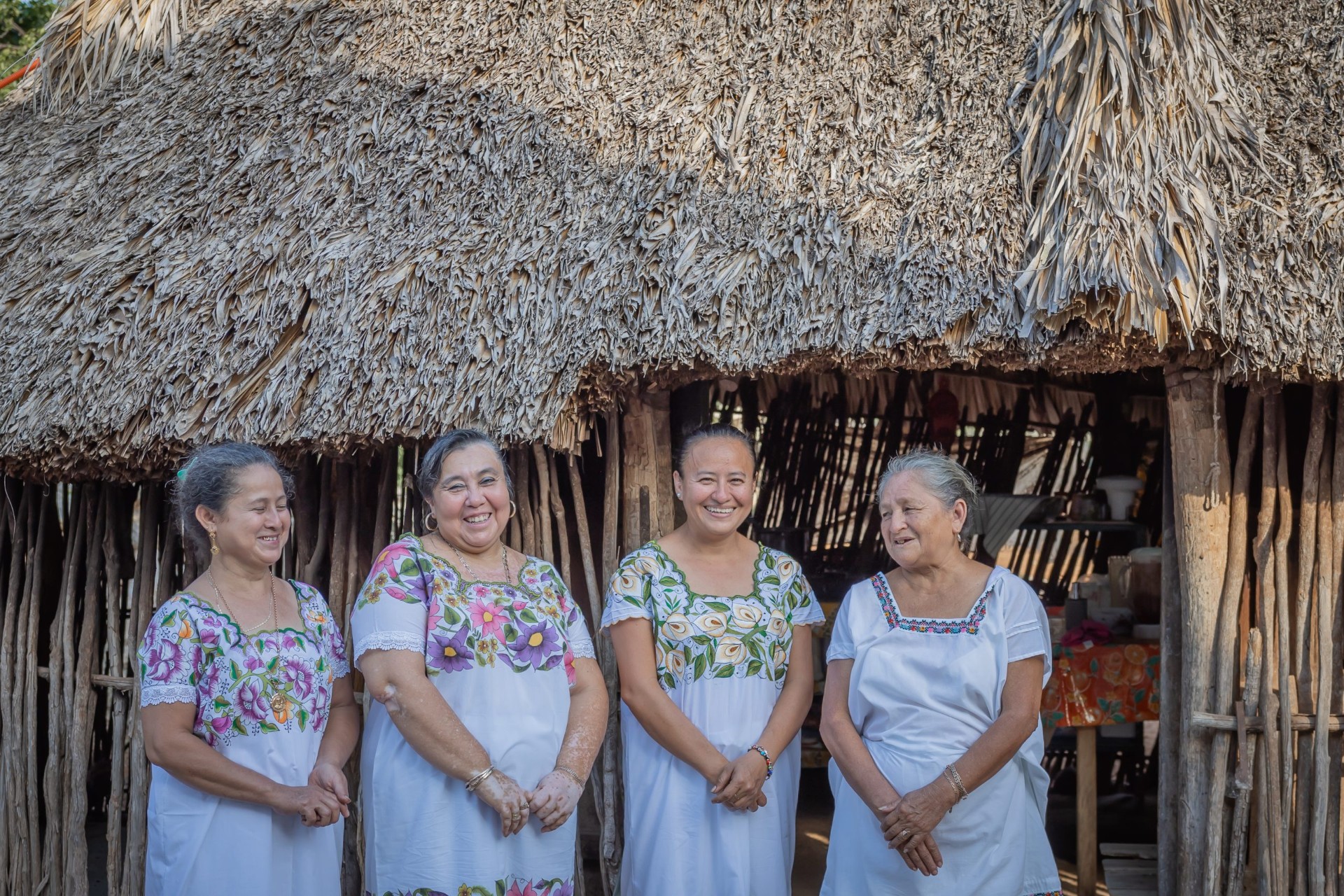
Local Mayan communities lead 70% of the guest experiences — from temazcal ceremonies to honey harvesting.
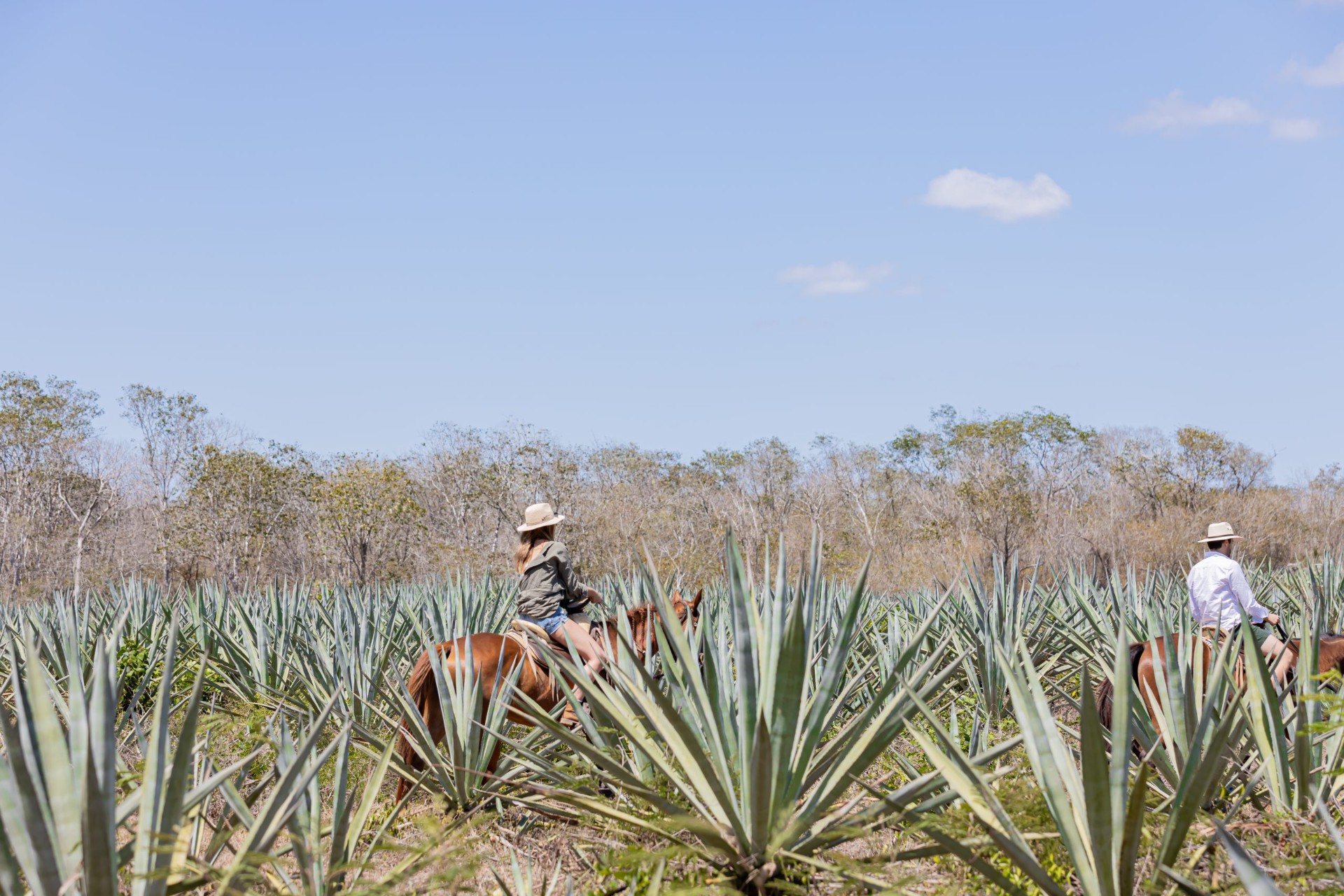
Riding through the surrounding henequén fields — the green gold that once defined the region's economy.
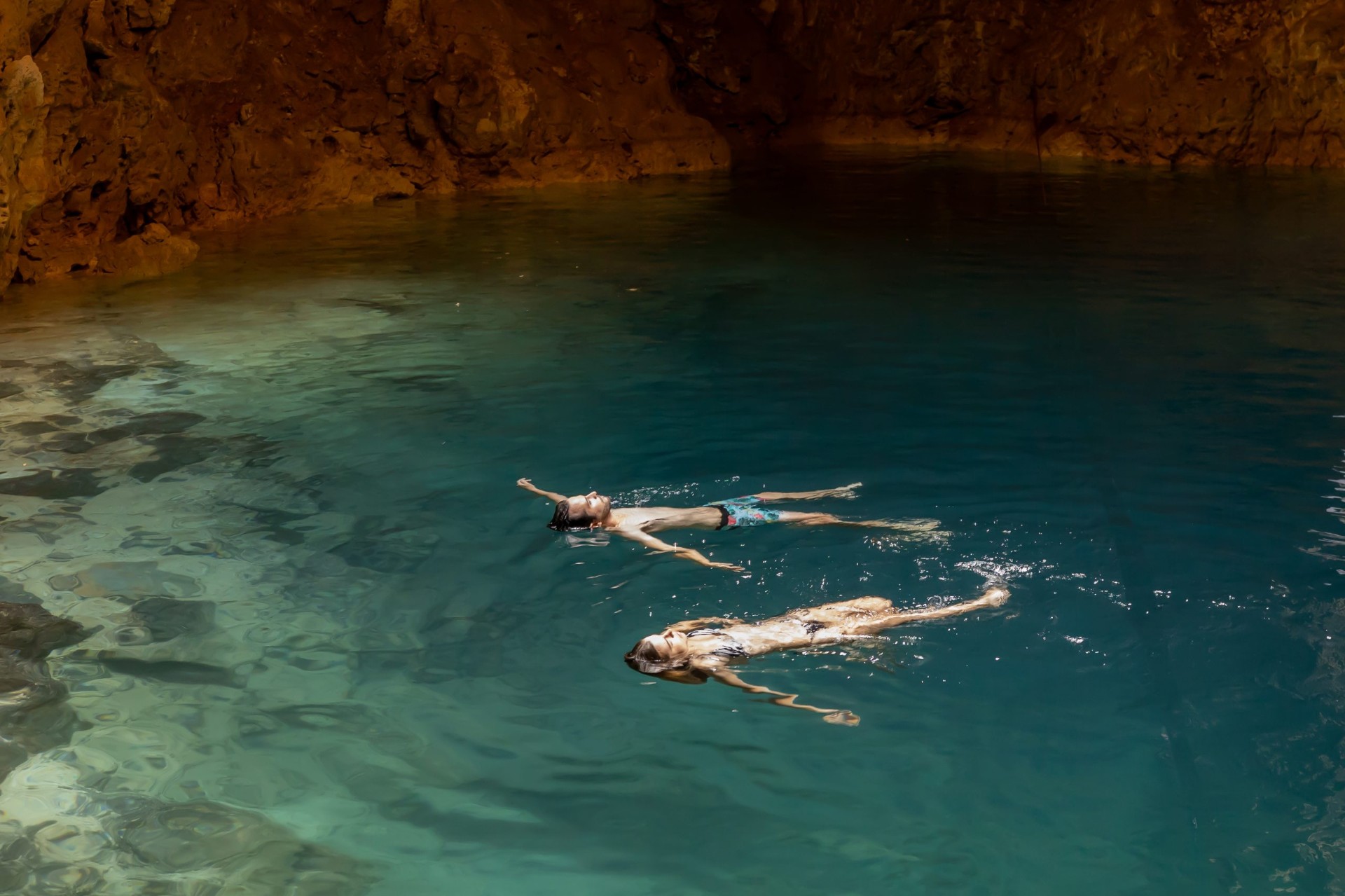
The on-site cenote — a sacred Mayan water source and the estate's most restorative ritual.
Featured Member
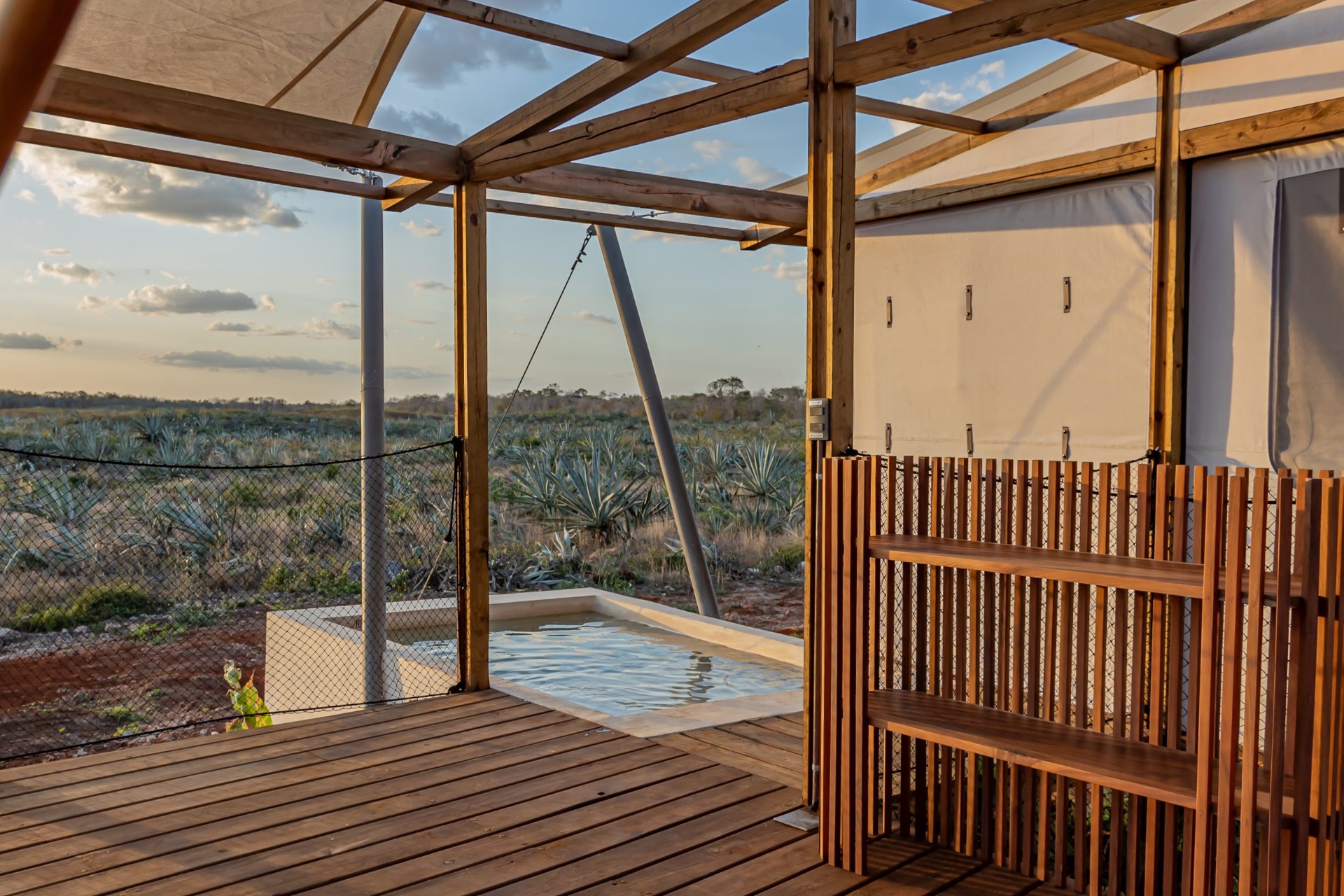
Sotuta de Peón · Yucatán, Mexico
Viatura Hacienda Xtojil
A restored 19th-century henequén hacienda 40 minutes from Mérida — 15 eco-conscious tented suites, an on-site cenote, and a working partnership with the surrounding Mayan communities who lead 70% of the guest experiences.
Visit PropertyThree Unforgettable Experiences at Hacienda Xtojil
Three signature guest experiences at the hacienda
Discover Flamingos in Their Natural Habitat
The peaceful seaside village of Sisal offers a rare chance to see flamingos thriving in the wild. From November to April, these graceful birds gather in the El Palmar State Reserve, wading through serene wetlands rich with algae, shrimp, and aquatic plants.
Share in Ceremonies in the Meliponary
In the Yucatán Peninsula, the sacred Melipona bee holds deep cultural and spiritual meaning for the Maya people. Take part in traditional ceremonies that honor these stingless bees, blending ancestral rituals, offerings, and a profound connection to nature.
Honor the Temazcal Tradition
Immerse yourself in a traditional temazcal ritual led by a Mayan shaman, where steam, sacred herbs, and chants purify the body and spirit. This ancient ceremony offers deep physical cleansing and spiritual renewal in a powerful, communal setting.
At Viatura Hacienda Xtojil, travel becomes a return — not just to nature, but to what truly matters: meaning, connection, and collective healing.
About the Author
Written by Lisa DiMartino for Regenerative Travel. Our editorial team profiles the member properties reshaping what luxury travel funds — and what it leaves behind.
Visit Viatura Hacienda XtojilWhere to stay
Suggested regenerative hotels
Continue the journey
Curated itineraries

5 Nights · India
A Silk Route Journey Through Ladakh
A slow expedition along an ancient trade path — reimagined as a thoughtful, regenerative luxury journey anchored by two sister retreats in Ladakh: Dolkhar in Leh and Lchang Nang in Nubra Valley.
View itinerary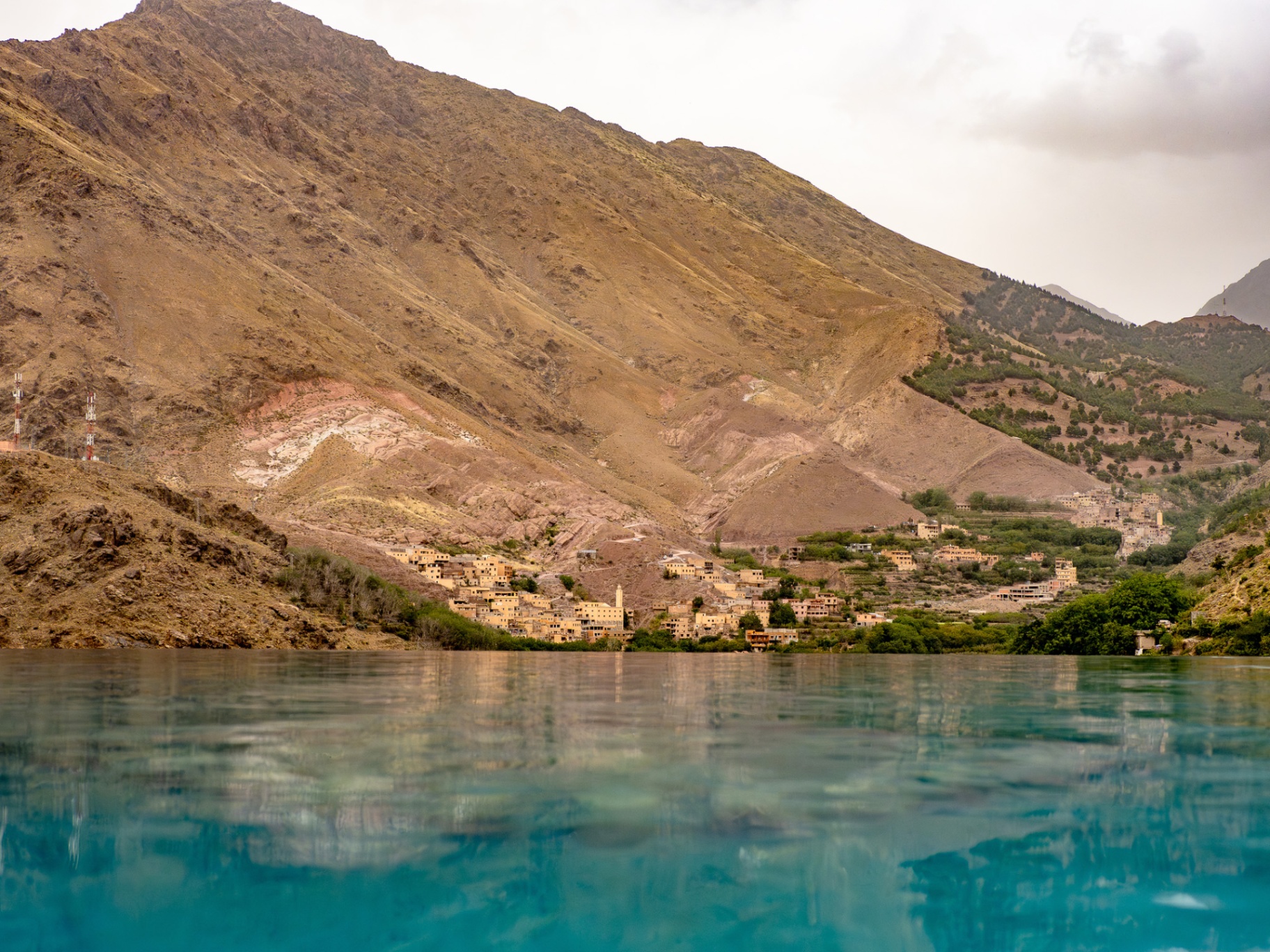
6 Nights · Morocco
Marrakech Medina & the High Atlas
This six-night journey traces two distinct but kindred expressions of Morocco — the intimate courtyard stillness of Dar Z5 in Marrakech's Dar el Bacha quarter, and the breathtaking mountain solitude of Kasbah du Toubkal in the High Atlas.
View itinerary