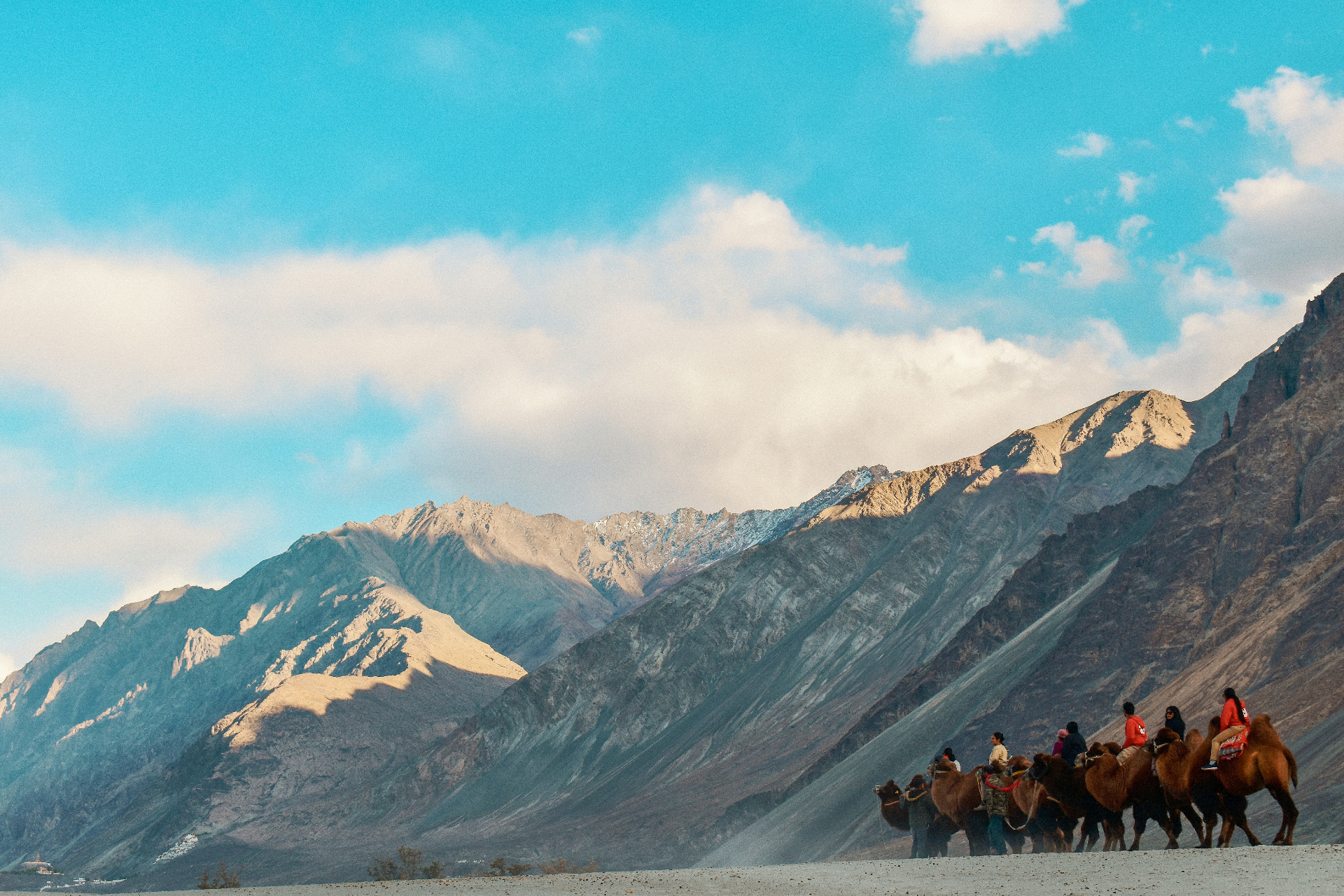

A Silk Route Journey Through Ladakh
5 Nights · Ladakh, India
A slow expedition along an ancient trade path that once linked Yarkhand to the courts of Lhasa and Delhi — reimagined as a thoughtful, regenerative luxury journey for cultural seekers.
Dolkhar & Lchang Nang
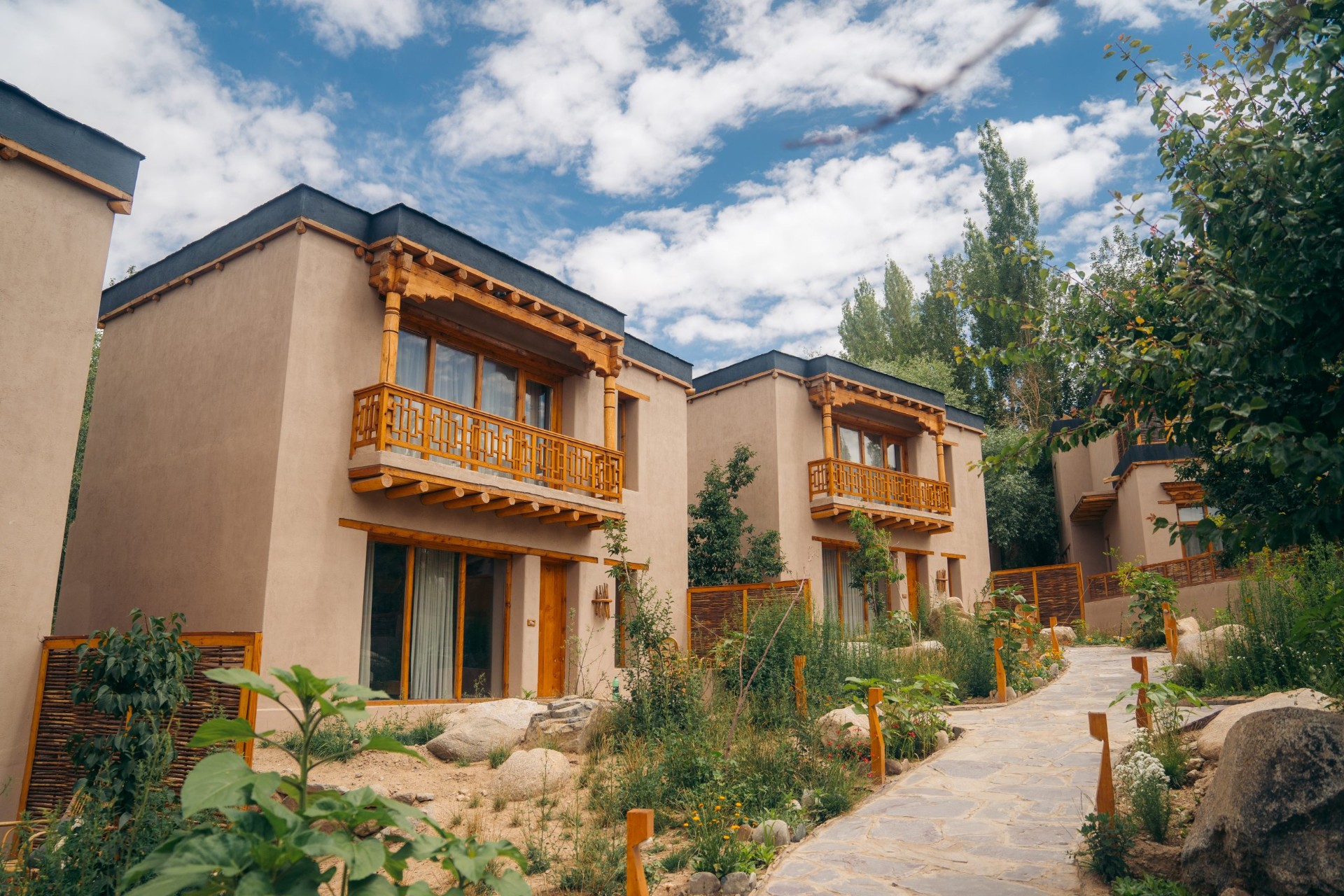
The journey is anchored by two of Ladakh's most considered Regenerative properties: Dolkhar in Leh for two nights of acclimatised quiet, and Lchang Nang in Nubra for three nights moving as caravans once did across the valley, ending where the dunes meet the sky.
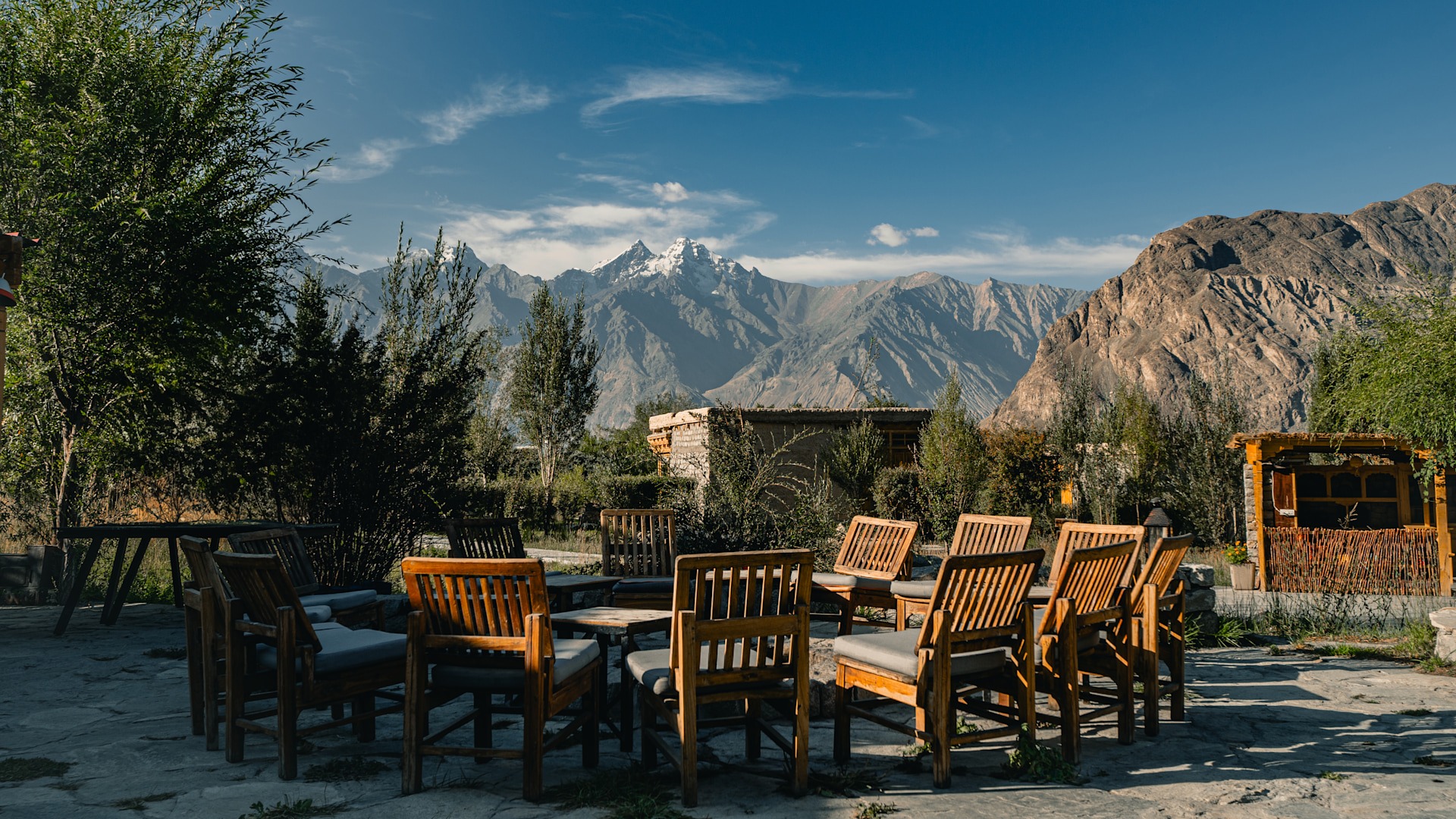
Separated by the legendary Khardung La pass at 5,359m — one of the world's highest motorable passes — the two properties share the same family, the same regenerative ethos, but inhabit entirely different landscapes: Dolkhar in the sheltered heart of Leh, and Lchang Nang among the willows and poplars of Nubra's Teggar village.
5 Nights Across Ladakh
From the ancient Silk Route heart of Leh, over the world's highest motorable pass, to the sand dunes and monastery trails of the Nubra Valley — each property chosen for its commitment to regenerative travel and deep Ladakhi heritage.
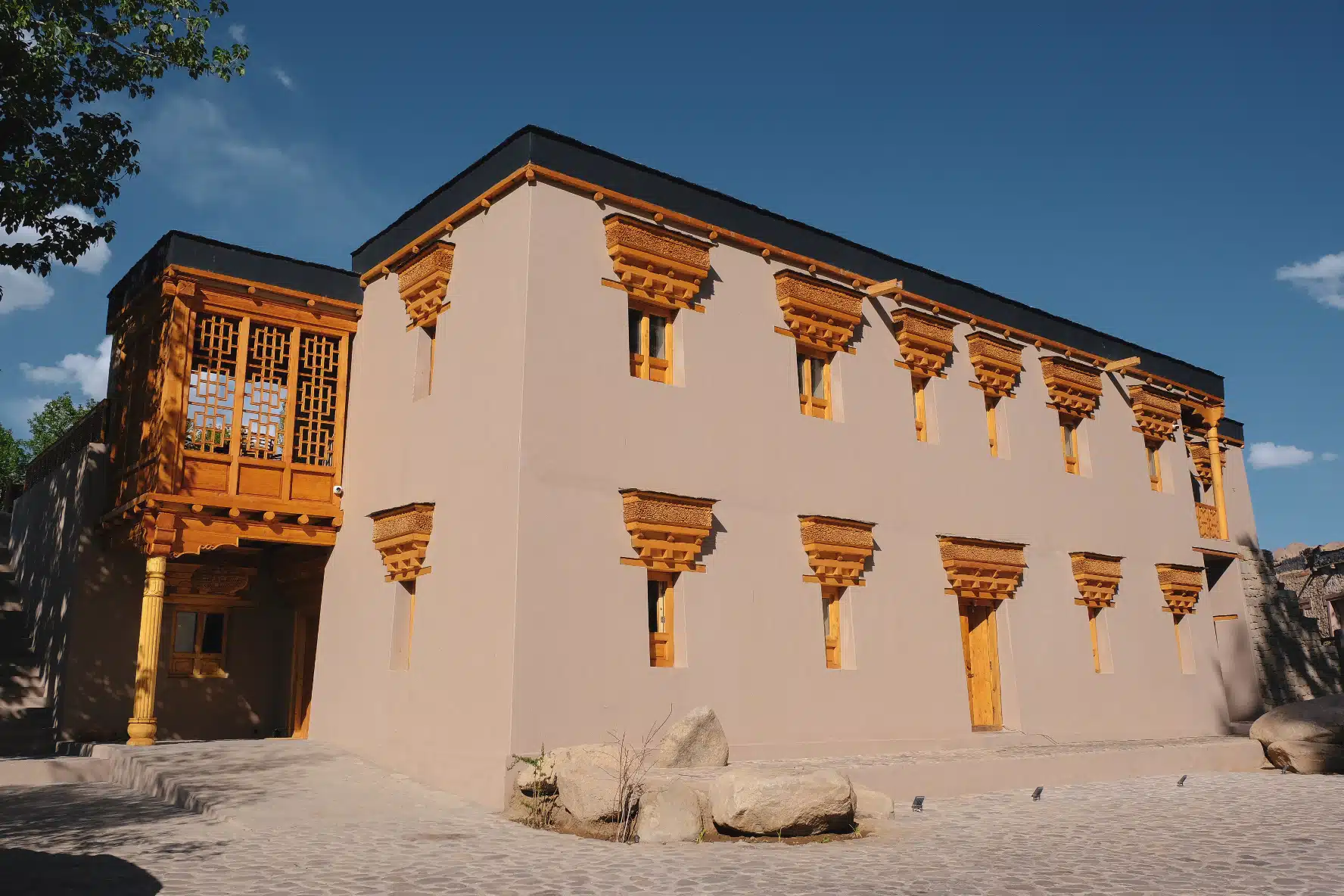
Dolkhar, Leh
Leh, Ladakh
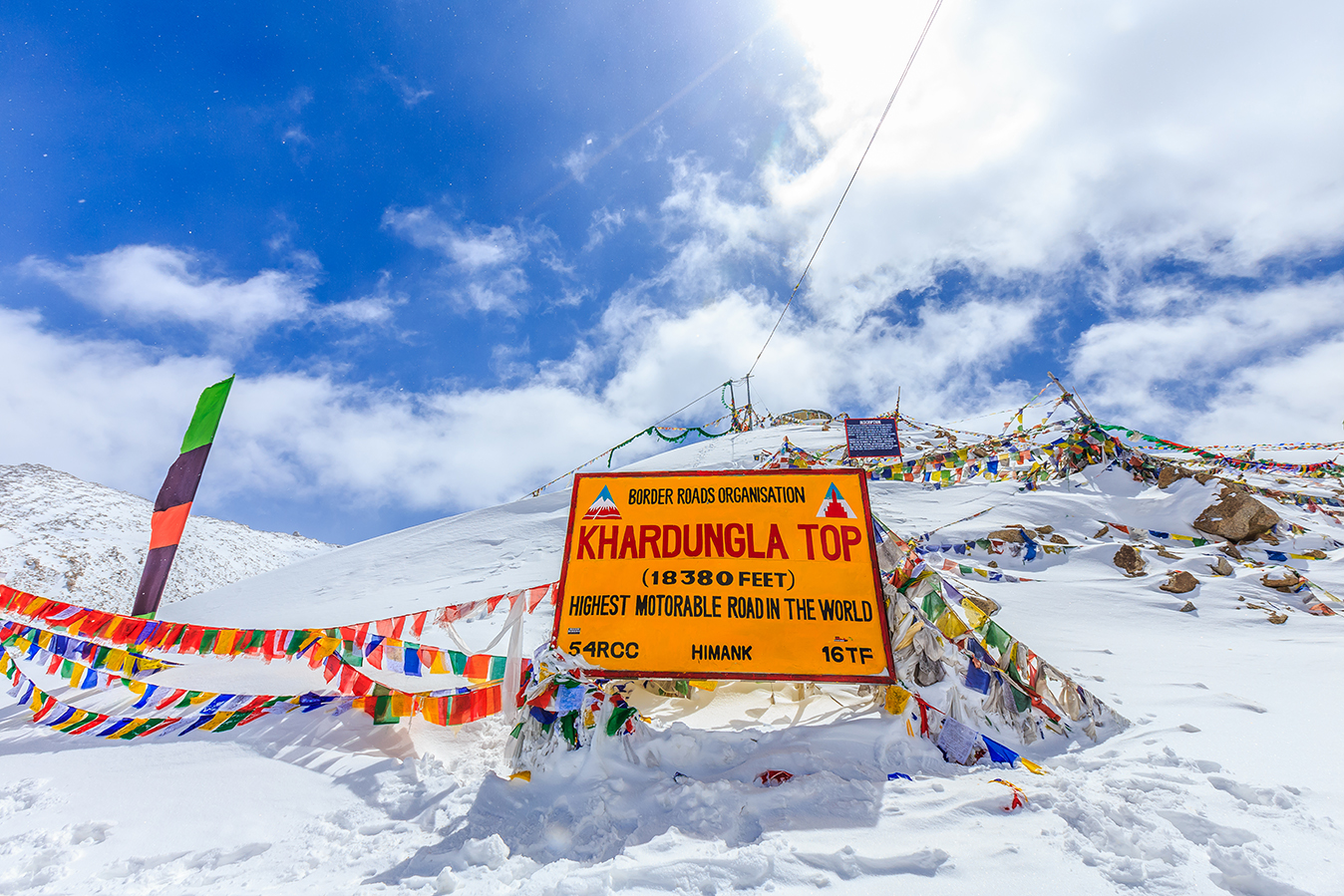
Crossing Khardung La
Dolkhar → Lchang Nang
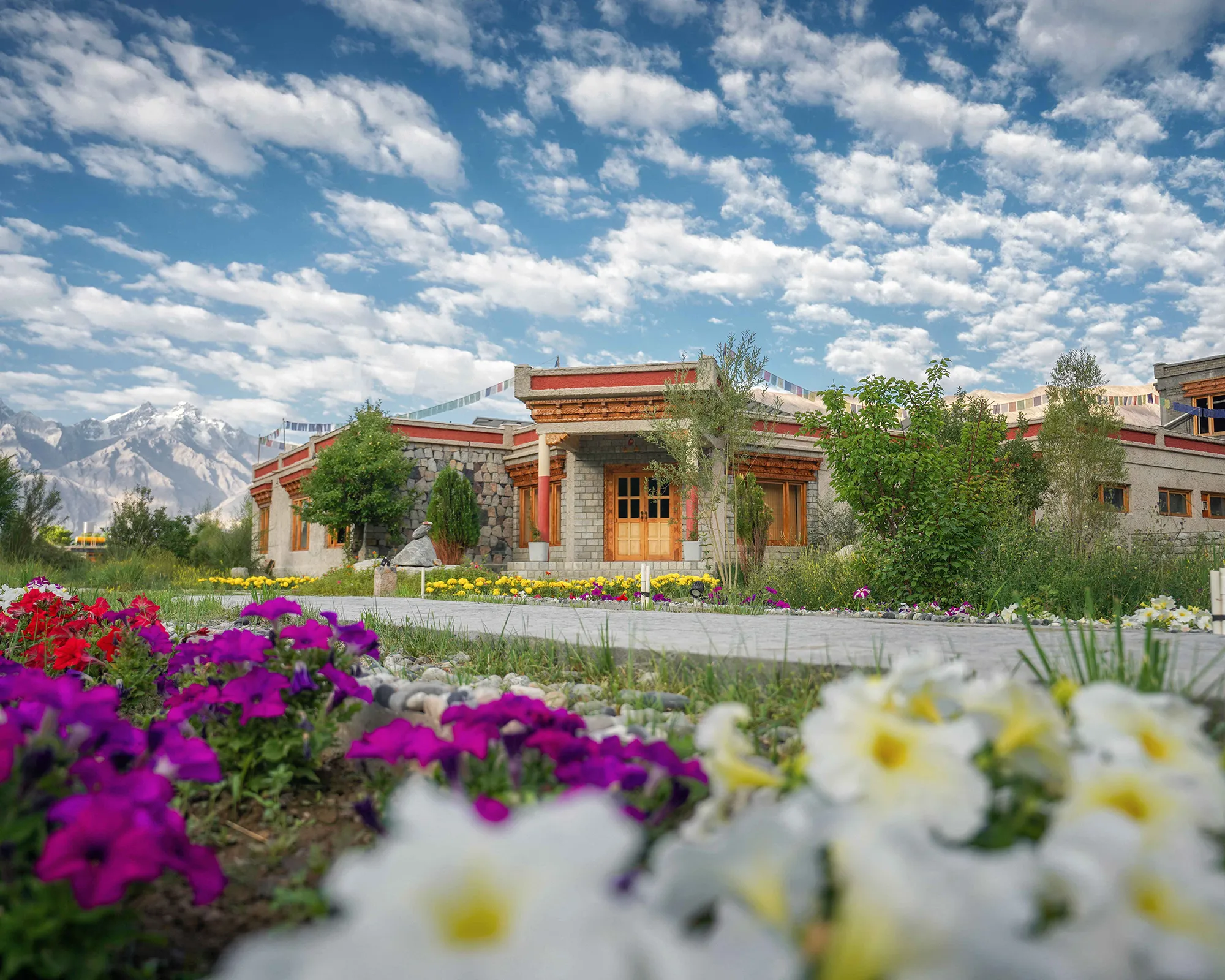
Lchang Nang Retreat
Nubra Valley, Ladakh
Return to Leh
Departure
The Silk Route, Reimagined
Dolkhar, Leh — Acclimatisation & Old Leh
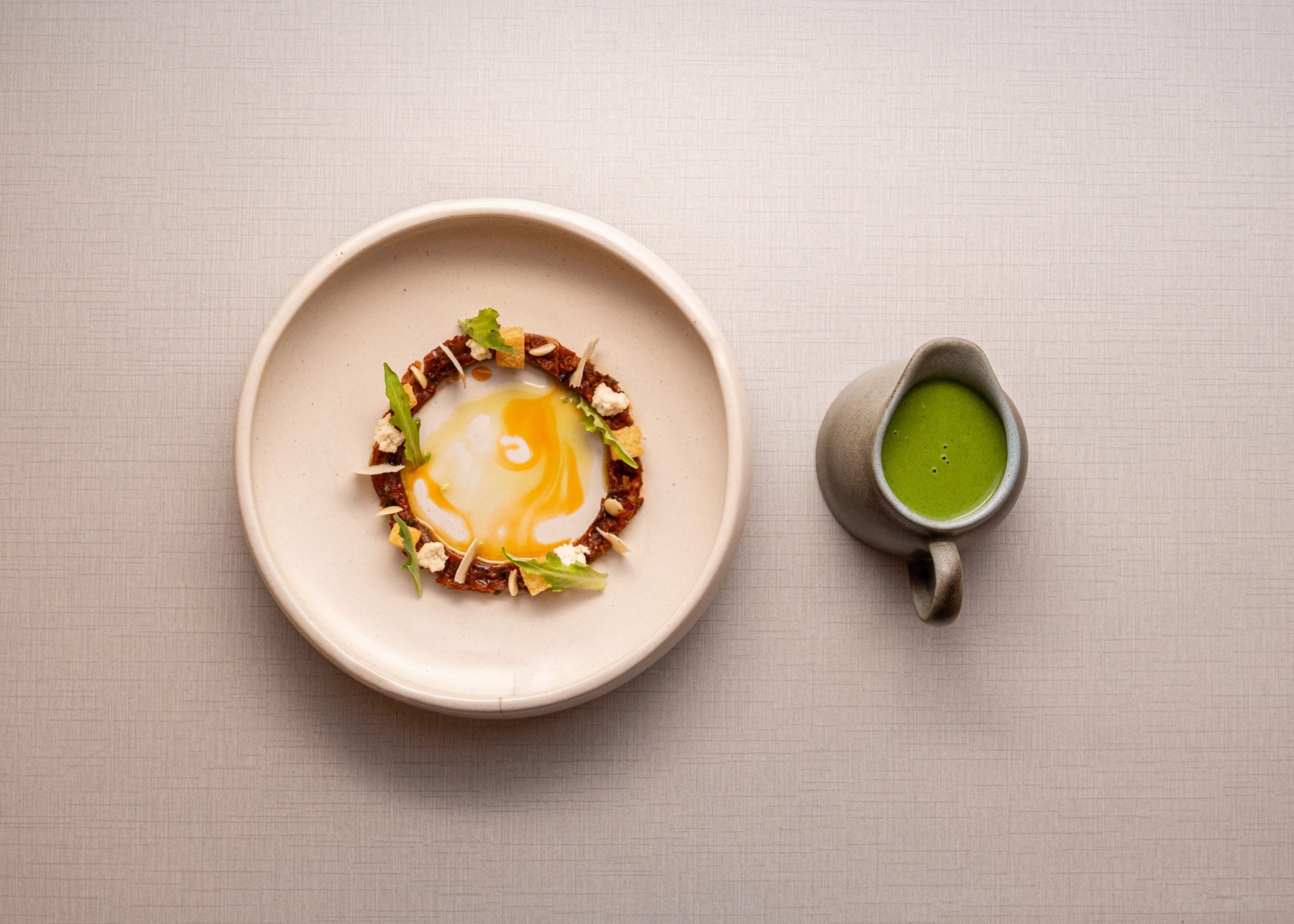
Arrive into Leh (IXL) by early flight from Delhi. At 3,500m, the first 36 hours belong to acclimatisation, and Dolkhar holds you gently through them: sea-buckthorn welcomes, oxygen concentrators in every duplex villa, sustainable architecture in earth and timber, and a Tibetan-trained therapist on hand at the spa. The culinary thread begins at Tsas, where Ladakhi ingredients meet contemporary technique — a quiet preview of the Central Asian and Yarkhandi cuisine to come in Nubra. By day two, slow walks through Old Leh's lanes, the Leh Palace, and the Central Asian Museum at Tsas Soma, which sits on what was once the city's caravanserai. Private yoga in view of the stupa, a Tibetan massage, an evening dinner that travels through the region's culinary memory.
Crossing into Nubra — Khardung La
Leave Dolkhar after breakfast. The road north climbs over Khardung La (5,359m), one of the world's highest motorable passes and a literal threshold into the Silk Route's last living chapter. Descend into the Nubra Valley. Settle into Lchang Nang Retreat — The House of Trees — set in Teggar village among willow and poplar groves. By afternoon, receive blessings at the ancient Ensa Monastery (founded 1430), pause at Sasoma, lunch at Spango pa house, and by dusk your tents are pitched at Panamik — dinner around the fire as storytellers revive the Silk Route beneath the stars.
Panamik to Chamshen — Tracing Tirisha La
Begin with the healing touch of an Amchi (traditional Ladakhi physician) and a soak in Panamik's natural hot springs. Breakfast with the Panamik women's alliance, then trace the historic Tirisha La trail with Bactrian caravan camels — the same double-humped beasts that carried silk, salt, and stories across these passes for centuries. Arrive in Chamshen — a village that remembers. Visit ancestral homes where Silk Route remnants still rest in family altars and trunks. As night deepens, sit with the Onpo astrologer for a personal reading, and listen to the Nightingale of Nubra sing the old caravan songs to the sky.
Chamshen to Kyagar — The Silk Route Dinner
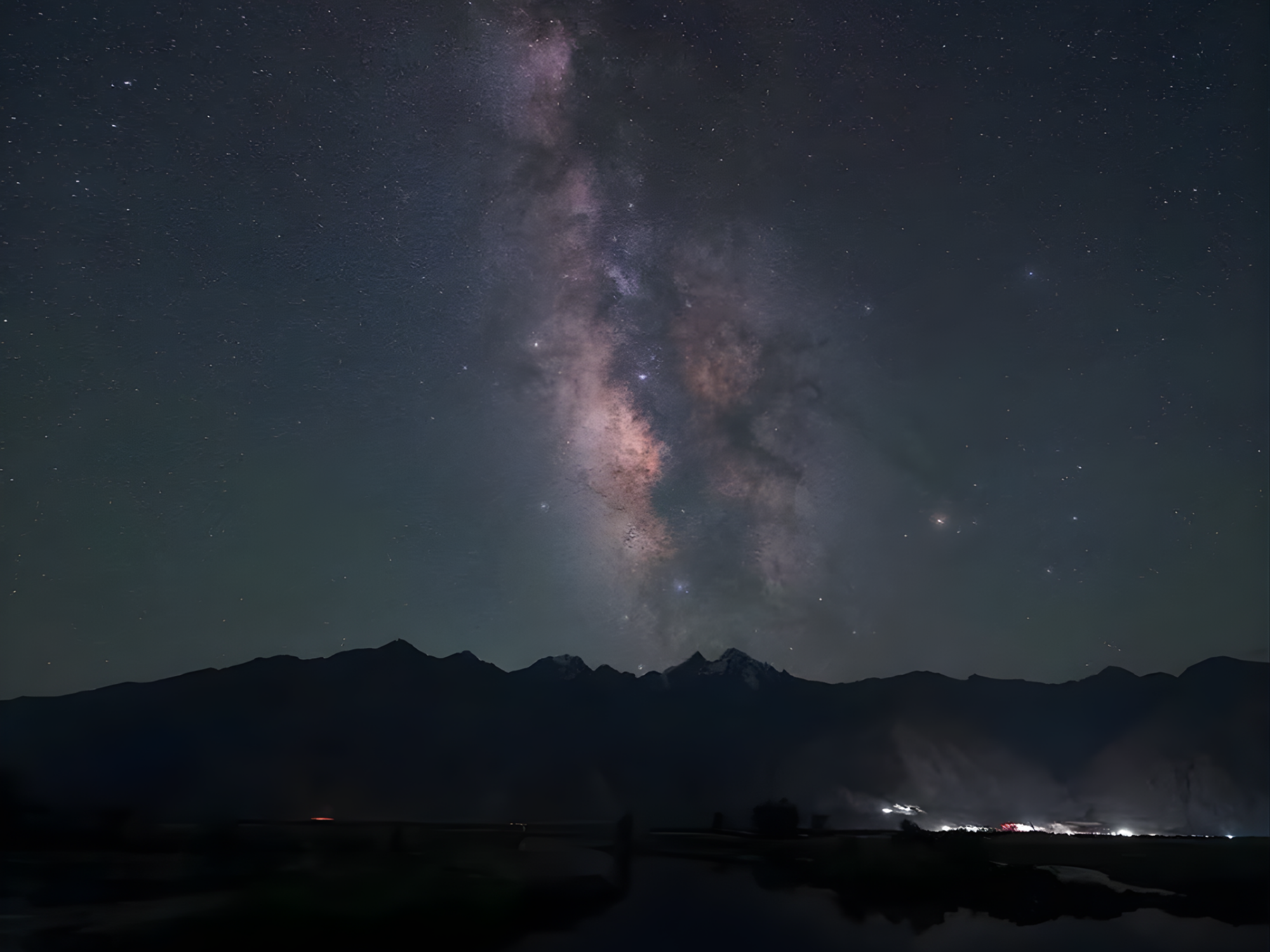
A morning meal prepared by the women of Chamshen. Then walk through Tirisha's quiet poplar forests toward Kyagar, camels at your side. A Yarkhandi house opens its doors for a warm lunch and a private cultural performance — the costumes, music, and dance that survived the closing of the trade routes in the 1950s. As twilight falls, gather on Nubra's high-altitude dunes for the Silk Route Dinner — the journey's culminating moment. A long table set on the sand, lanterns, song, chef-curated Central Asian and Ladakhi cuisine, and a sky reading lesson learning the constellations the traders once navigated by.
Return to Leh, Departure
Morning farewells at Kyagar. Drive back over Khardung La to Leh in time for an afternoon flight to Delhi.
Travel That Gives Back More Than It Takes
Every property on this itinerary was chosen not just for its beauty, but for its commitment to restoring ecosystems, empowering communities, and preserving Ladakh's rich cultural heritage.
Rammed earth & timber
Vernacular Architecture
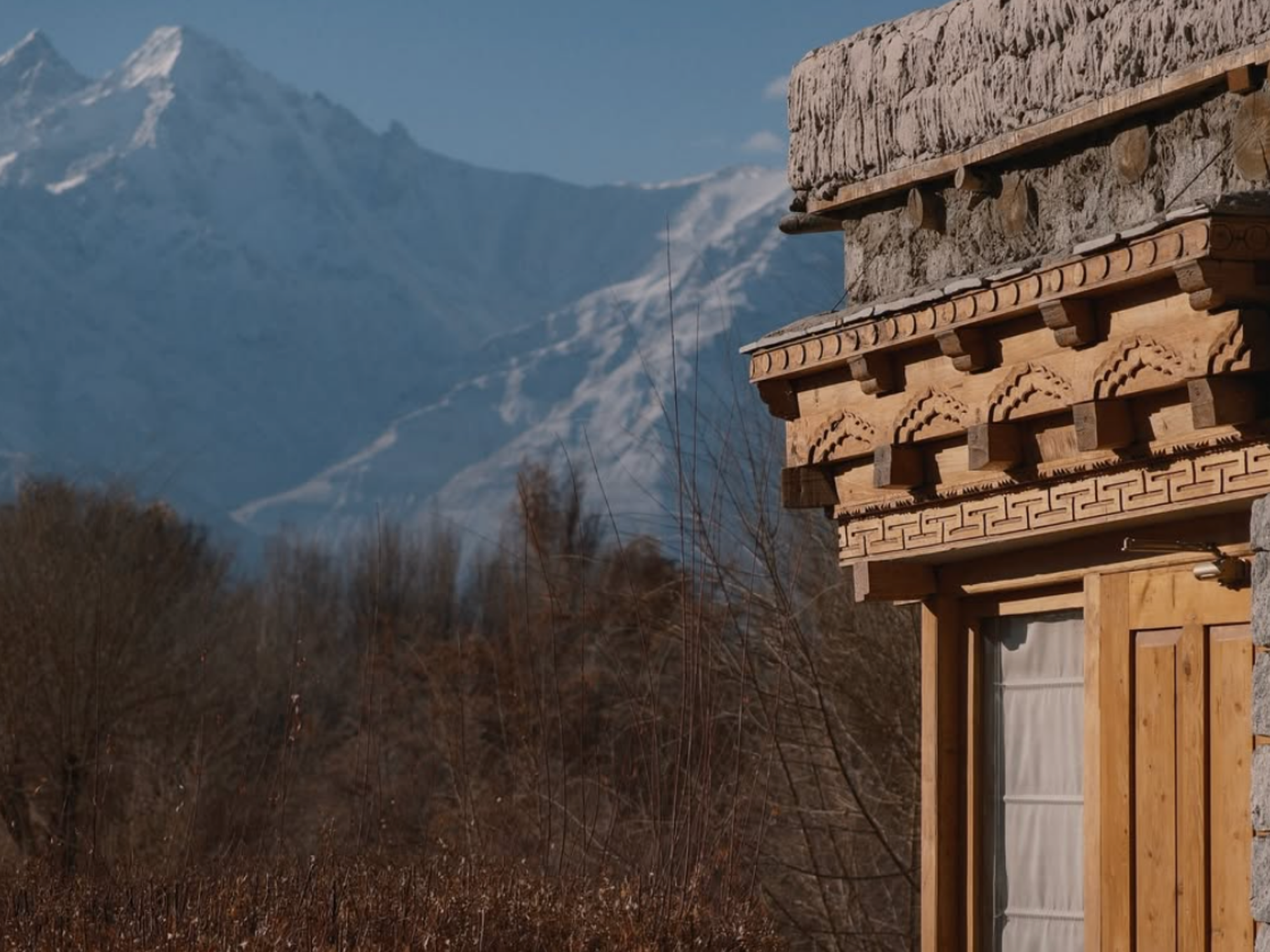
Both properties are built using traditional Ladakhi construction — rammed earth, stone, and locally sourced timber — supporting artisan livelihoods and reducing the carbon footprint of construction at altitude.
Women's alliances & villages
Community Partnership
The Caravans of Nubra programme directly partners with village women's alliances, ancestral homesteads, and local cultural practitioners — ensuring tourism revenue flows directly into the communities that make this journey possible.
Silk Route revival
Cultural Preservation
Through the Caravans programme, Lchang Nang actively revives Silk Route traditions — Yarkhandi cuisine, Onpo astrology, caravan songs, and Bactrian camel trekking — preserving living heritage that might otherwise be lost.
1 Country
India
2 Regenerative Properties
Sister retreats
5 Nights
Of purposeful travel
June–September offers the best conditions — Ladakh's brief summer brings clear skies, accessible passes, and warm days in the valleys. Khardung La is typically open from late May through October. The Caravans of Nubra programme runs during peak season months.
Dolkhar
Arrive into Leh (IXL) by early flight from Delhi. At 3,500m, the first 36 hours belong to acclimatisation, and Dolkhar holds you gently through them: sea-buckthorn welcomes, oxygen concentrators in every duplex villa, sustainable architecture in earth and timber, and a Tibetan-trained therapist on hand at the spa. The culinary thread begins at Tsas, where Ladakhi ingredients meet contemporary technique. By day two, slow walks through Old Leh's lanes, the Leh Palace, and the Central Asian Museum at Tsas Soma.
Dolkhar's seven villas are built using traditional Ladakhi earth and timber construction, supporting local artisans and minimising environmental impact. The property champions local cuisine, employs from surrounding communities, and operates with passive solar design principles.
- AddressBelow Shanti Stupa, Leh, Ladakh, India
- Nearest AirportKushok Bakula Rimpochee Airport (IXL)
- Transfer Time4 km / 10 min. from airport
Lchang Nang Retreat
Set in Teggar village among willow and poplar groves, Lchang Nang — The House of Trees — is Dolkhar's elemental sibling: same family, same ethos, but rooted in the wilder, quieter geography of the north. Cottages built in rammed earth and Ladakhi vernacular detail, kept warm by passive solar design. Under Lchang Nang's care, the Caravans of Nubra journey unfolds: monastery blessings, Bactrian camel treks along ancient trade paths, village homestay meals, Amchi healing, and a culminating Silk Route dinner on the high-altitude dunes.
Lchang Nang operates as a community partner in Nubra, employing local villagers, preserving Ladakhi vernacular architecture through rammed-earth construction, supporting women's alliances, and reviving Silk Route cultural traditions through its Caravans of Nubra programme.
- AddressTeggar Village, Nubra Valley, Ladakh, India
- Nearest AirportKushok Bakula Rimpochee Airport (IXL) via Leh
- Transfer Time~5 hours drive from Leh over Khardung La
Ready to Explore?
Let us craft your bespoke Ladakh itinerary. Every journey is tailored to your pace, your curiosity, and your purpose.
Your Travel Designer
Bilal Ahmed Chapri
Discovery Journeys India
"We are deeply committed to operating in a sustainable, low-impact manner to help preserve India's natural beauty and thriving biodiversity."