
The Architecture of a Living Coast
Coastal & Island Properties Restoring Ocean Ecosystems
The ocean has long been hospitality's greatest selling point. Properties advertise turquoise waters, private beaches, and endless horizons, inviting guests to admire nature from a comfortable distance. But for a growing number of coastal and island properties, the ocean is no longer a backdrop. It is a living system under immense pressure, and one that demands active participation in its recovery.
Coral bleaching, rising sea temperatures, coastal erosion, biodiversity loss, and changing weather patterns are redefining what it means to operate along the world's shorelines. In response, these properties are moving beyond sustainability and embracing a different role: becoming stewards of the ecosystems they depend upon.
From Saint Lucia to Belize, Jamaica to Panama, and Indonesia to Tanzania and Alaska, a new model of hospitality is emerging. One where reefs are treated as infrastructure, guests become participants in restoration projects, and community wellbeing is understood as inseparable from ocean health. Although these properties are spread across continents, they share a common understanding: thriving coastlines are not guaranteed. They must be actively protected.
A healthy reef can dissipate up to 97 percent of incoming wave energy — natural infrastructure at planetary scale.
The Caribbean
Protecting the reefs that protect the islands
In the Caribbean, coral reefs are far more than underwater attractions. They are natural breakwaters that absorb wave energy, protect shorelines from erosion, support fisheries, and sustain local economies built around tourism. A healthy reef can dissipate up to 97 percent of incoming wave energy, and researchers estimate that nearly 200 million people worldwide rely on reefs for exactly this kind of protection from storm surge and flooding. Restoring a reef also costs a fraction of building a seawall of comparable strength, making coral conservation one of the most cost-effective forms of coastal defense available. Several properties are helping redefine what it means to safeguard these ecosystems.
Long before marine conservation became commonplace in hospitality, Jade Mountain in Saint Lucia helped lay the foundations for marine protection on the island. Owner Nick Troubetzkoy played a pivotal role in establishing Saint Lucia as a scuba diving destination by creating the island's first professional scuba operation and promoting marine awareness internationally. Those early efforts eventually contributed to the creation of the Soufriere Marine Management Authority (SMMA), which today protects Saint Lucia's nearshore marine environment. The property continues to build upon this legacy through its Reef Life and Renewal initiative. Guests can participate in educational diving experiences that explore marine species identification, coral behaviour, and active restoration efforts. Through the Coral Kaleidoscope program, divers contribute directly to coral nurseries by planting and out-planting corals into the surrounding reef system.
In neighboring Jamaica, Rockhouse Hotel approaches conservation through an equally systemic lens. As a member of the Negril Environmental Protection Trust, the property supports the protection of both the Royal Palm Reserve and the Negril Marine Park. Environmental practices are embedded throughout operations, from rainwater harvesting and composting to waste reduction initiatives and mandatory reef-safe sunscreen policies. The policy responds to a growing body of research showing that common UV filters, particularly oxybenzone and octinoxate, can trigger coral bleaching, damage coral DNA, and impair fish reproduction, even at the low concentrations typical of swimmer runoff. Through the Rockhouse Foundation, established in 2004, one-third of the hotel's profits support educational and community initiatives throughout the region.
Reef-safe policies exist because oxybenzone and octinoxate can bleach coral even at swimmer-runoff concentrations.
Just down Seven Mile Beach, Skylark Negril extends this approach by reducing its own environmental footprint through rainwater harvesting, solar hot water systems, composting, recycling programs, and sustainable guest experiences that minimize damage to fragile reef systems. Through educational initiatives and local partnerships, conservation becomes something visitors learn rather than simply observe.
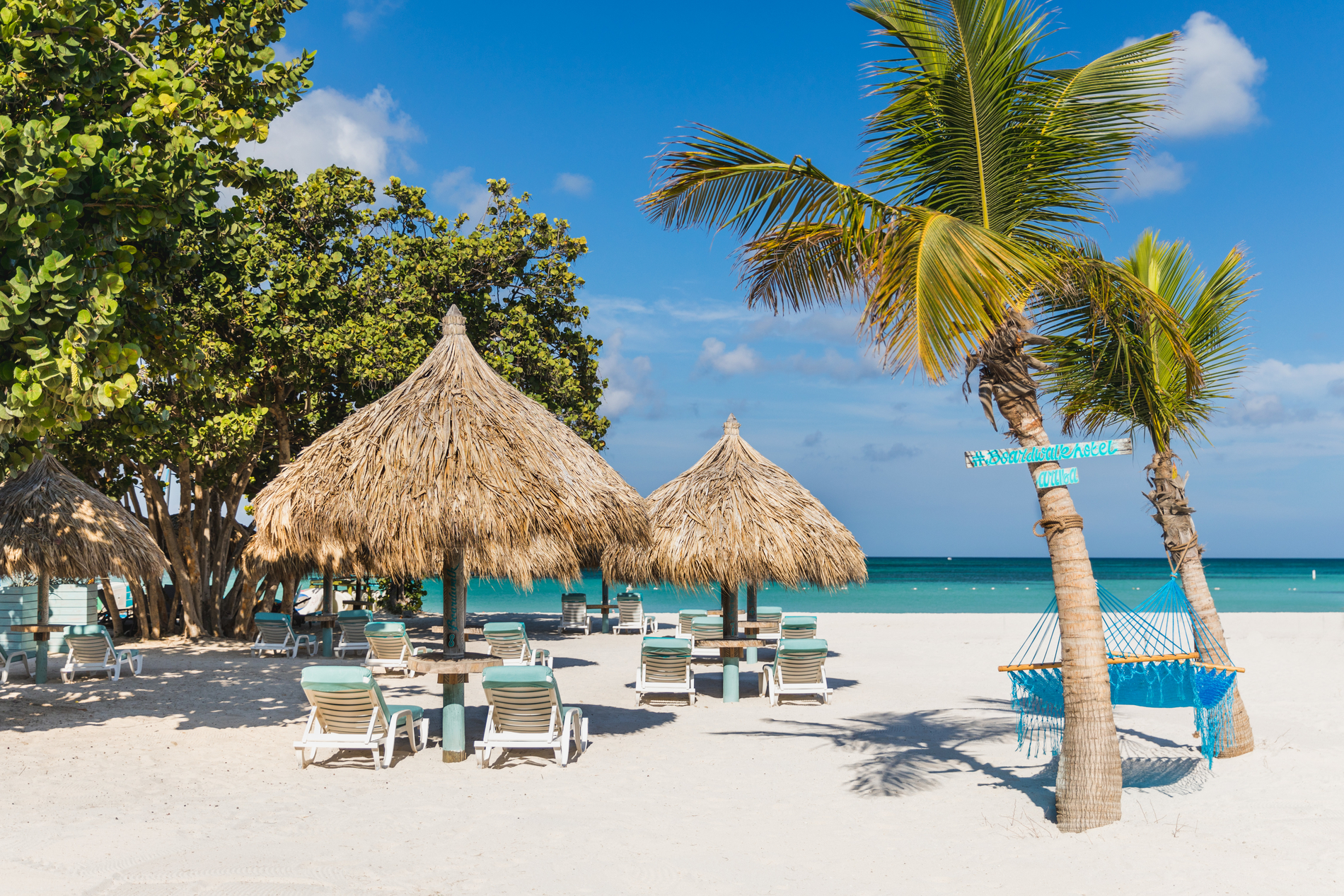
Meanwhile, Boardwalk Boutique Hotel Aruba demonstrates how small islands are rethinking resource management altogether. On an island heavily dependent on energy-intensive desalination processes, water security is inseparable from environmental protection. Since 2019, the hotel's reverse osmosis system has generated over 150 cubic meters of freshwater each month, supplying nearly one-third of the property's water needs. Guests are invited to participate through beach clean-ups, reef conservation activities, and immersive sustainability tours that transform visitors into informed ambassadors for the island itself. Rather than directing tourists toward heavily curated experiences, Boardwalk encourages a deeper understanding of Aruba's ecosystems, cultures, and environmental realities.
Across the Caribbean, a common theme emerges: protecting reefs is no longer enough. Hospitality is increasingly investing in the social systems that allow marine ecosystems to survive.
Featured Caribbean Members
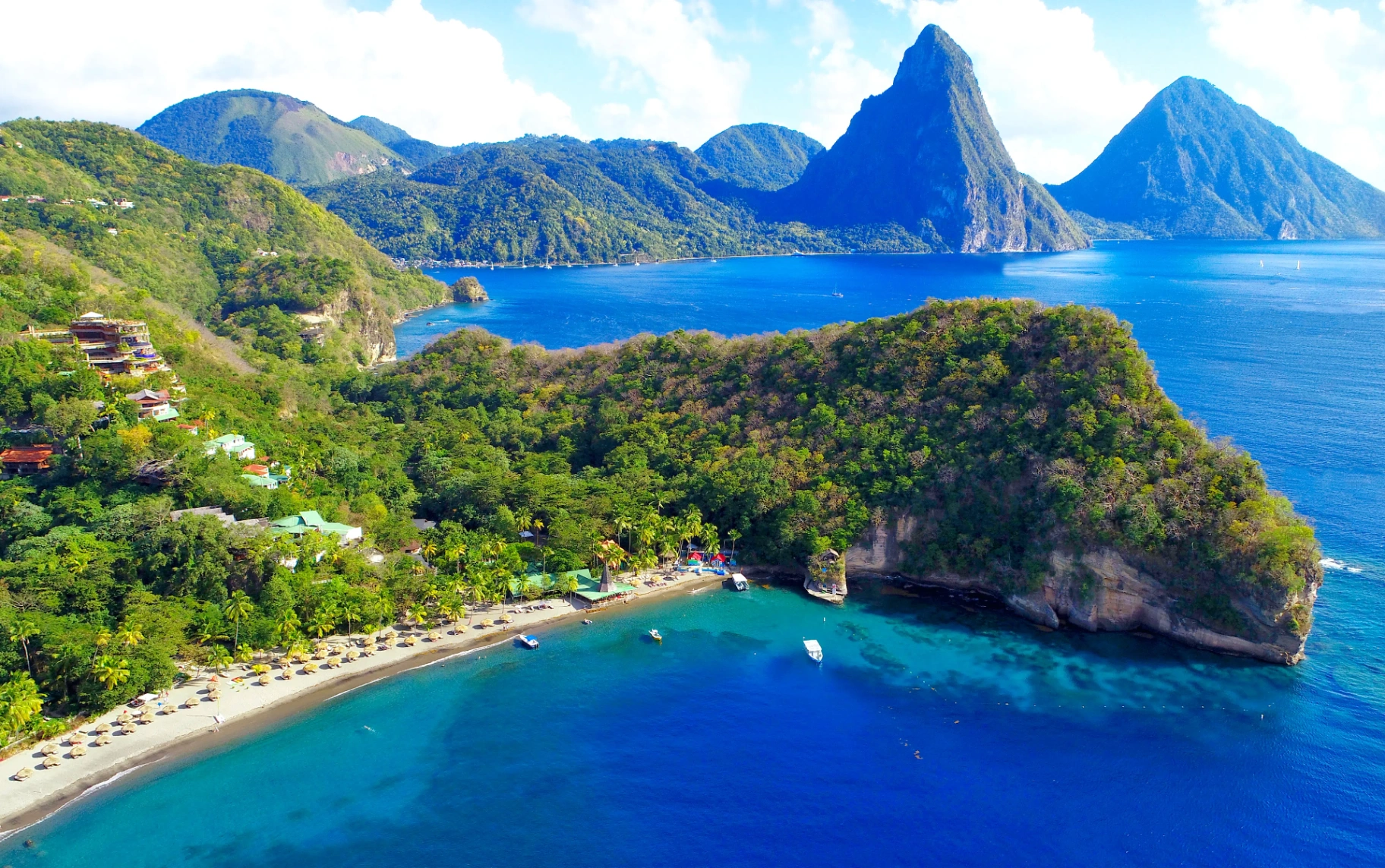
Saint Lucia
Jade Mountain
Reef Life & Renewal — guests plant coral through the Coral Kaleidoscope program.
View Property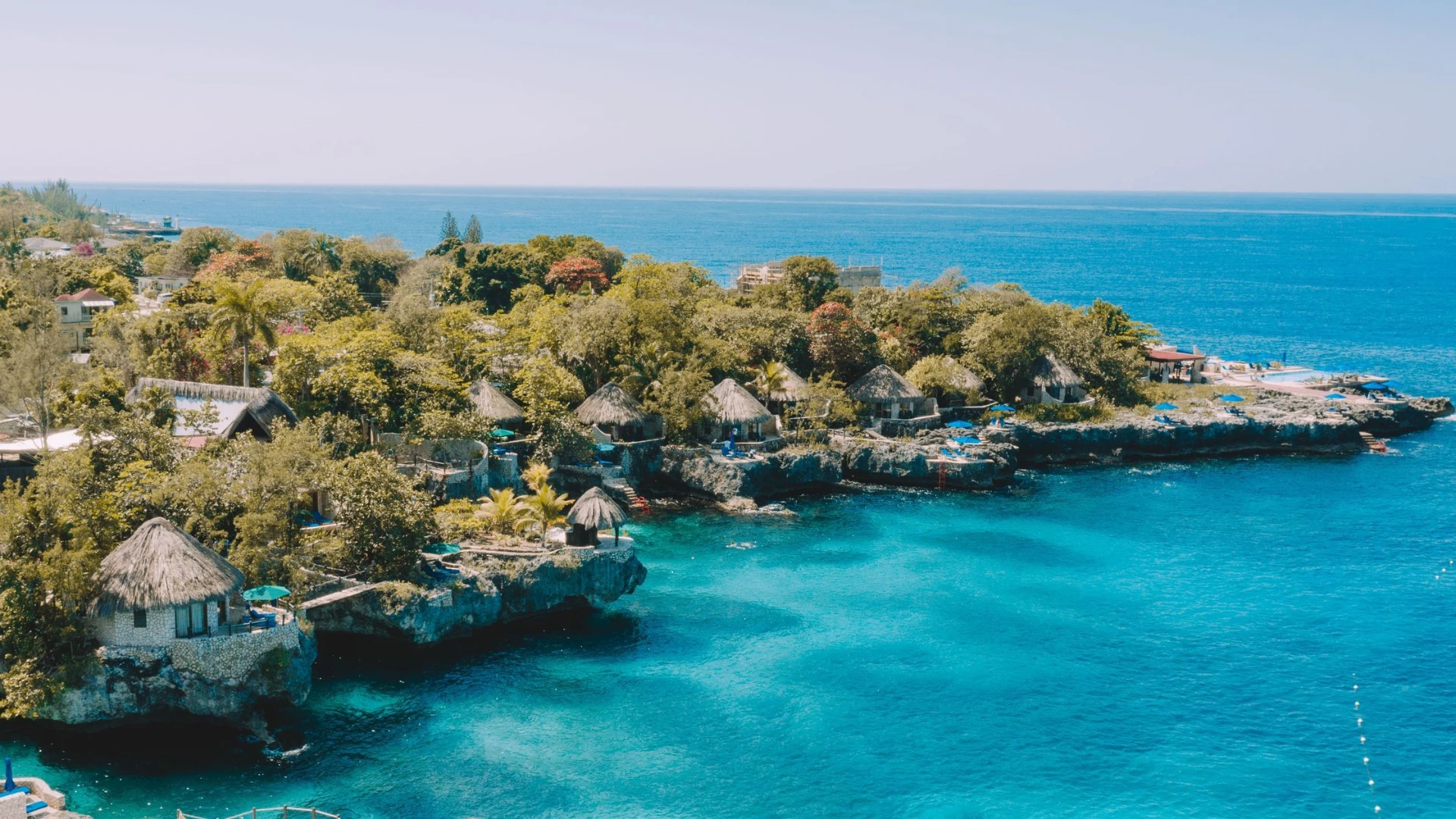
Negril, Jamaica
Rockhouse Hotel
Negril Environmental Protection Trust partner; 1/3 of profits fund the Rockhouse Foundation.
View Property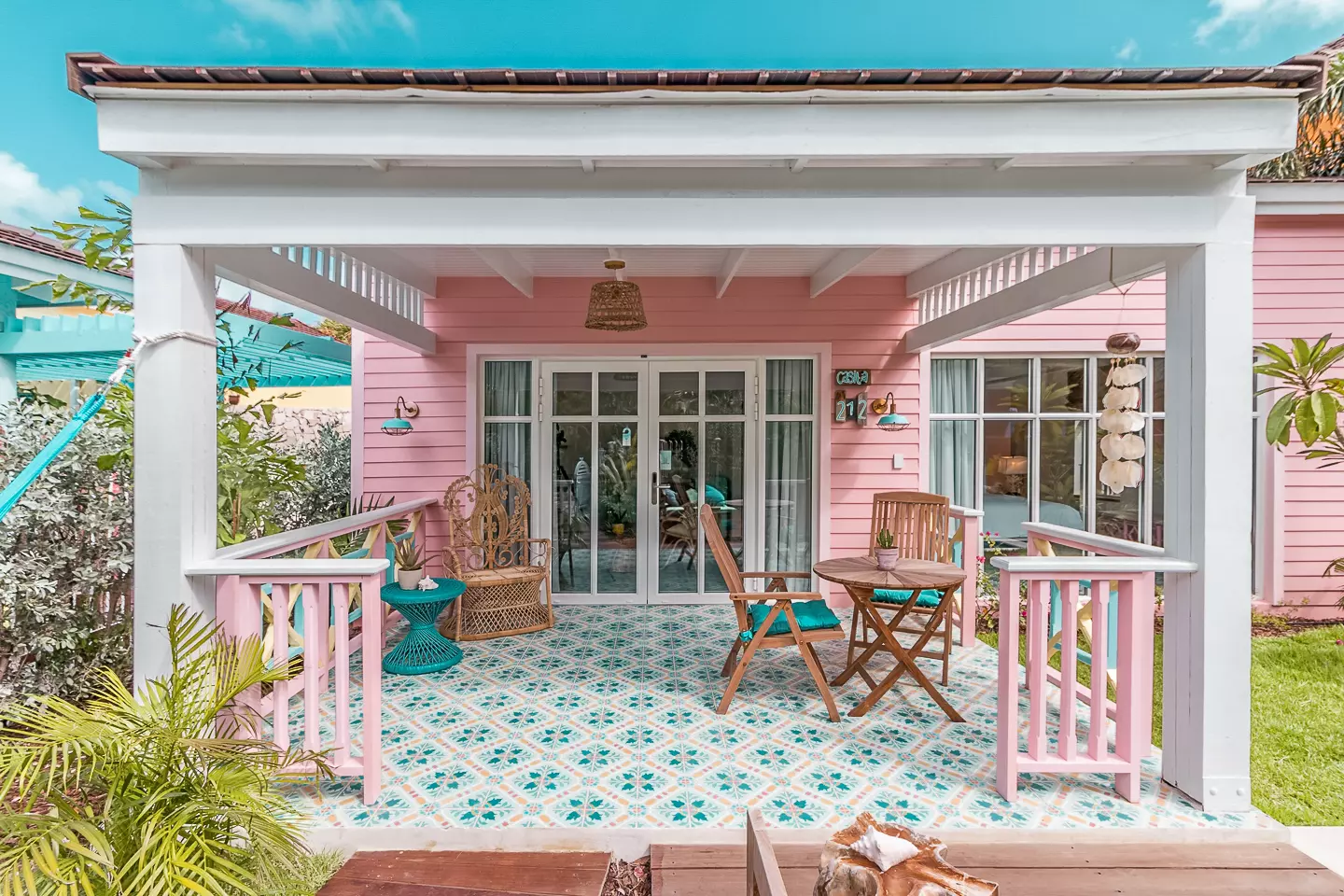
Aruba
Boardwalk Boutique Hotel
150m³/month of on-site reverse-osmosis freshwater — a third of the property's needs.
View Property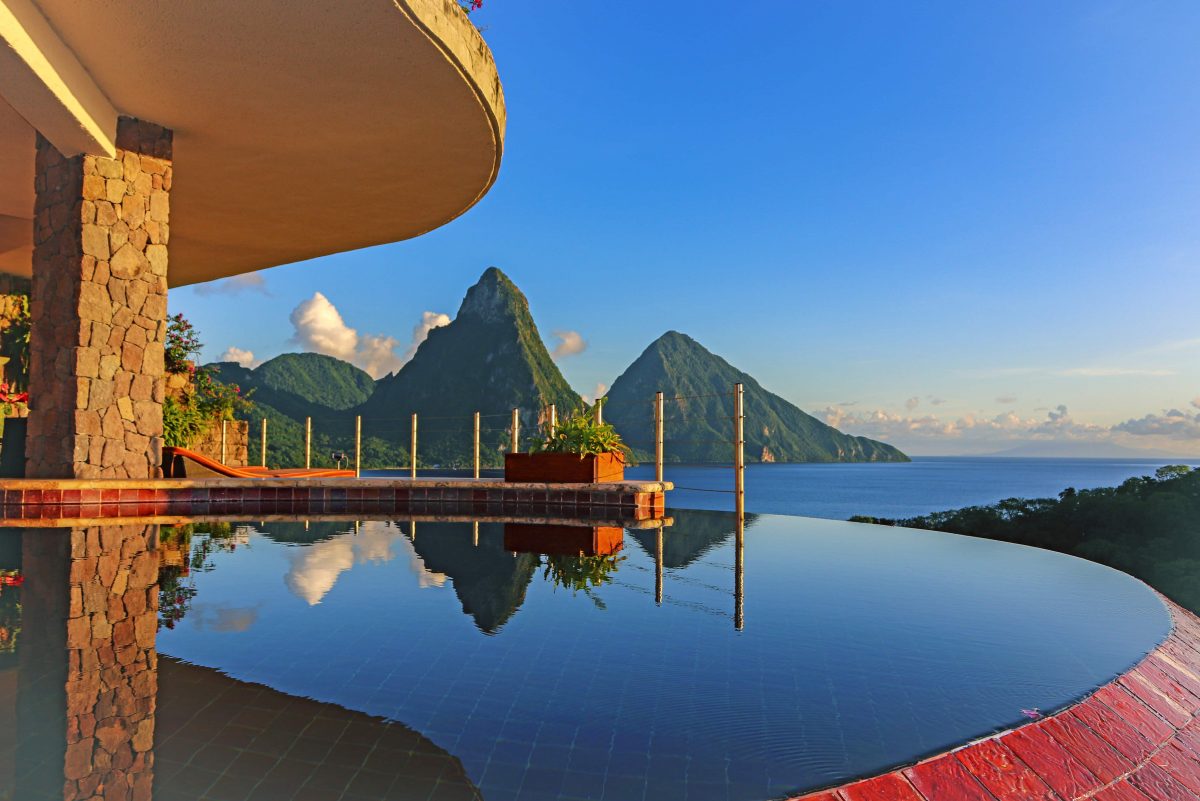
Jade Mountain · Saint Lucia
Open-wall sanctuaries above the Soufriere Marine Management Area, where the property's Coral Kaleidoscope program out-plants coral.
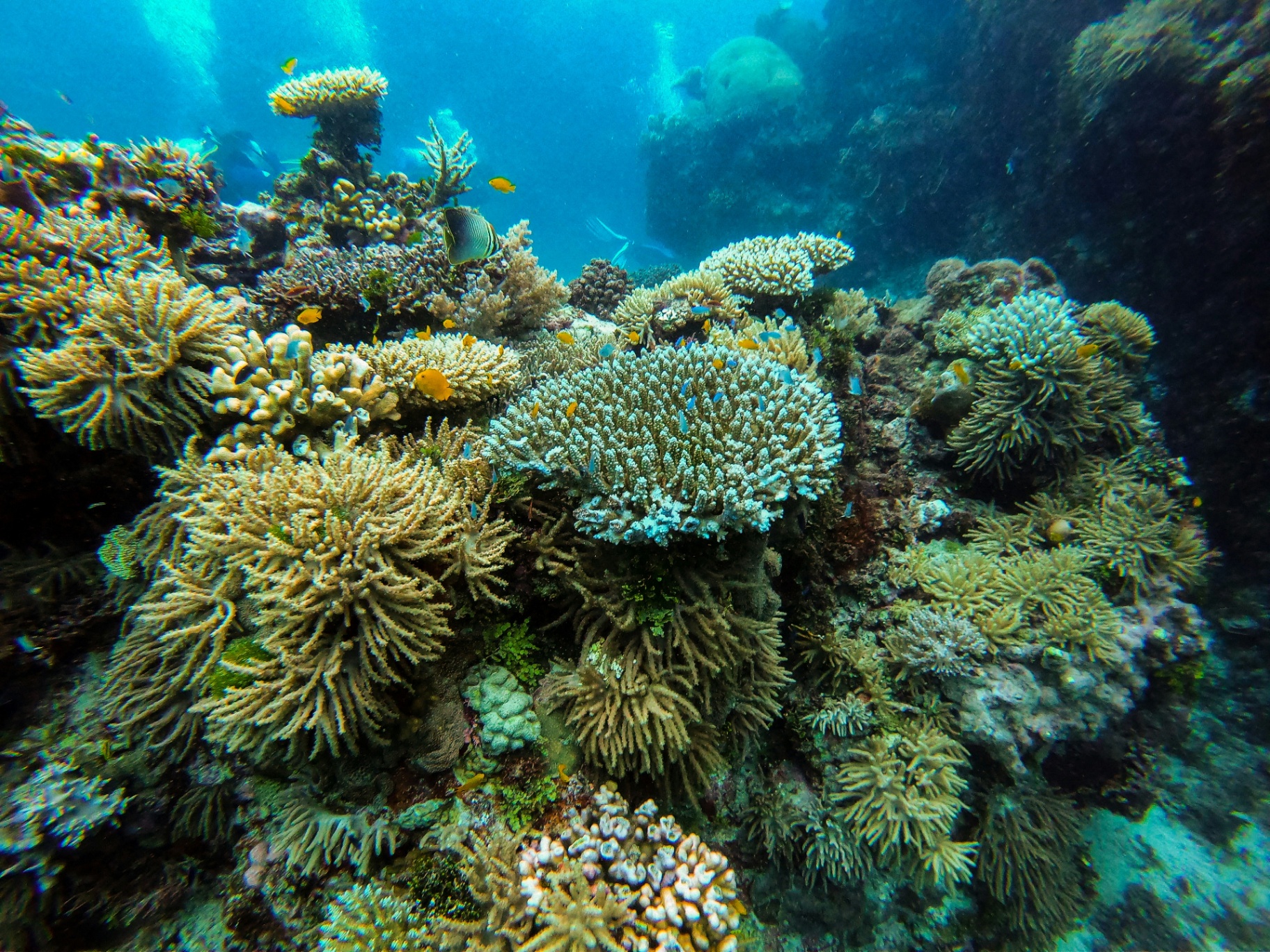
Reef Restoration · Caribbean
A healthy reef dissipates up to 97% of incoming wave energy — the natural infrastructure Jade Mountain and Rockhouse help protect.
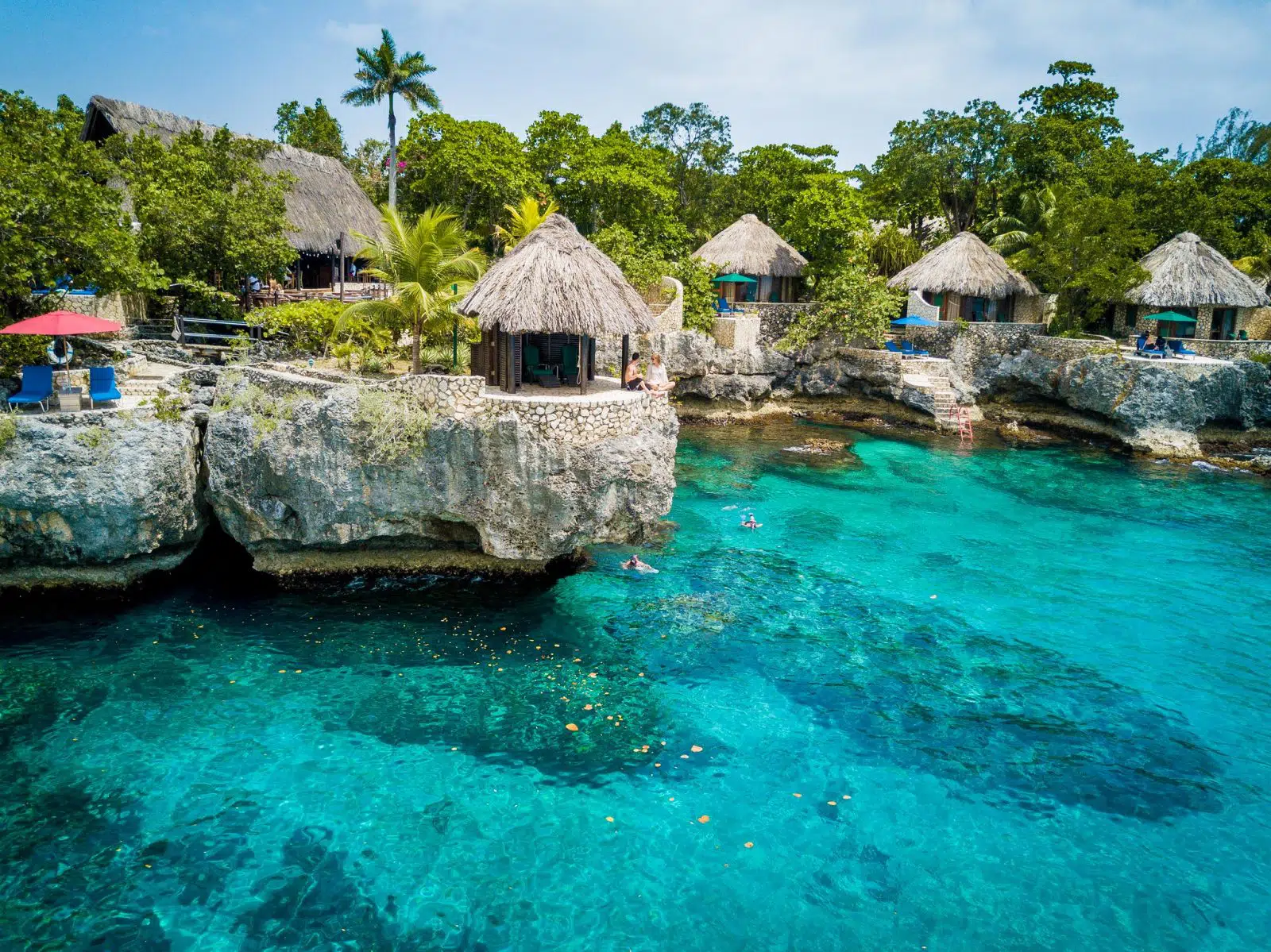
Rockhouse Hotel · Negril, Jamaica
Cliffside cottages above the reef-safe waters of the Negril Marine Park.
Seagrass meadows cover less than 0.1% of the ocean floor yet account for up to 18% of all carbon buried in marine sediment.
Belize
Expanding conservation beyond coral reefs
While coral reefs often dominate conversations around ocean conservation, this is a reminder that marine stewardship extends far beyond coral itself.
In Belize, Hamanasi Resort sits adjacent to thriving turtle grass meadows where endangered manatees graze. These seagrass ecosystems are among the planet's most important yet overlooked carbon sinks. Though seagrass meadows cover less than 0.1 percent of the ocean floor, they account for an estimated 10 to 18 percent of all carbon buried in marine sediment, locking it away at rates that can outpace tropical forest soil many times over, while also providing nursery habitats for countless marine species. Protecting them begins with everyday decisions. The resort exclusively uses natural and environmentally friendly products to prevent harmful chemical runoff from reaching these delicate waters. Beyond its own operations, Hamanasi supports two important regional initiatives. Through Fragments of Hope, a Belizean organization restoring coral ecosystems since 2006, resilient coral species are mapped, propagated, and transplanted to increase biodiversity and strengthen reef resilience. Simultaneously, its partnership with The Nature Conservancy Belize supports sustainable seaweed aquaculture, creating alternative livelihoods for fishers while generating habitat for juvenile marine species and helping reduce localized ocean acidification.
Collectively, these properties expand the definition of ocean conservation itself. The future of healthy seas may depend just as much on seagrass meadows and responsible coastal development as it does on coral reefs.
Hamanasi Resort · Belize
Where reef meets rainforest — adjacent seagrass meadows are among the ocean's most efficient carbon sinks.
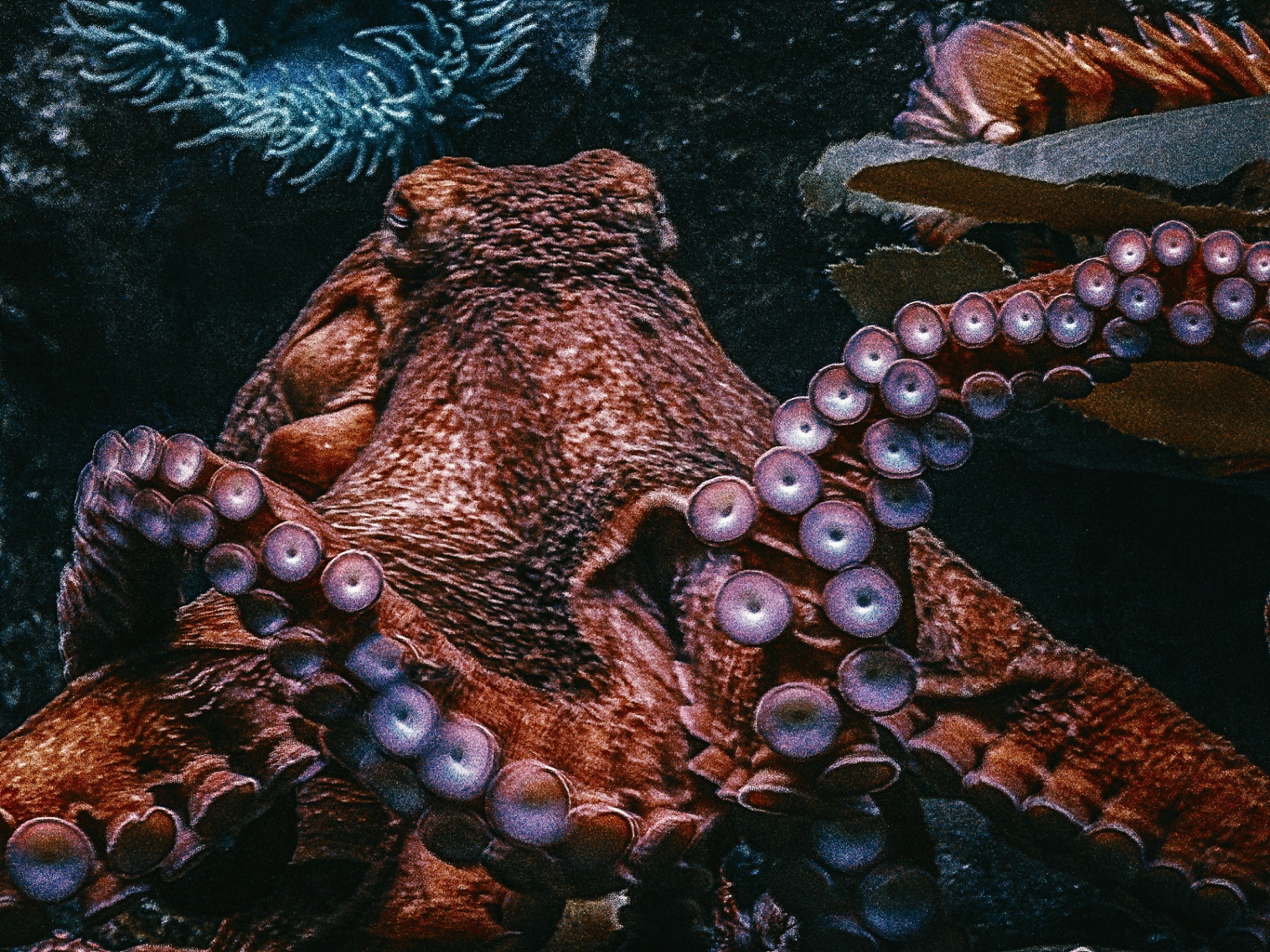
Reef Life · Belize Barrier Reef
Invertebrates protected by reef-safe sunscreen policies used across regional properties.
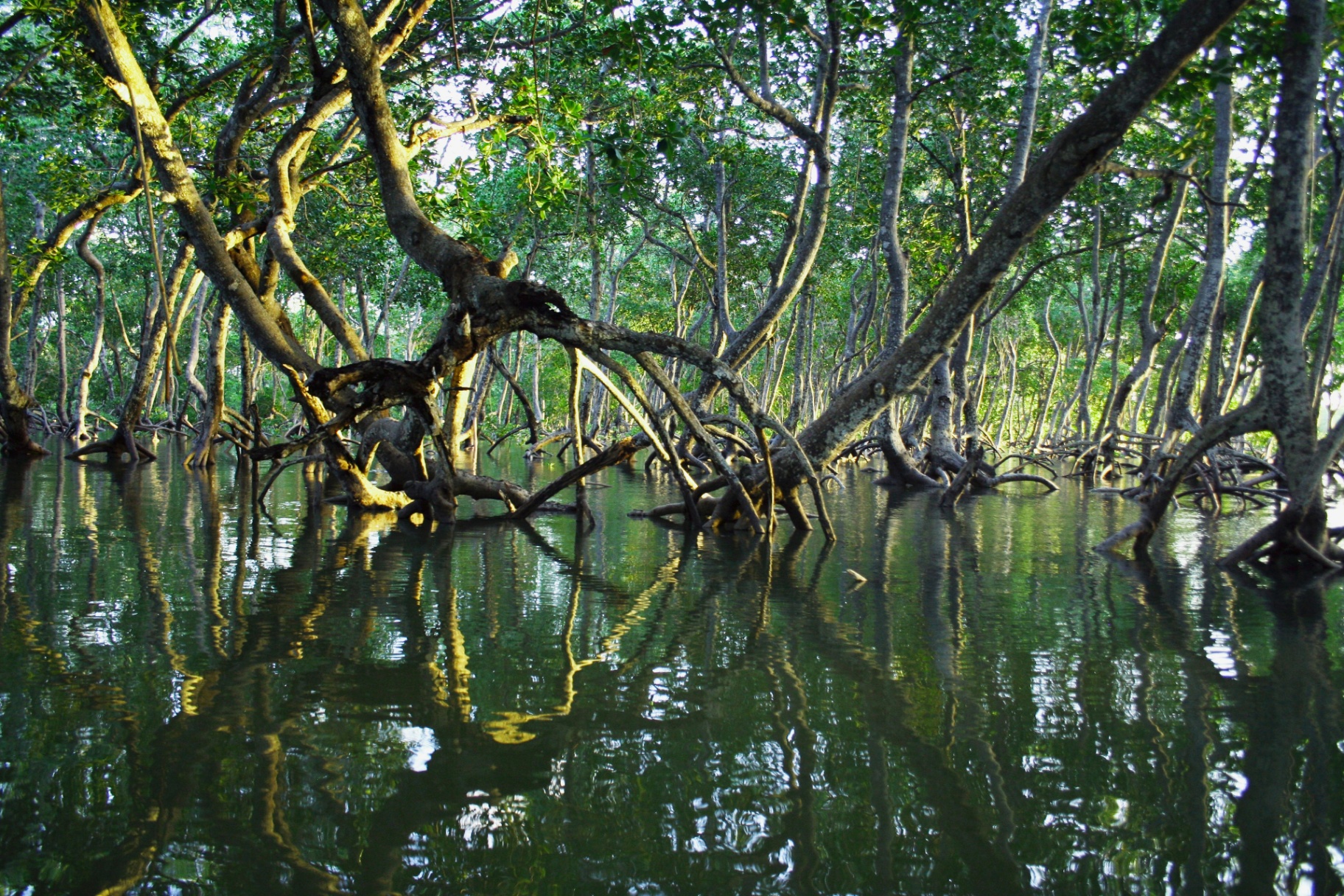
Mangrove Channels · Bocas del Toro
Nursery habitat for juvenile marine species — the front door of Tranquilo Bay Eco Adventure Lodge.
Where forest meets reef: on Isla Bastimentos and Rote, the coastline is protected by what sits above the tideline as much as below.
Remote Frontiers
Stewardship at the edge of the world
Some of the world's most compelling examples of regenerative coastal hospitality are found in remote landscapes where environmental fragility is impossible to ignore.
In Indonesia, Sardine Beach Rote sits on Rote Island, the southernmost island in the archipelago and one still largely untouched by large-scale development. The absence of major resorts across Rote has, so far, kept its reefs and beaches close to pristine, a condition local operators are increasingly expected to actively protect rather than simply inherit as visitor numbers to the island grow.
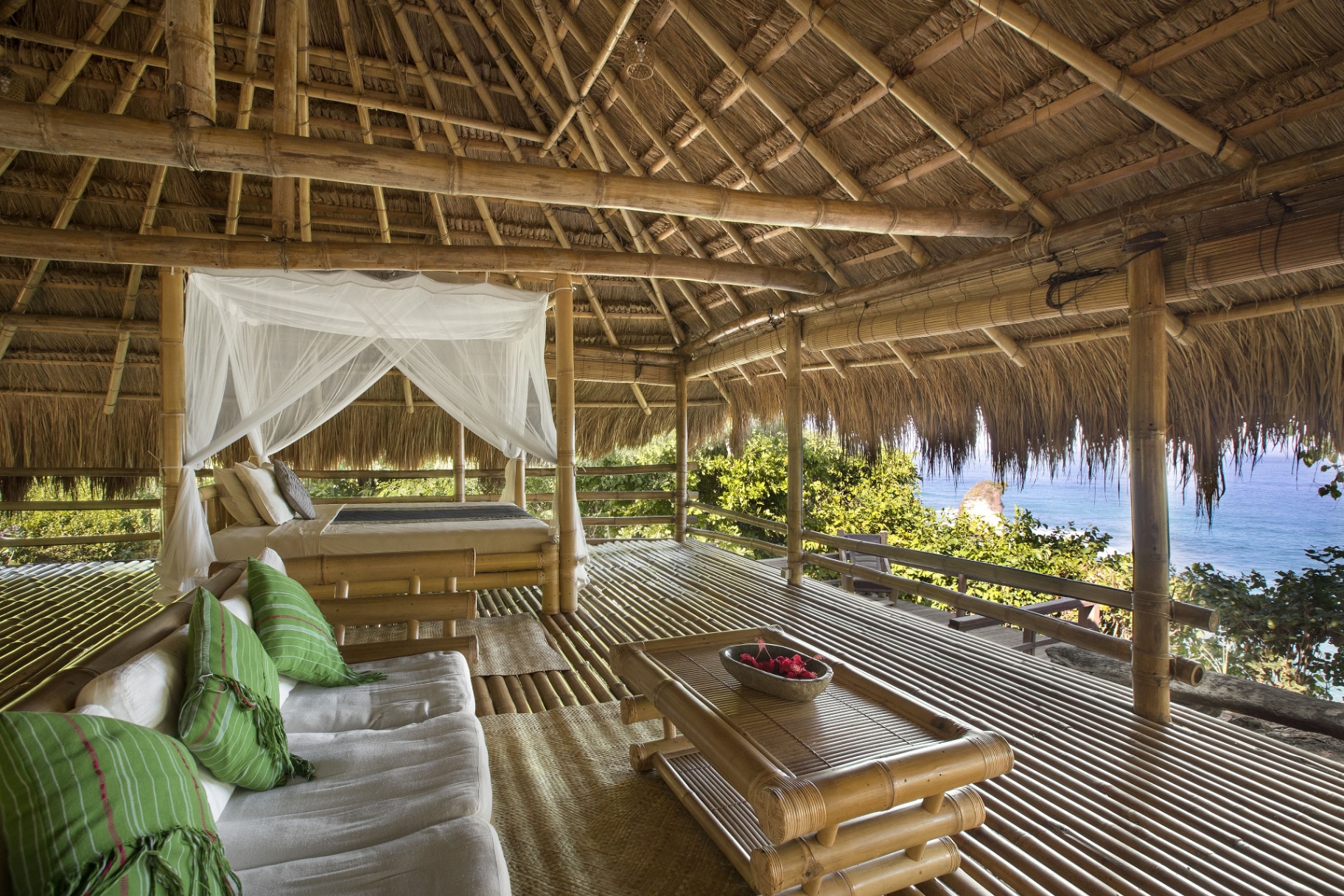
Nearby in Sumba, Ngalung Kalla built its self-sufficiency the hard way. What began in 2014 as a beachfront camp, started by a family who spent a decade working at Nihiwatu before striking out on their own, grew slowly into an eco surf and health retreat built almost entirely from materials sourced on-site: bamboo cured in seawater, reclaimed coconut trunks used as structural beams, and traditional alang grass roofing. By 2020, two deep bore wells combined with rooftop rainwater catchment had made the property water self-sufficient, a resilience that carried it through the pandemic's isolation without strain. Its gardens and agroforestry plots supply much of the kitchen's produce, composting toilets handle waste on-site, and a small working fleet of boats gives guests access to Sumba's surf breaks and reefs without adding pressure to the coastline.
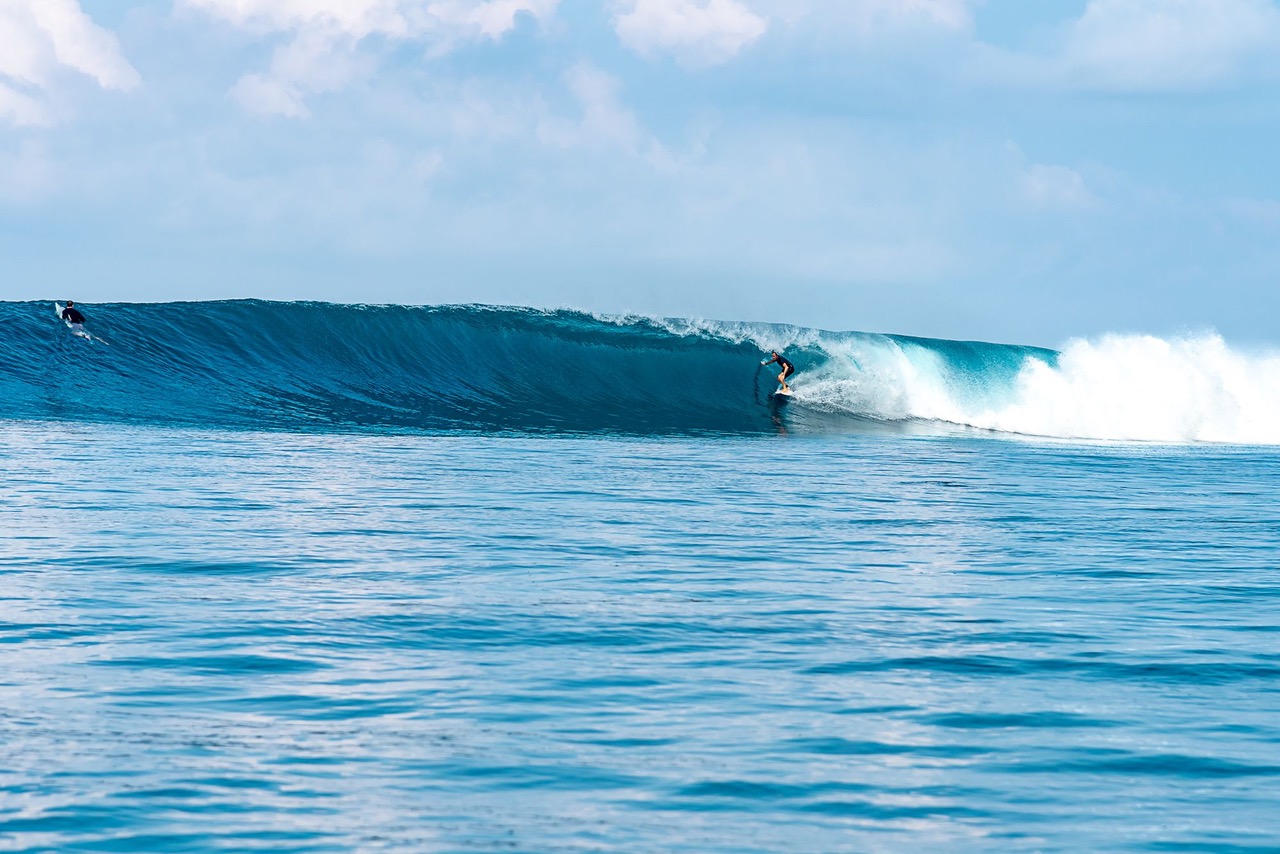
Ngalung Kalla · Sumba, Indonesia
Water self-sufficient since 2020; built almost entirely from bamboo cured in seawater and reclaimed coconut.
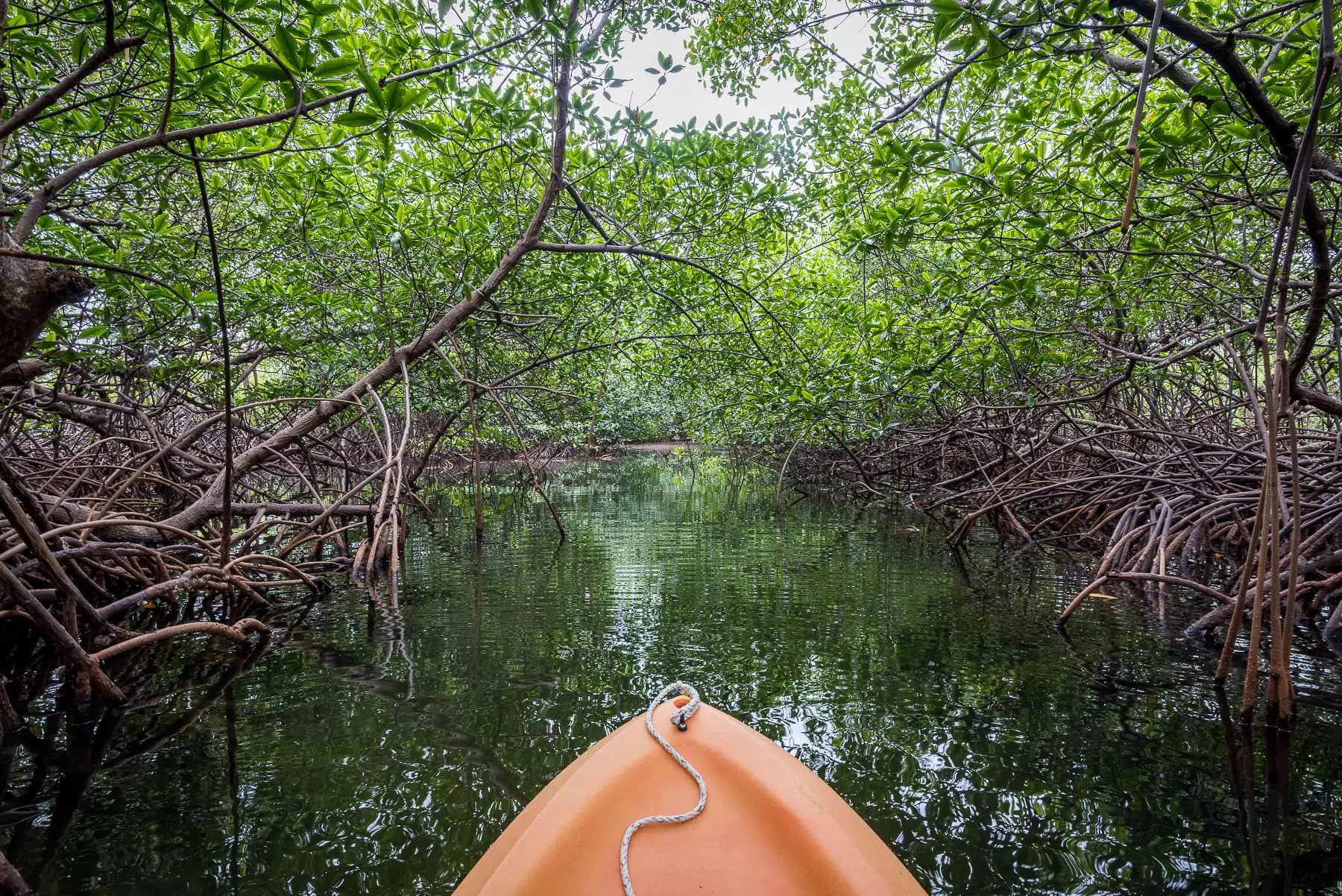
Tranquilo Bay · Bocas del Toro, Panama
8 developed acres of 200+ conserved — mangroves opening straight into Bastimentos National Marine Park.
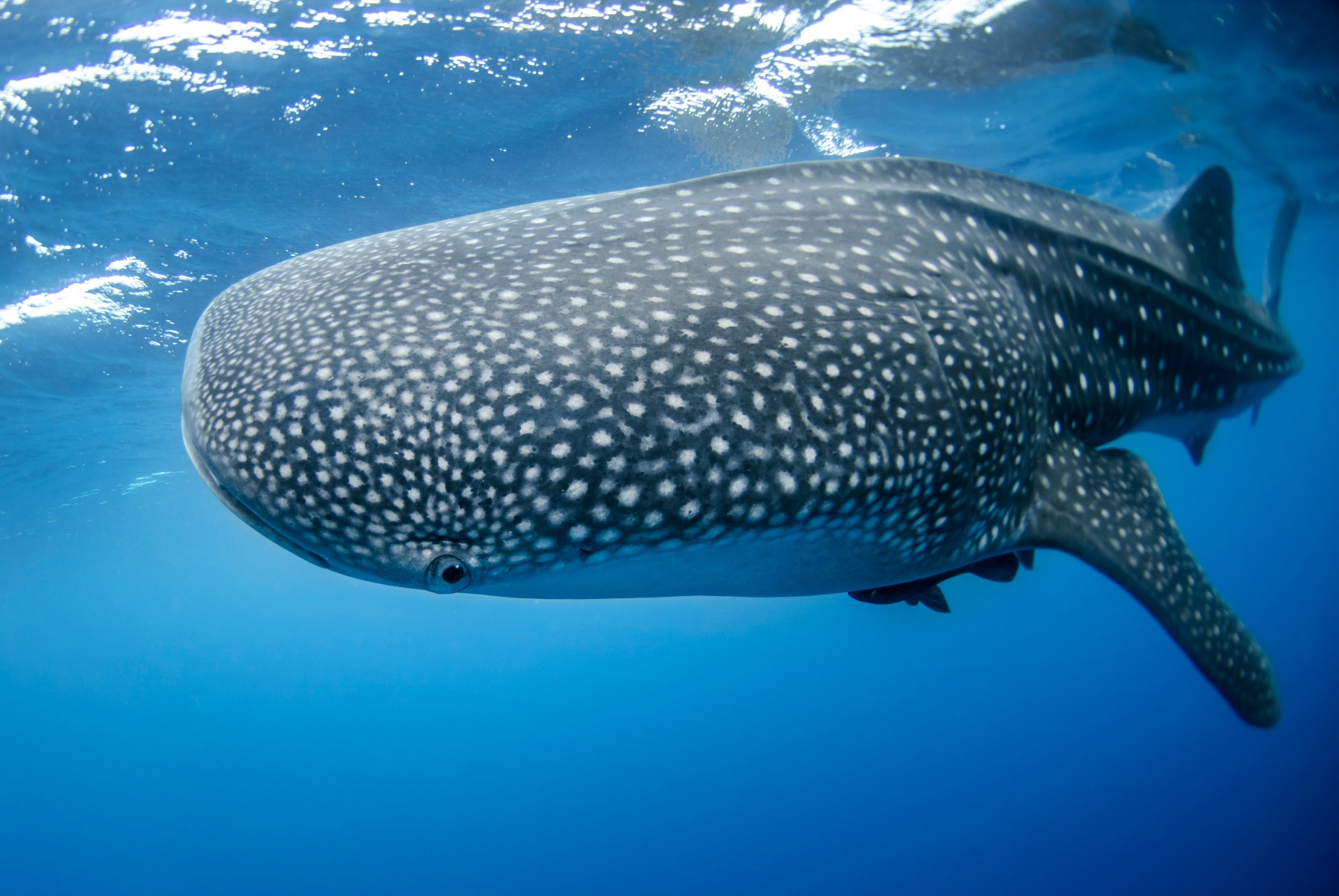
Pemba Channel · Tanzania
Waters recognised as among East Africa's most ecologically significant, protected by The Manta Resort's no-fishing zone.
In Panama, Tranquilo Bay Eco Adventure Lodge sits on Isla Bastimentos in the Bocas del Toro archipelago, reachable only by boat once guests land in Bocas Town. The lodge has deliberately developed just 8 of its more than 200 conserved acres, leaving the rest, along with a stretch of Caribbean coastline, as active forest and reef habitat. That reef sits inside the Bastimentos National Marine Park, so a morning snorkel moves guests directly from mangrove shallows into a protected coral system a few minutes offshore. Much of the guiding team comes from the Ngäbe community, whose knowledge of the surrounding rainforest and reef shapes how the lodge introduces guests to both.
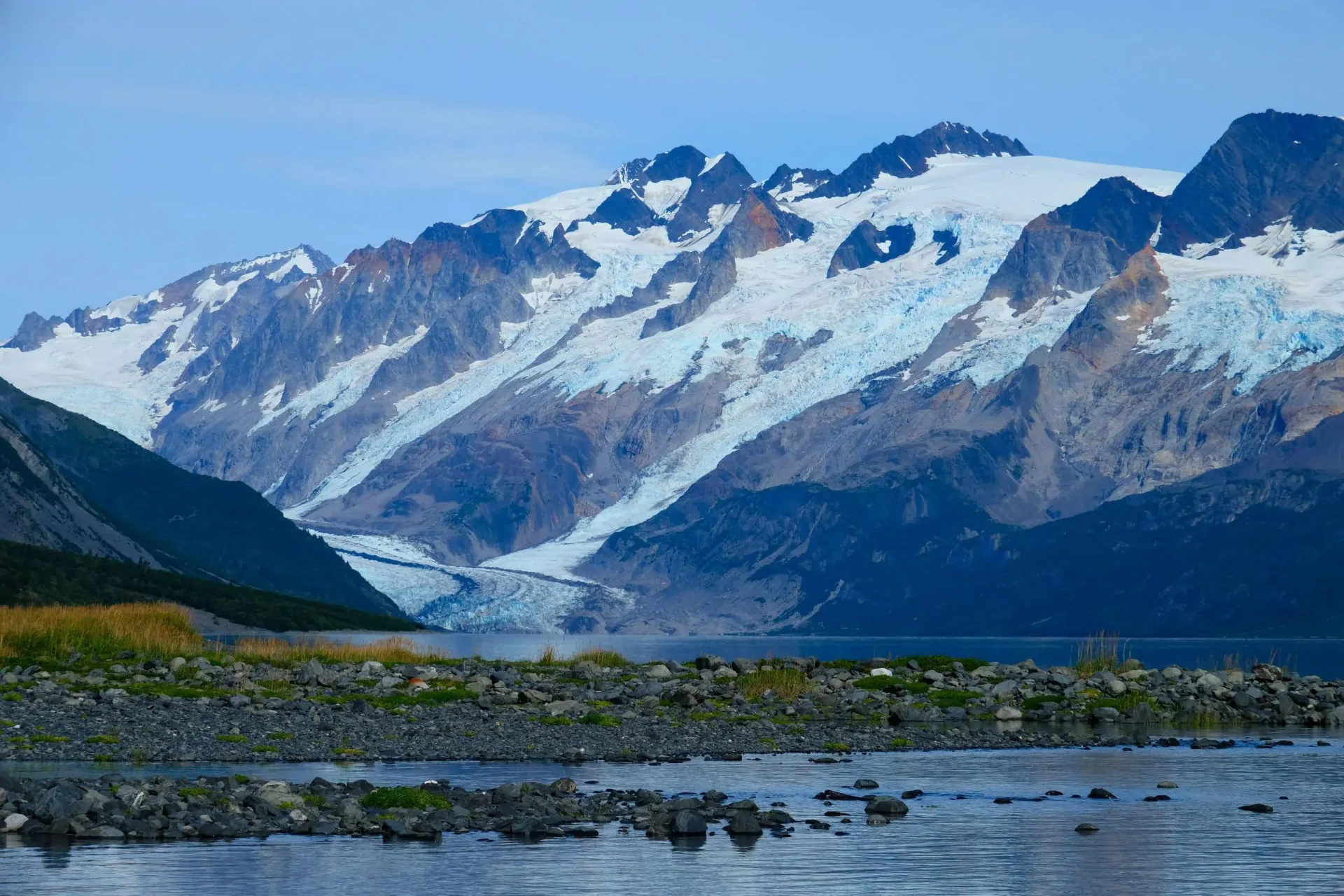
In Alaska, Within the Wild – Tutka Bay Lodge embraces a philosophy of intentional smallness. Accessible only by water taxi or floatplane, the lodge occupies a protected cove surrounded by millions of acres of wilderness. With only six guest accommodations, its environmental footprint remains intentionally limited. The surrounding watershed does quiet, essential work of its own: coastal old-growth forest filters rainwater before it reaches the bay, and the resulting cold, clean runoff feeds the salmon streams that anchor the region's entire marine food web, from seabirds to the bears fishing its banks. The property gathers its own spring water, educates guests about responsible visitation, and works closely with local communities and conservation organizations to protect these connected systems. Through its nonprofit arm, Be the Wild, it supports broader conservation initiatives throughout the region.
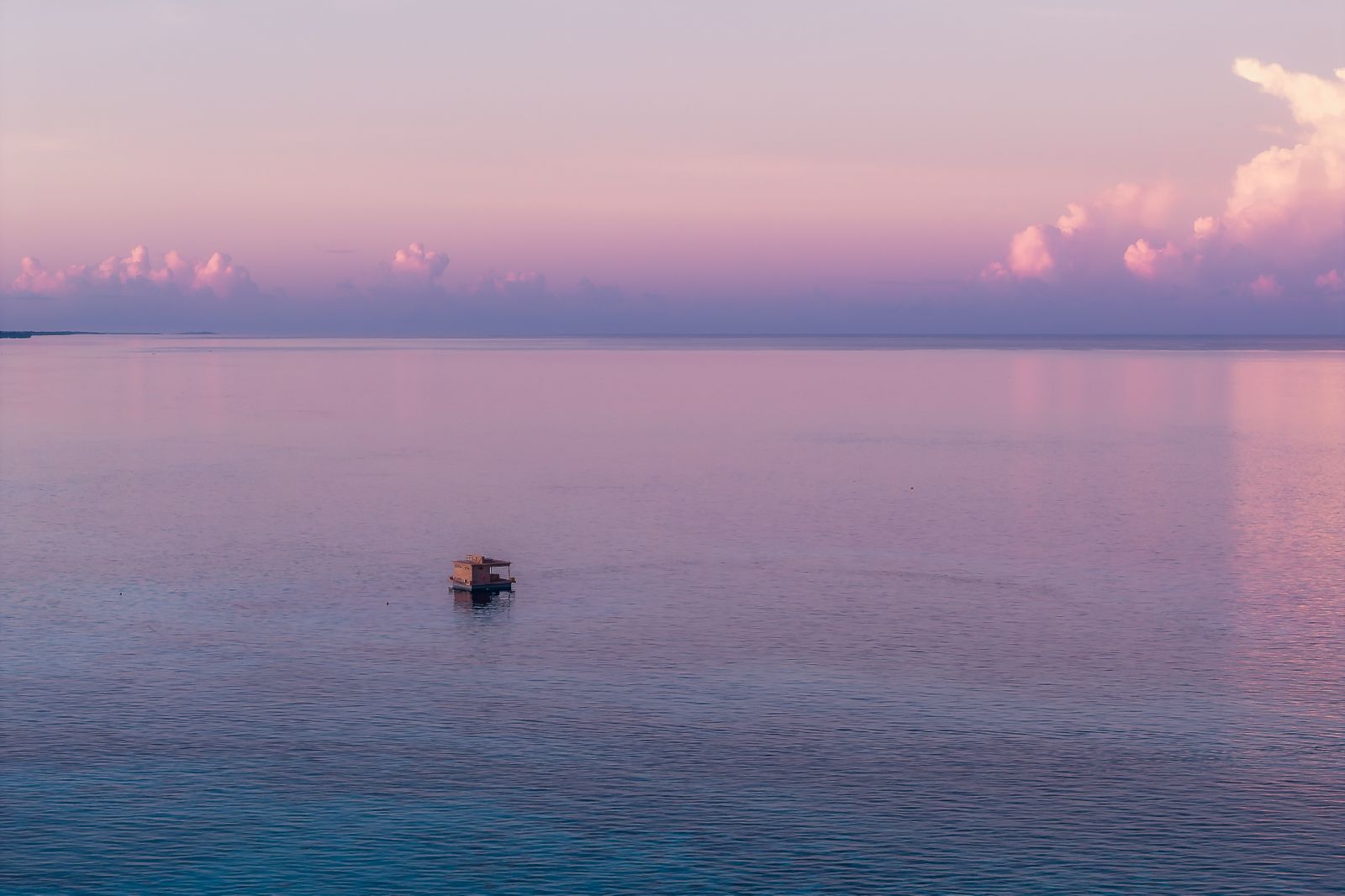
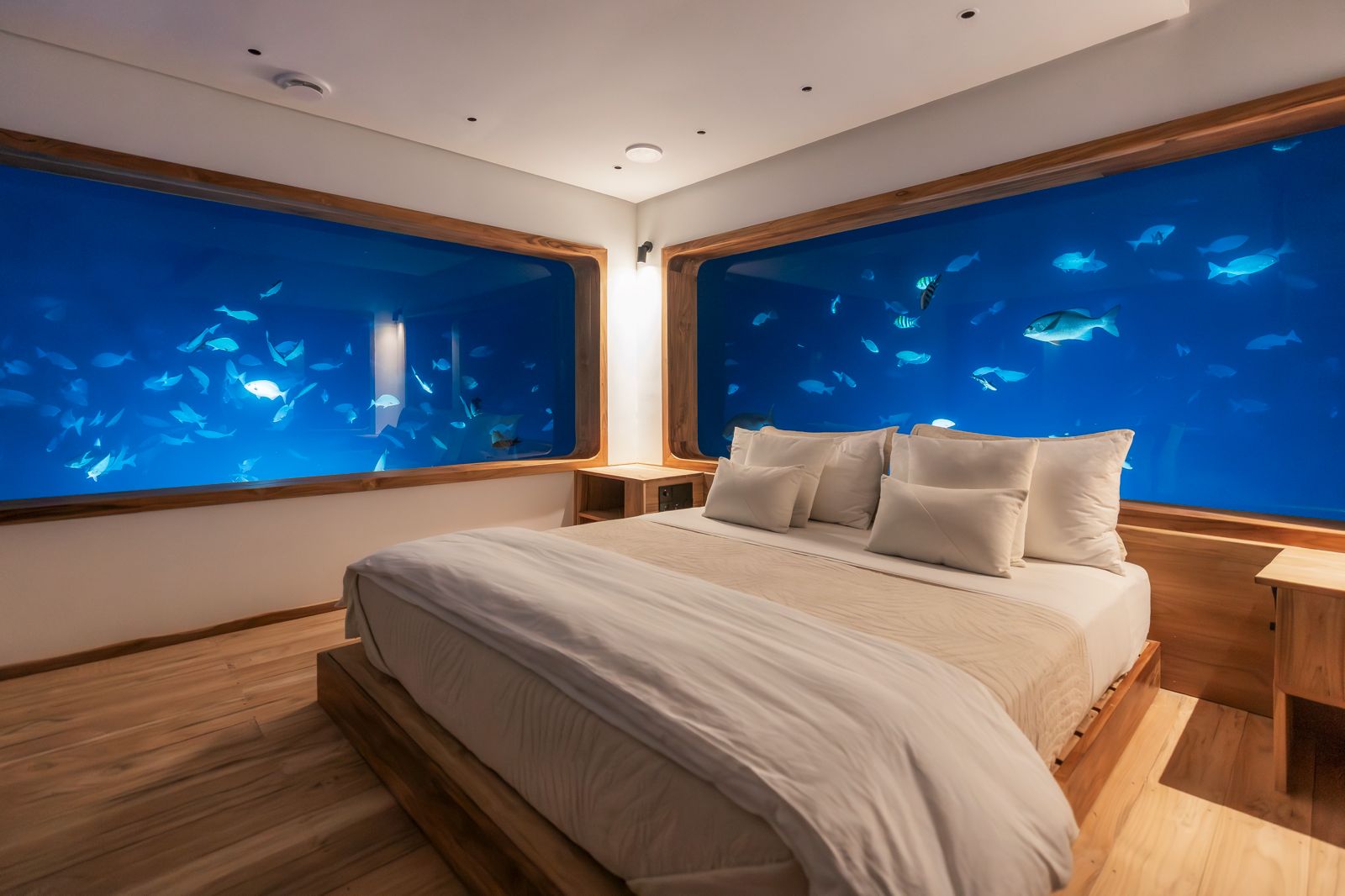
Off Tanzania's coast, The Manta Resort occupies a remote corner of Pemba Island in the Zanzibar Archipelago, reachable only by a speedboat transfer from the airport. Its best-known feature, a three-level floating room submerged four meters into the Pemba Channel, was designed less as a novelty than as a way to concentrate guest activity in one carefully monitored spot so the surrounding reef stays undisturbed. The resort has established a no-fishing zone around its house reef and works with local fishermen on sustainable practices, while proceeds from the floating room are channeled through the Kwanini Foundation into the management of the Pemba Channel Conservation Area, funding community programs, reef monitoring, and ranger-led protection of waters recognized as among East Africa's most ecologically significant.
The Manta Resort · Pemba, Tanzania
Sunset over the Pemba Channel Conservation Area, funded in part by proceeds from the property's submerged floating room.
The Manta Resort · Underwater Room
A three-level room submerged four metres into the reef — designed to concentrate guest activity in one monitored spot.
Tutka Bay Lodge · Alaska
Glacial runoff feeding the salmon streams that anchor the region's entire marine food web.
Boardwalk Boutique Hotel · Aruba
On an island reliant on desalination, the property produces nearly a third of its freshwater on-site.
In these remote places, stewardship is not an optional initiative layered onto hospitality. It is the foundation upon which hospitality exists.
Conclusion
What unites these properties is not a single conservation program or environmental certification. It is a profound shift in perspective. They understand that the ocean is no longer treated as an amenity to market, but as a relationship to maintain.
Guests are no longer passive observers, but active participants in restoration. Communities are not separate stakeholders, but essential partners in ecological resilience. And hospitality itself is no longer measured solely by comfort or luxury, but by the health of the ecosystems left behind.
As climate pressures intensify, coastal destinations will increasingly face a choice: continue extracting value from the environments that attract visitors, or become active agents in their recovery. These properties understood that being close to the sea means helping ensure there will be a sea worth returning to.
Featured Remote-Frontier Members
Sumba, Indonesia
Ngalung Kalla
Water self-sufficient since 2020; built from bamboo cured in seawater and reclaimed coconut.
View Property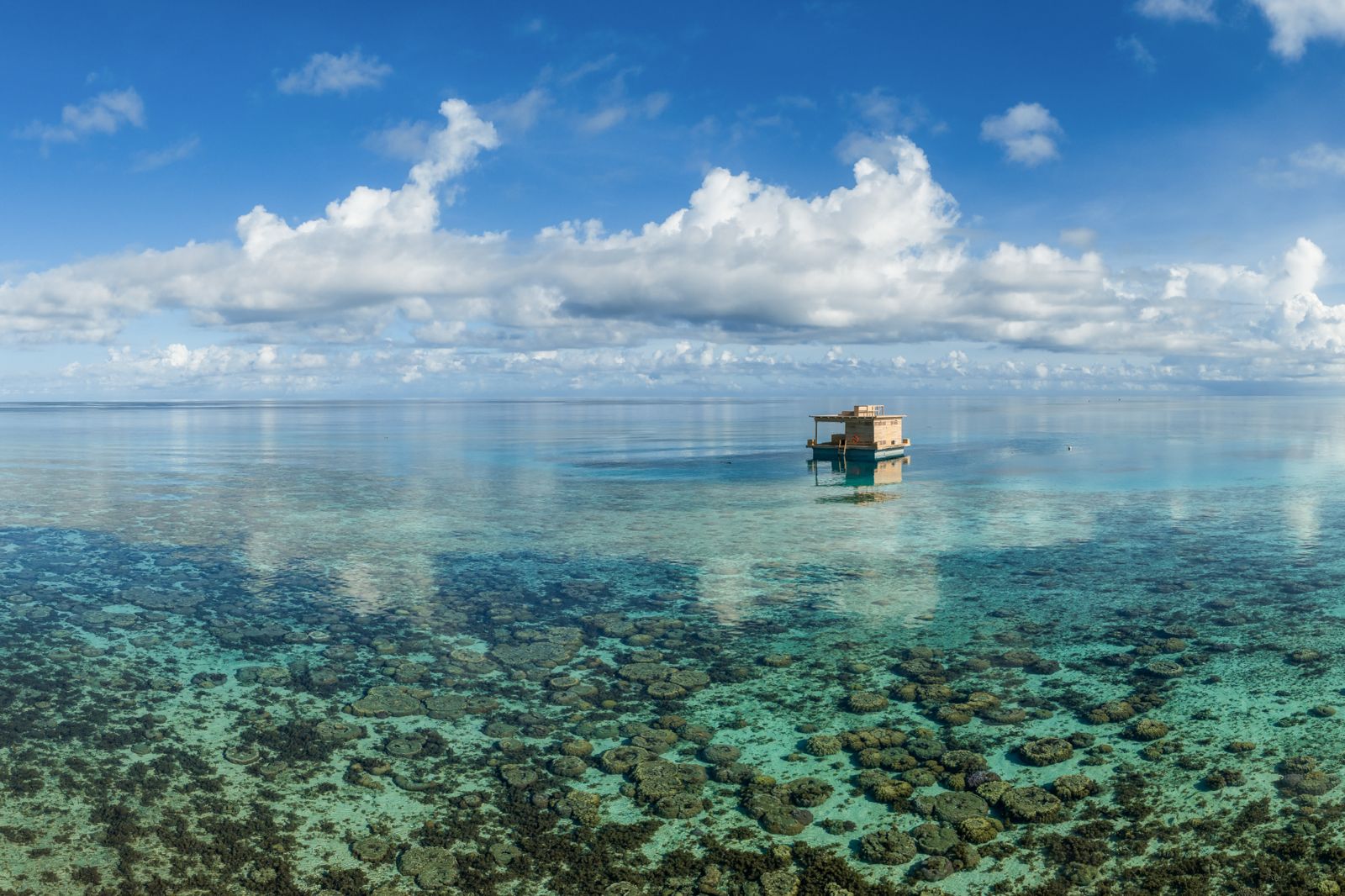
Pemba Island, Tanzania
The Manta Resort
No-fishing zone around the house reef; floating-room proceeds fund the Kwanini Foundation and the Pemba Channel Conservation Area.
View Property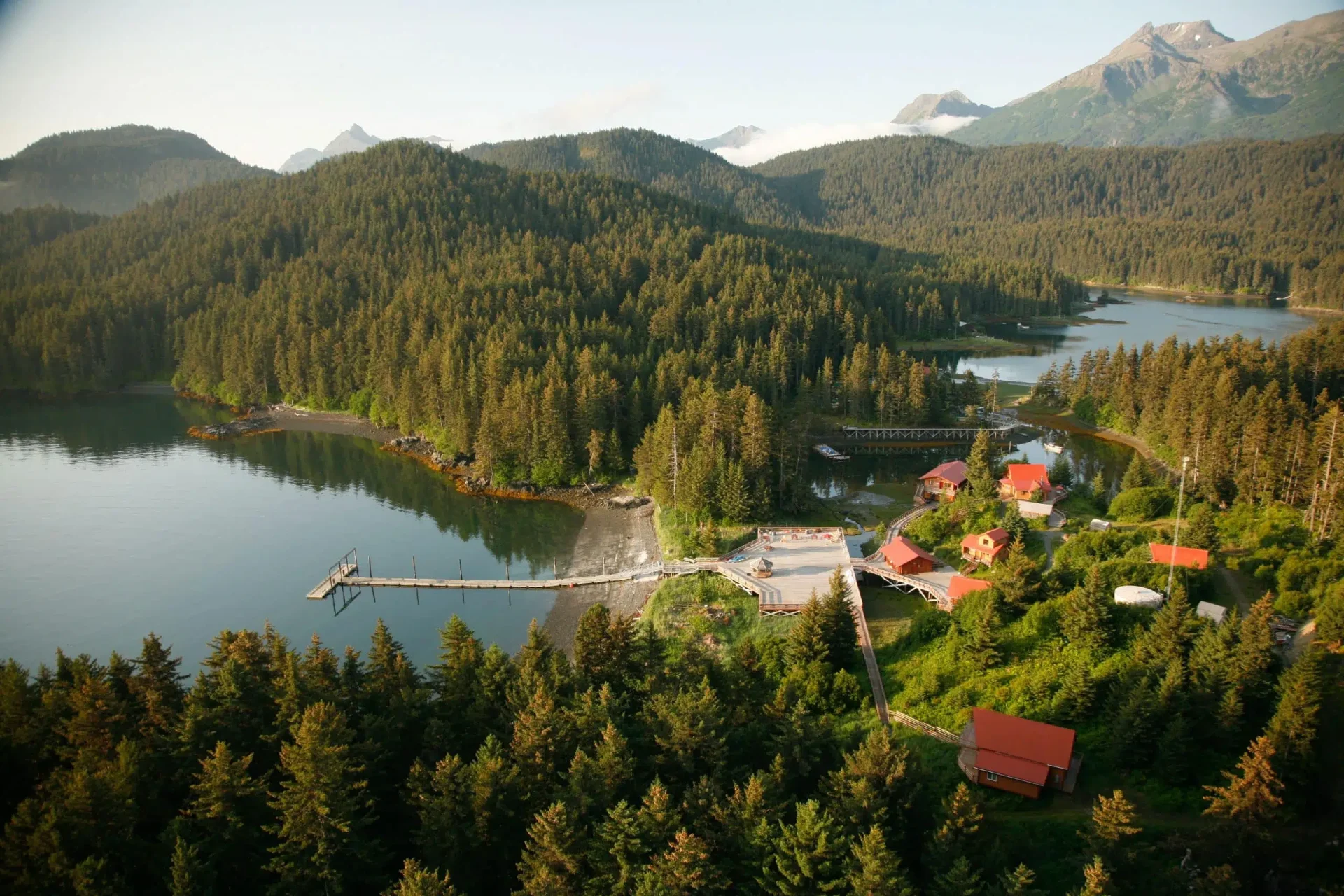
Alaska, USA
Tutka Bay Lodge
Six accommodations inside a protected cove; nonprofit arm Be the Wild funds regional conservation.
View PropertyWhere to stay
Suggested regenerative hotels
Continue the journey
Curated itineraries
11 Days · Indonesia
Remote Surf: Sumba & Rote
Eleven days threaded across two of eastern Indonesia's most far-flung islands — chasing waves, slow mornings, and the kind of barefoot quiet that's getting harder to find anywhere else.
View itinerary7 Nights · Belize
Reef & Rainforest: Belize
A seven-night cadence alternating between the second-longest barrier reef on earth and the jungle foothills of the Maya Mountains — diving, snorkeling, cave tubing, and a night hike through the world's first jaguar preserve.
View itinerary