
Four Metres Below:
The Underwater Room Redefining Regenerative Luxury
There is a room at the bottom of the Indian Ocean where the world looks entirely different.
Twenty metres below the surface off Pemba Island, the water holds a particular quality of light: shifting, silver-green, alive in a way that is difficult to articulate until you have witnessed it from the inside. Guests who have slept in the new Underwater Room at The Manta Resort describe the experience in similar terms. Humbling. A reminder that the ocean was never ours to begin with.
That feeling is not accidental. It is, in fact, the whole point.
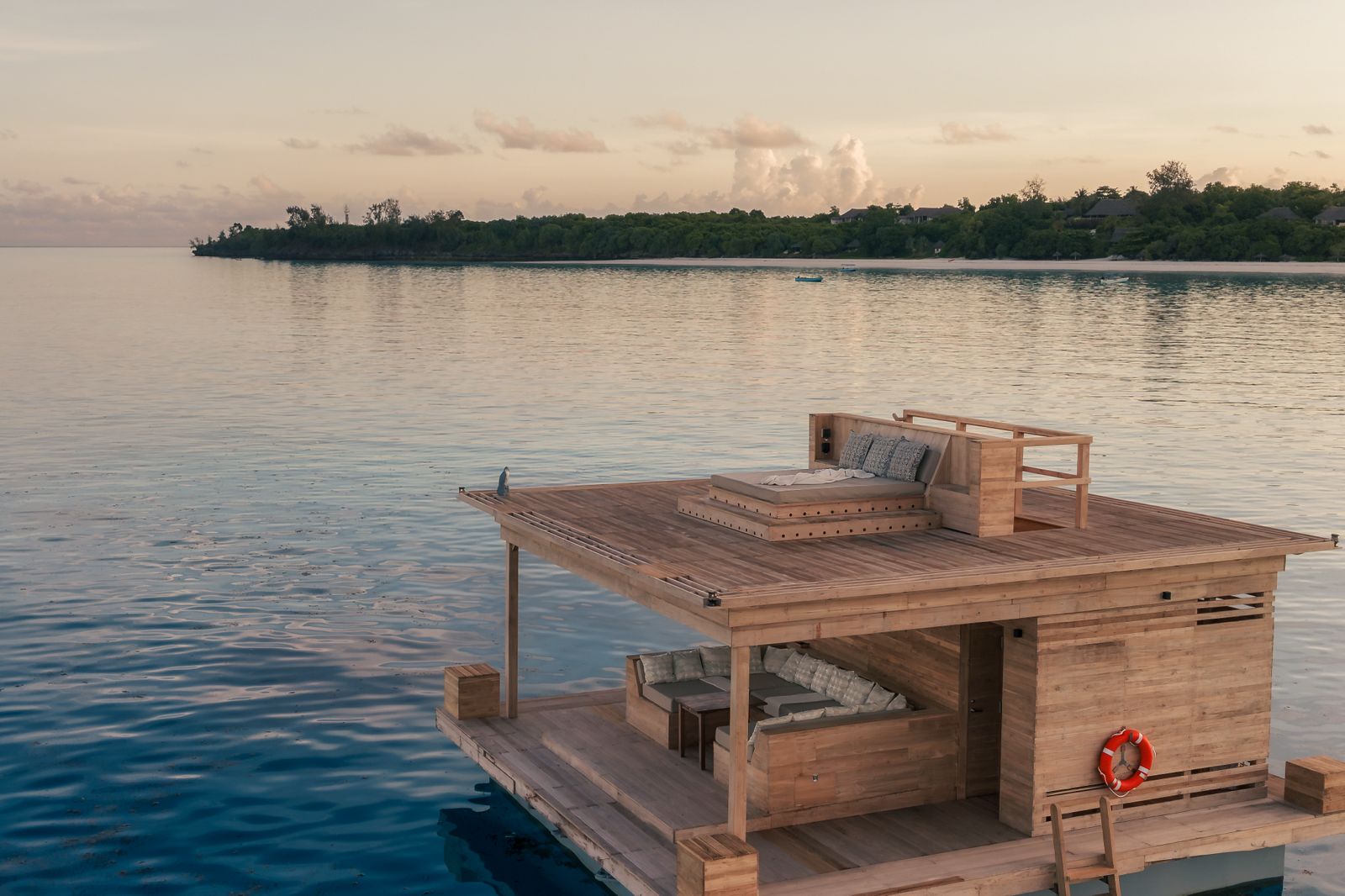
The reef around Pemba Island — now part of the Kwanini Marine Conservation Area.
What We Stand to Lose
The numbers behind a fragile ocean
The numbers are worth sitting with before we talk about what one resort is doing on a remote island off the Tanzanian coast.
From January 2023 to March 2025, bleaching-level heat stress impacted 84% of the world's coral reefs, reaching 82 countries, territories and economies. During the first global coral bleaching event in 1998, just 21% of reefs experienced bleaching-level heat stress. Scientists have called the fourth and most recent global bleaching event "unprecedented," and a widely used bleaching prediction platform had to add three entirely new alert levels to its scale to indicate the heightened risk of mass coral mortality.
A 2024 reassessment by the IUCN Red List found that 44% of reef-building coral species globally are now at risk of extinction, up from one third when they were last assessed in 2008. The Intergovernmental Panel on Climate Change warns that up to 90% of corals could be lost by 2050 at 1.5°C of warming, and up to 99% at 2°C.
Beneath the surface, the fishing picture is equally urgent. According to the FAO's State of World Fisheries and Aquaculture Report 2024, the share of overfished stocks has increased from 35.4% to 37.7% over just two years, continuing a trend observed across several decades. Over one third of marine mammals and nearly one third of sharks and reef-forming corals are now threatened with extinction globally, with fishing driving the greatest share of marine biodiversity loss.
Ocean acidification alone could eliminate up to 54 million jobs and jeopardize $180 billion in annual fisheries output through its impacts on the marine species that coastal communities depend on.
The ocean covers more than 70% of this planet. It regulates climate, produces more than half the oxygen we breathe, and sustains the livelihoods of more than three billion people. It is also, by every scientific measure, under a pressure it has not experienced in recorded human history.
World Oceans Day is a moment to sit with that reality. It is also a moment to ask what is actually possible when the relationship between tourism, community, and ecosystem is built on something other than extraction.
A Room Built for Reverence
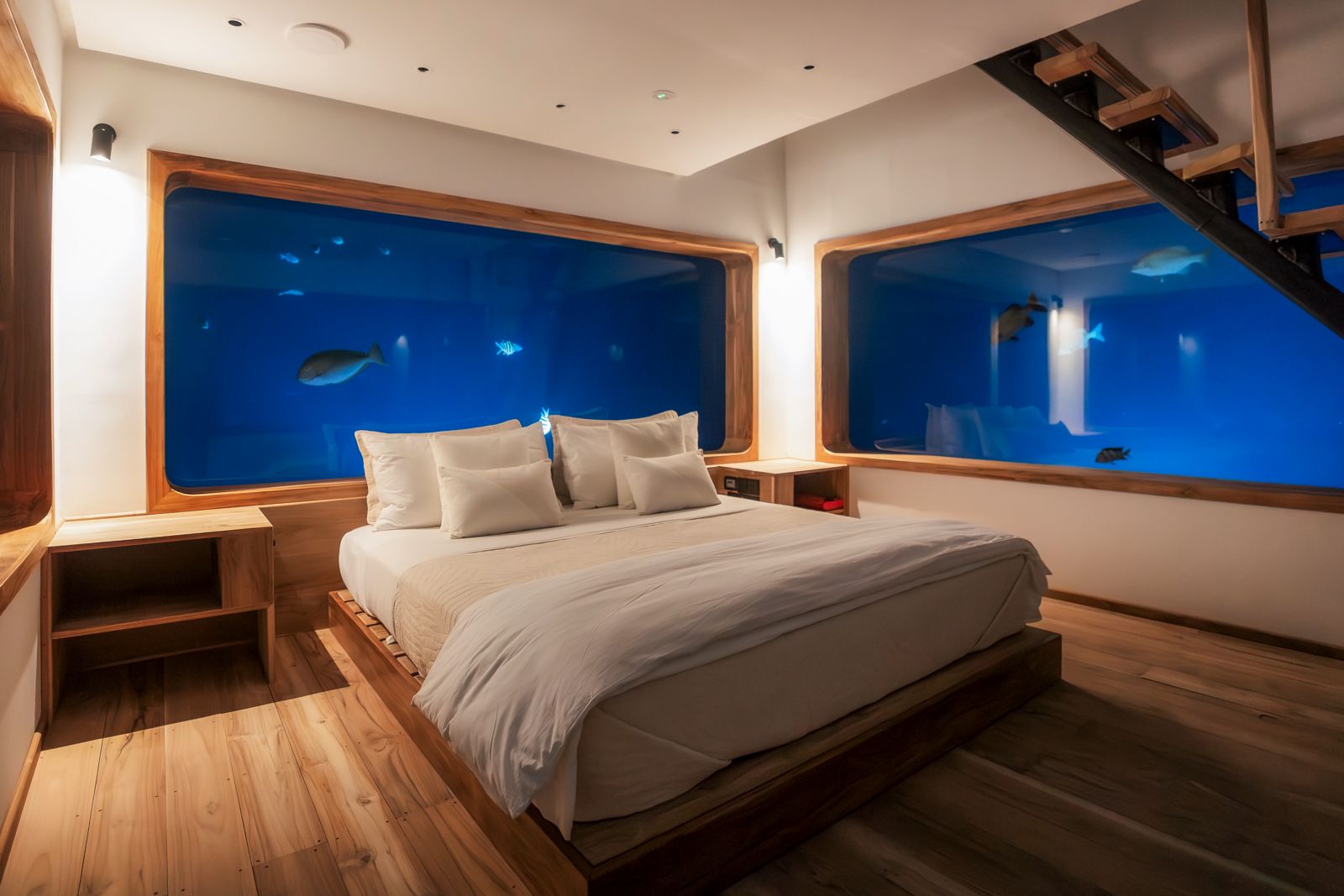
The new Underwater Room at The Manta Resort
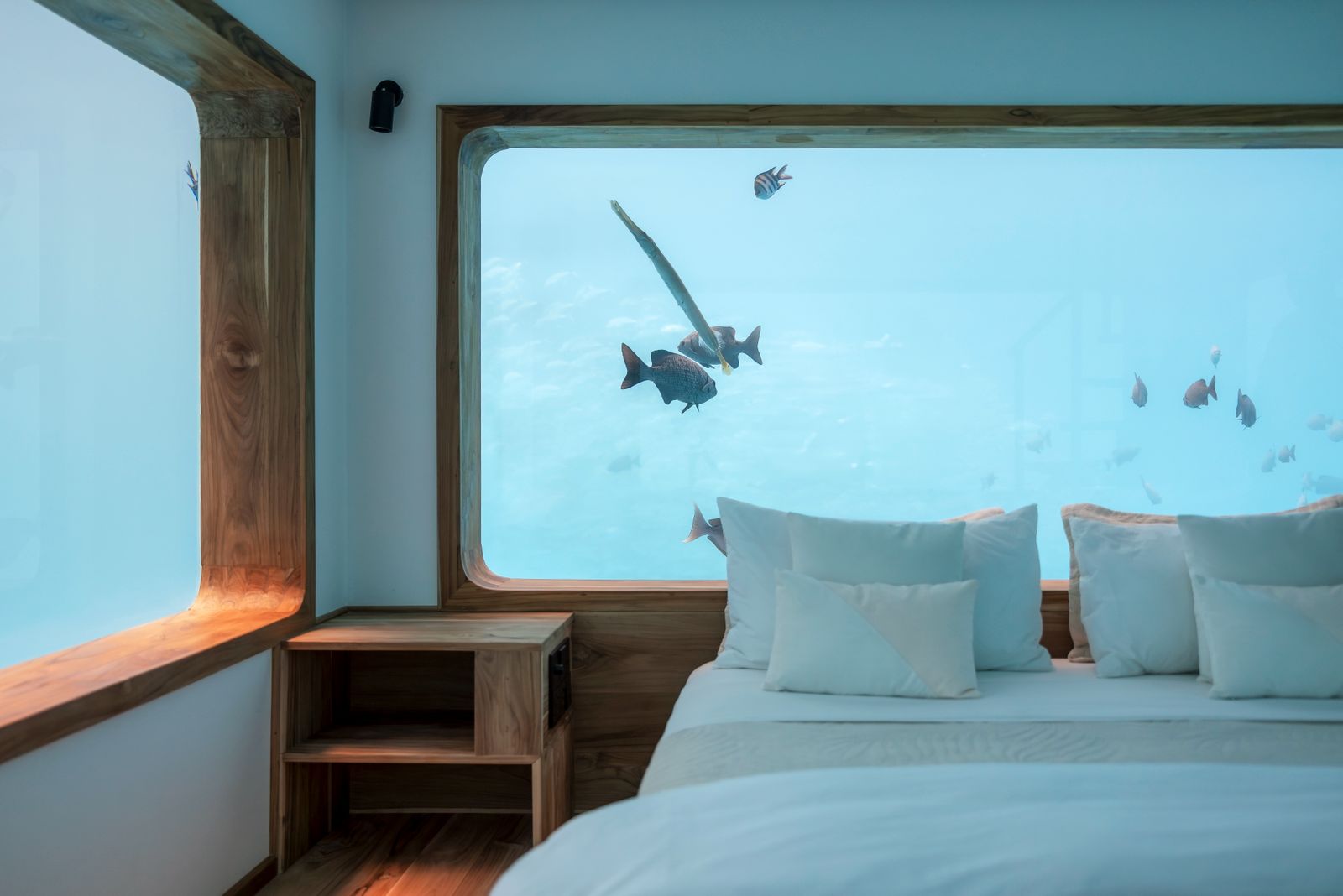
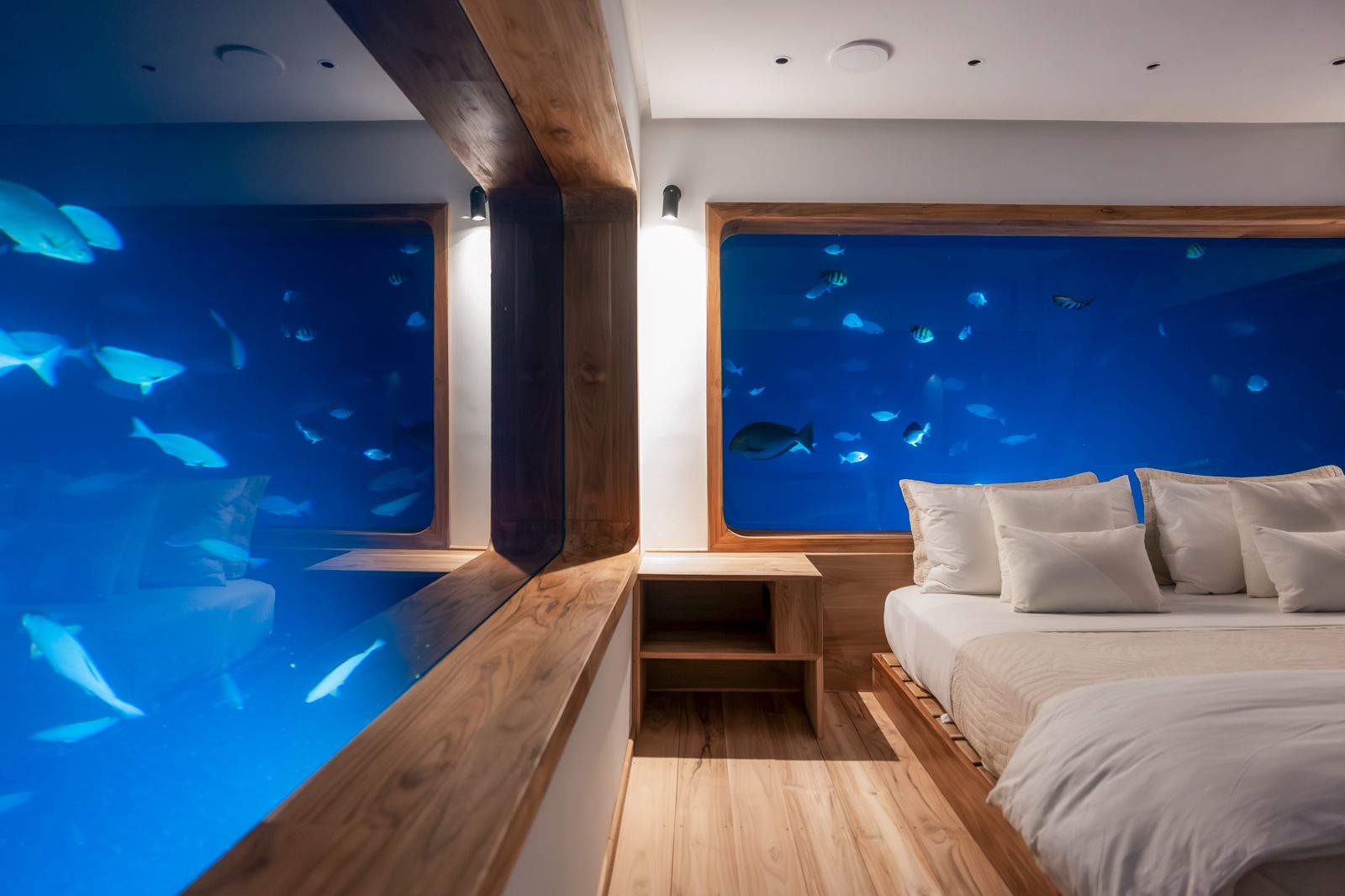
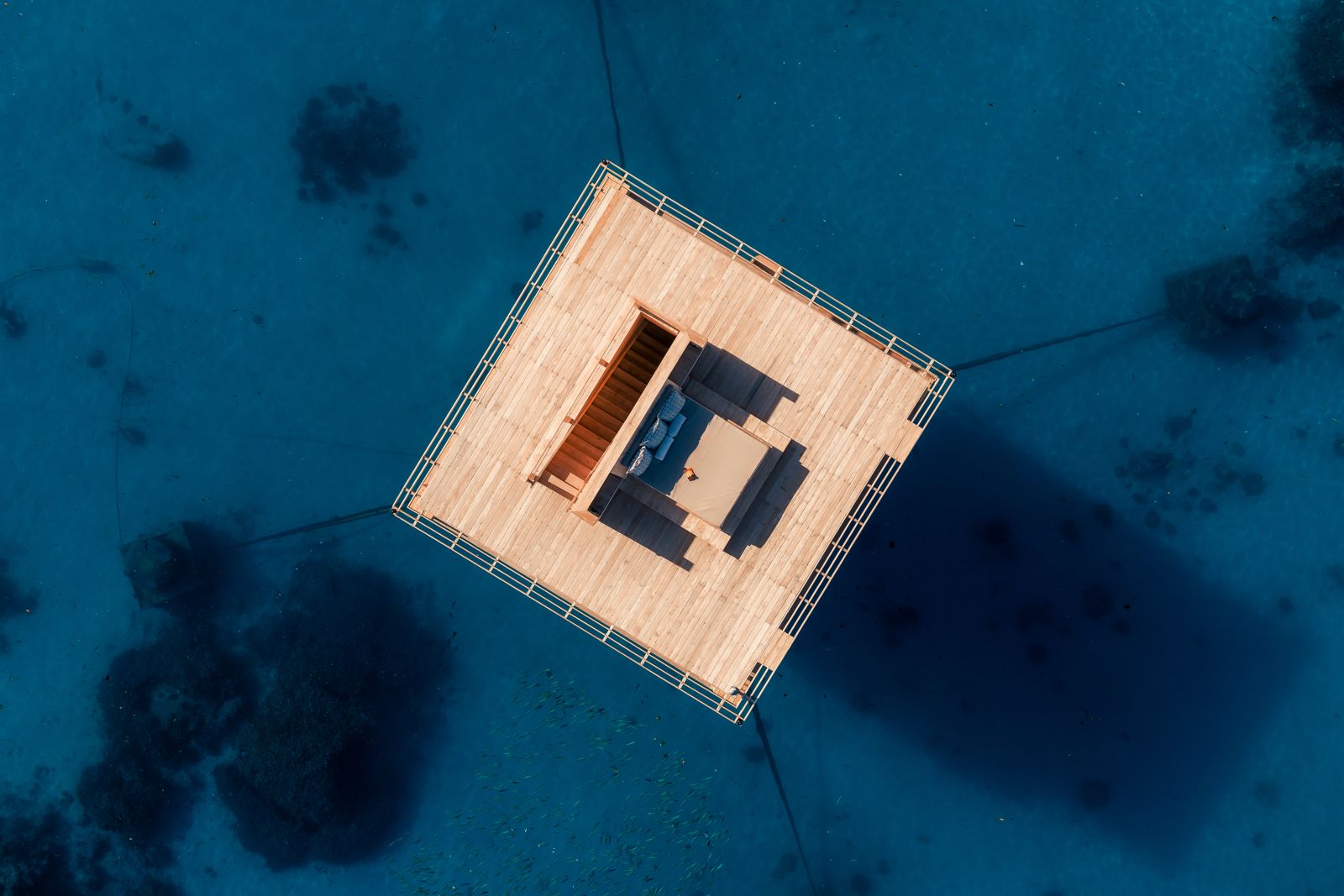
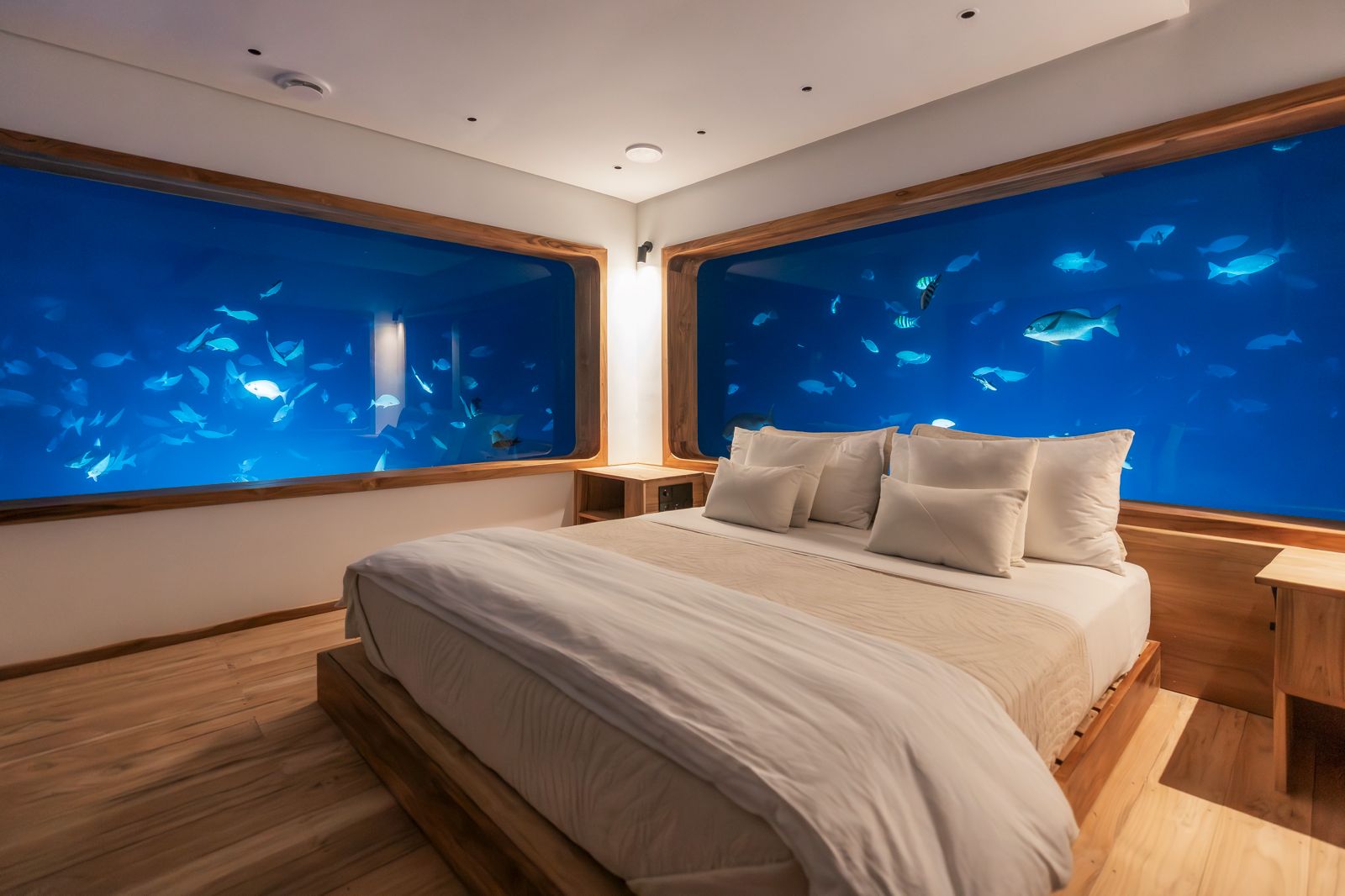
The new Underwater Room at The Manta Resort is, by any measure, an architectural achievement. Nearly double the size of its predecessor, the four-by-four metre submerged suite features floor-to-ceiling windows that dissolve the boundary between guest and sea. Schools of fish drift past at eye level. Coral formations glow in the half-light. At night, bioluminescence turns the water into something that resembles the inside of a dream.
But Matthew Saus, the resort's founder, is quick to redirect the conversation. "The real story that we want to tell is a story about the conservation efforts and everything that's come about," he says. "It's a much bigger story than just the tourist's experience."
He is right. And the story, in this case, is genuinely worth telling.
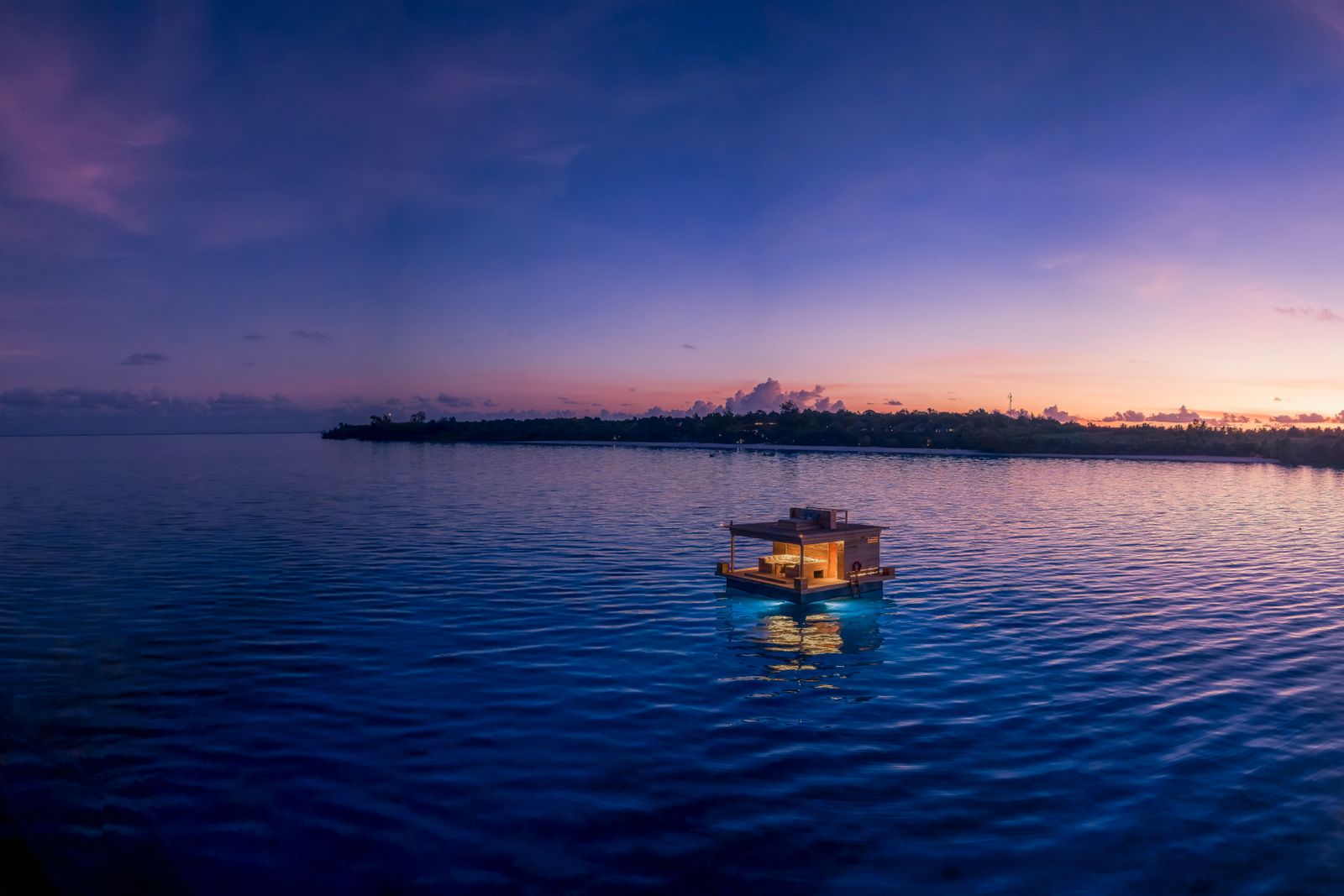
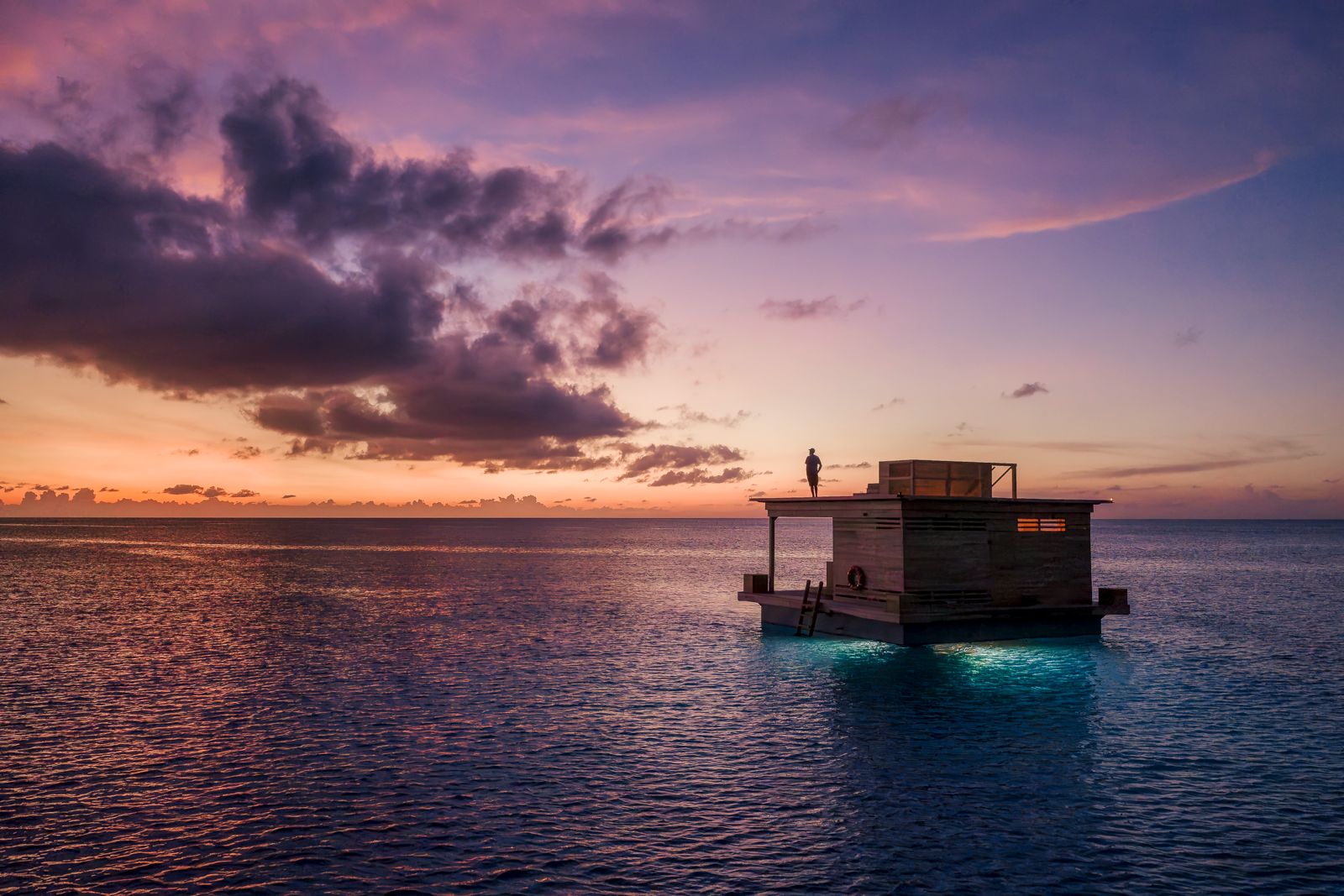
At night, the Underwater Room glows against the bioluminescent dark.
What Happens When an Ocean Is Given Room to Recover
From no-take zone to spillover effect
For years, the reefs surrounding Pemba Island followed a familiar pattern: overfishing, coral degradation, communities caught between immediate need and long-term survival. The Kwanini Foundation, established by the resort, began working alongside local fishermen and government stakeholders not to exclude people from the ocean, but to rebuild their relationship with it.
The centrepiece of that work is a protected no-take zone: a stretch of reef where fishing is prohibited, allowing marine ecosystems to regenerate on their own terms. The results have exceeded every projection. Fish populations have rebounded. Coral has returned. And in a dynamic that marine biologists call the spillover effect, the abundance inside the protected zone has spread outward, replenishing the waters where local fishermen still work.
"It came back beyond our wildest imagination. If you don't take everything and you manage the extraction, you're able to save the resource for future generations. That's really what it's about."
— Matthew Saus, Founder, The Manta Resort
That recovery became the foundation for something unprecedented: a formal co-management agreement between the Kwanini Foundation and Tanzania's Ministry of Blue Economy, the first of its kind in the country. Developed in partnership with Blue Alliance, the agreement creates a framework for managing legal fishing, supporting reef-positive businesses, and building the kind of institutional infrastructure that outlasts any single resort or initiative.
The ocean, given half a chance, knows how to heal itself. The harder work is creating the conditions that allow it to.
Community Is the Conservation
95% of staff from Pemba Island
The Manta Resort employs a staff that is 95% from Pemba Island itself. There is no formal hotel school on the island, so the resort built its own training programme, one that has become a pipeline for sustainable livelihoods in a community with few alternatives. When guests pay to sleep beneath the sea, that revenue flows directly into the island's economy and into the families of the people who protect and manage these waters.
"The underwater room makes all of this possible. It has been the catalyst for the government to be on board with us."
— Matthew Saus
This is what regenerative travel looks like beneath the language: not a resort that minimises its footprint, but one that has made the flourishing of its surrounding community and ecosystem the precondition of its own existence. The Underwater Room is not a product that happens to support conservation. It is the mechanism through which conservation becomes possible.
The Manta Resort
A barefoot-luxury sanctuary on the northern tip of Pemba, home to the iconic Underwater Room and the Kwanini Foundation's marine conservation work — where 95% local staffing, a no-take reef zone, and the spillover effect have turned a hotel into the engine of an entire island's regeneration.
A Vision Worth Replicating
A model designed to be shared
The Manta Resort is now exploring how its model, and even the Underwater Room concept itself, might be adopted by other operators committed to marine biodiversity and community development. "It can be a real champion for coral reefs and a champion for biodiversity in the ocean," Saus says. "The population on Pemba is growing. The effects of global warming are intensifying. The reefs are bleaching. And this little box in the water can prove to be incredibly important."
The fourth global mass coral bleaching event, which ran from 2023 to 2025, triggered widespread coral mortality worldwide and drove coral cover on the Great Barrier Reef to its lowest recorded levels. The science is clear that incremental harm reduction will not be sufficient. What is needed, and what remains rare, are models that demonstrate restoration is possible: that reefs can come back, that fish populations can rebuild, that communities and ecosystems can thrive together rather than compete.
Off the coast of Pemba Island, a green turtle moves through protected waters. The reef below holds the kind of density that takes years to rebuild. In a glass room beneath the surface, a guest watches the ocean breathe.
The ocean doesn't forget what was taken from it. It doesn't forget generosity either.
Plan the journey
Travel designers who craft Tanzania & Pemba itineraries.
Each of these designers can build a journey that includes The Manta Resort and the wider Tanzanian coast and bush.
Sources
- ICRI / NOAA Global Coral Bleaching Report 2025
- IUCN Red List 2024 — coral extinction assessment
- IPCC / UN SDG Report 2024, Goal 14
- FAO State of World Fisheries and Aquaculture 2024 (via MSC)
- IPBES Global Assessment / Marine Biodiversity Decline (via NRDC)
- ADB Marine Biodiversity and Sustainability 2025
- FAO Review of the State of World Marine Fishery Resources 2025
- Springer Nature / Coral Reefs Journal 2026
- UNEP coral bleaching explainer
The Manta Resort is a member of the Regenerative Travel network.
Where to stay
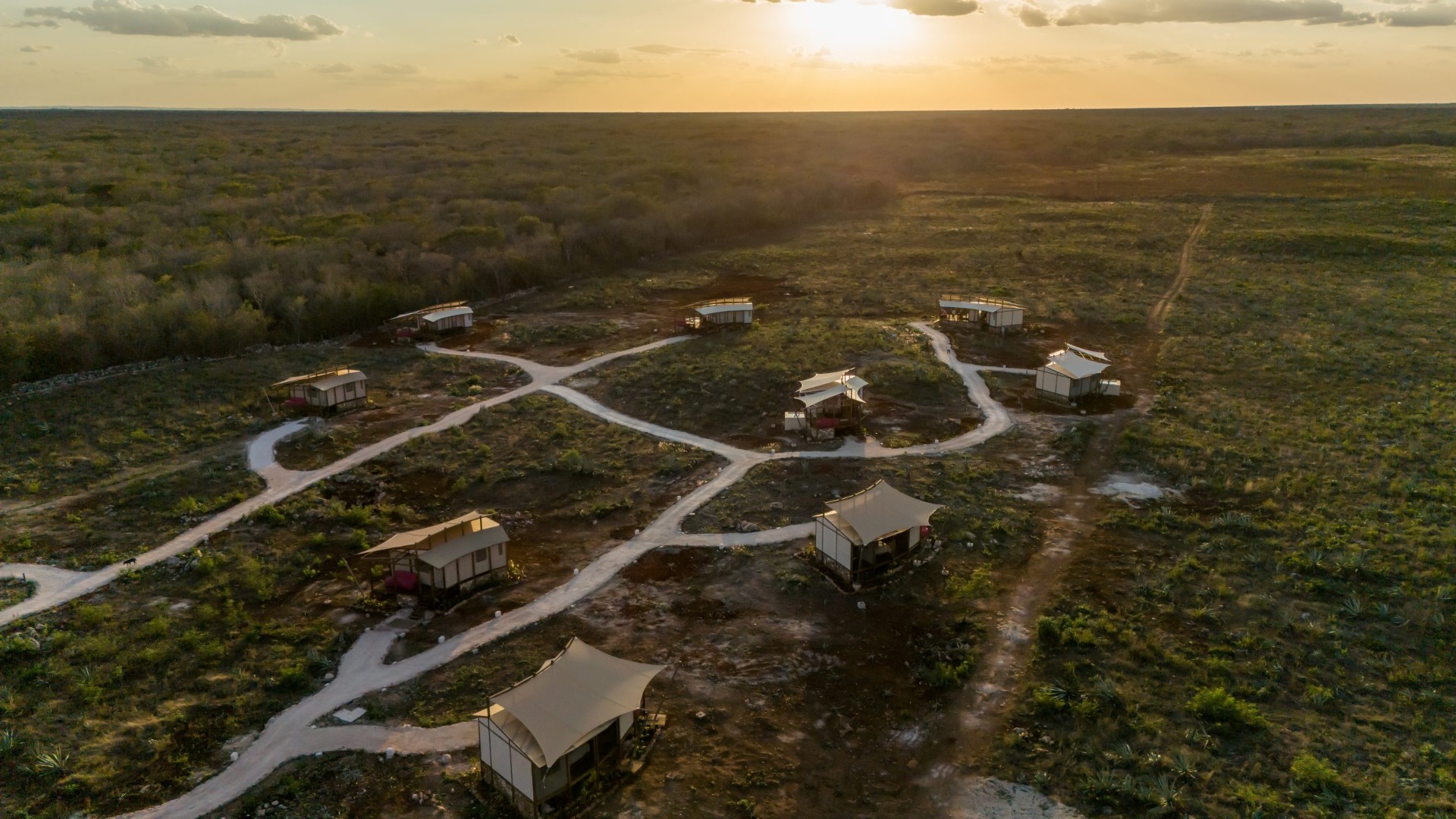
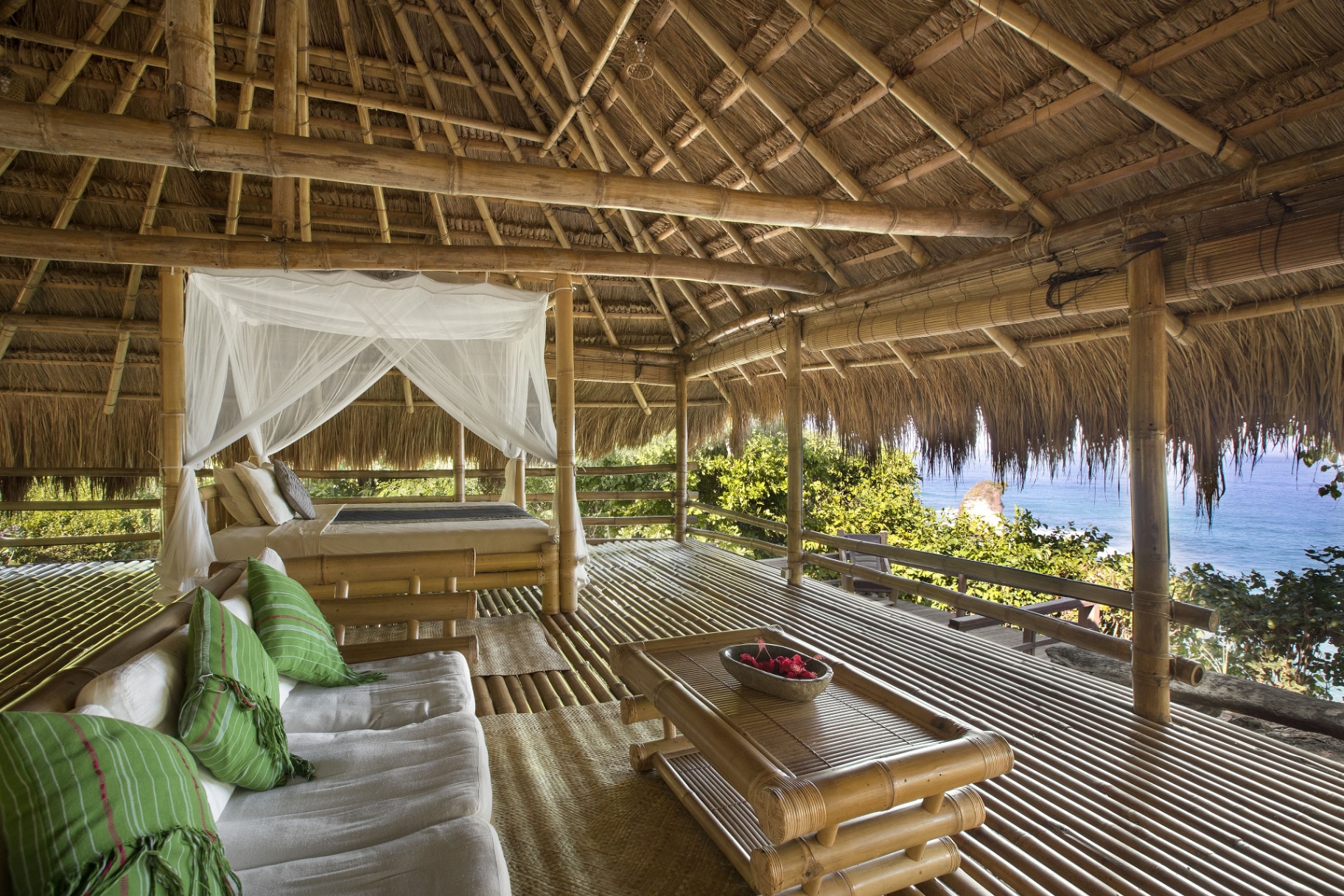
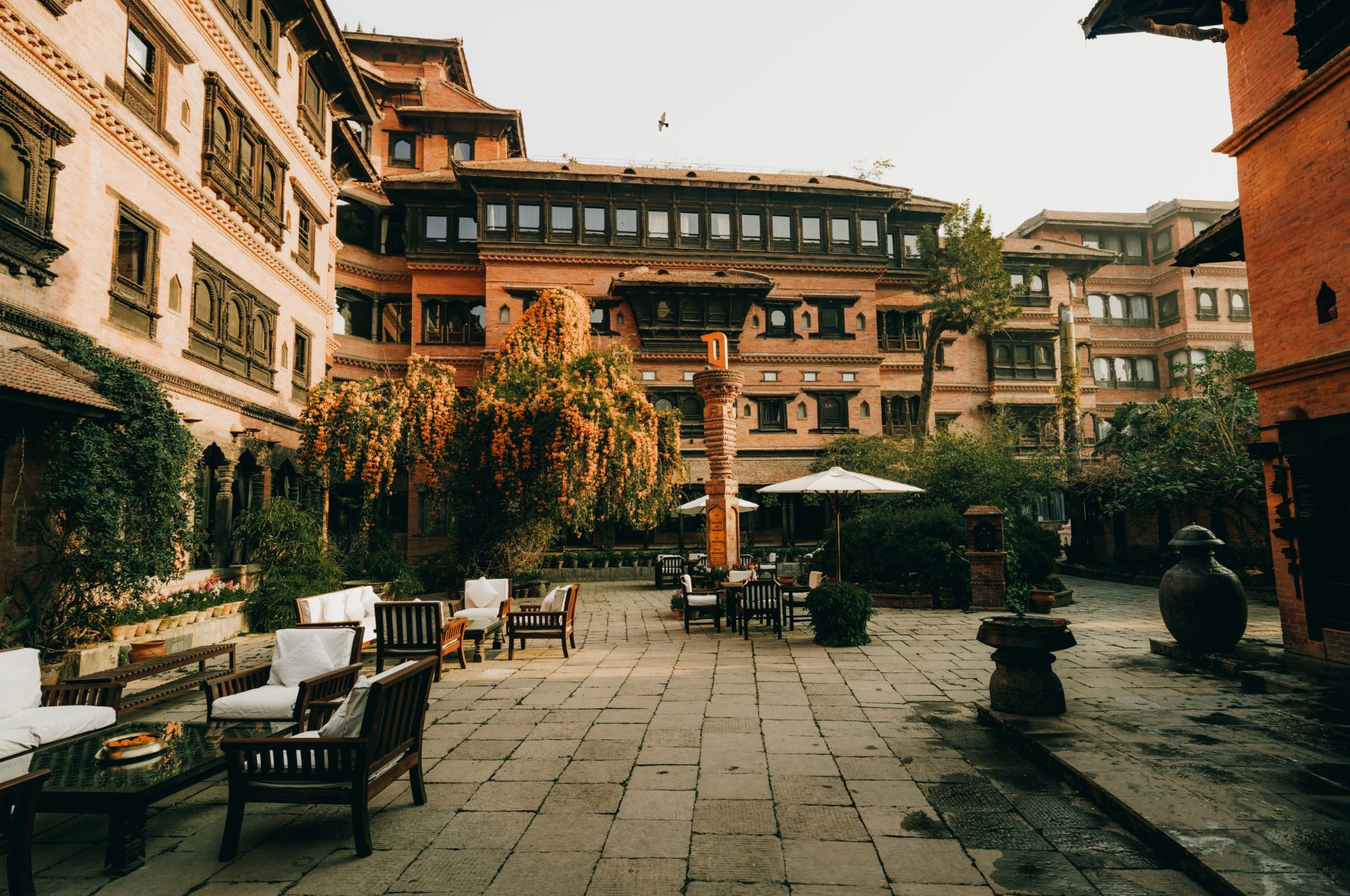
Suggested regenerative hotels
Continue the journey
Curated itineraries
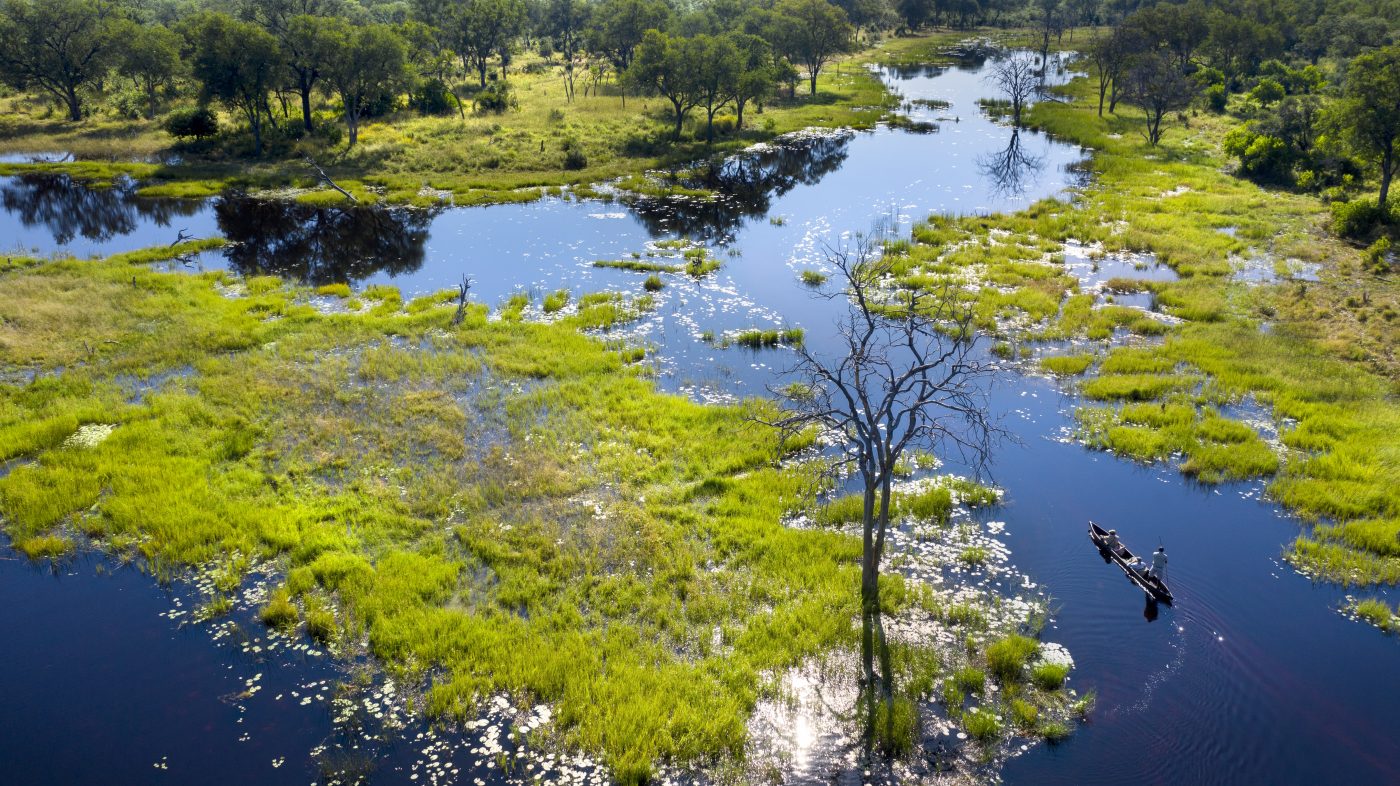
11 Nights · Botswana & South Africa
Okavango, Big Five & the Winelands
From the waterways of the Okavango Delta through Botswana's legendary game concessions to South Africa's Big Five reserves, ending with wellness and wine in the Franschhoek Valley.
View itinerary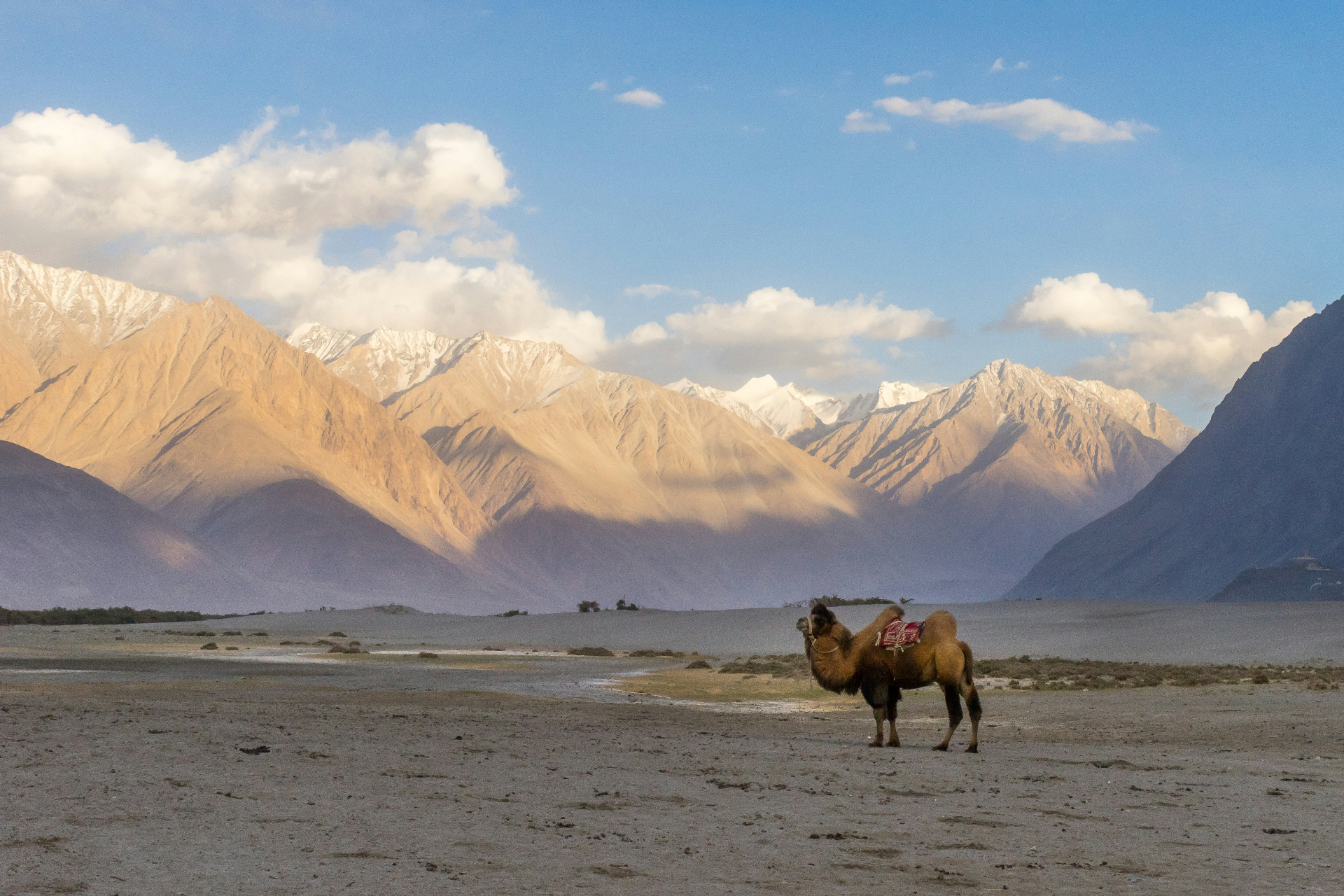
5 Nights · India
A Silk Route Journey Through Ladakh
A slow expedition along an ancient trade path — reimagined as a thoughtful, regenerative luxury journey anchored by two sister retreats in Ladakh: Dolkhar in Leh and Lchang Nang in Nubra Valley.
View itineraryKeep reading
More from the magazine
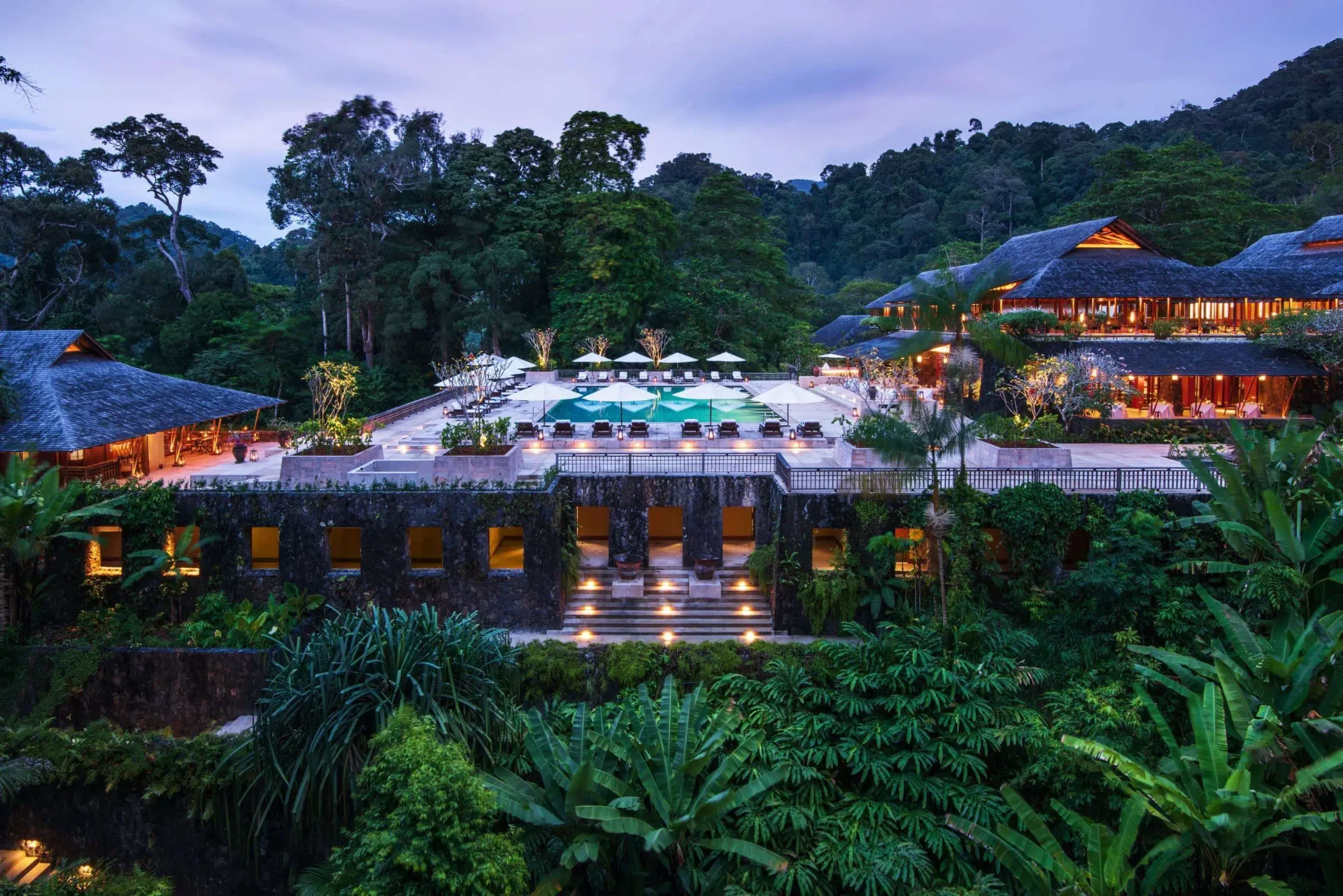
Asia
The Asia Issue: How Heritage and Regeneration Meet
From the Himalayas to the Ganges to the rainforests of Langkawi — how member properties across Asia express regeneration as a centuries-old practice.
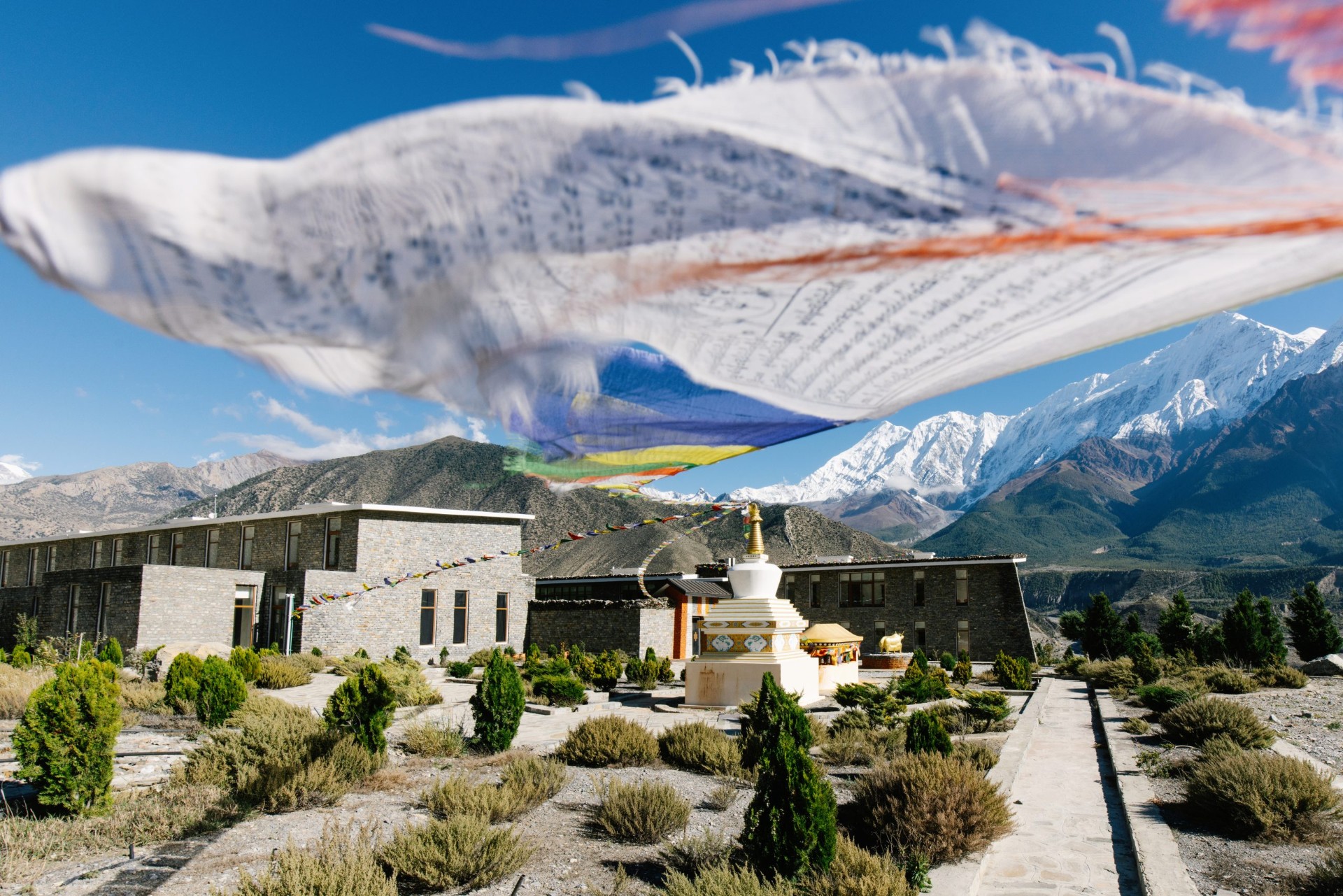
Mountains
Mountain Retreats in Reverence to the Earth and Climate
From Mustang to the Atlas to Nubra — how a new generation of mountain lodges is building lightly, listening first, and letting culture and ecology lead.