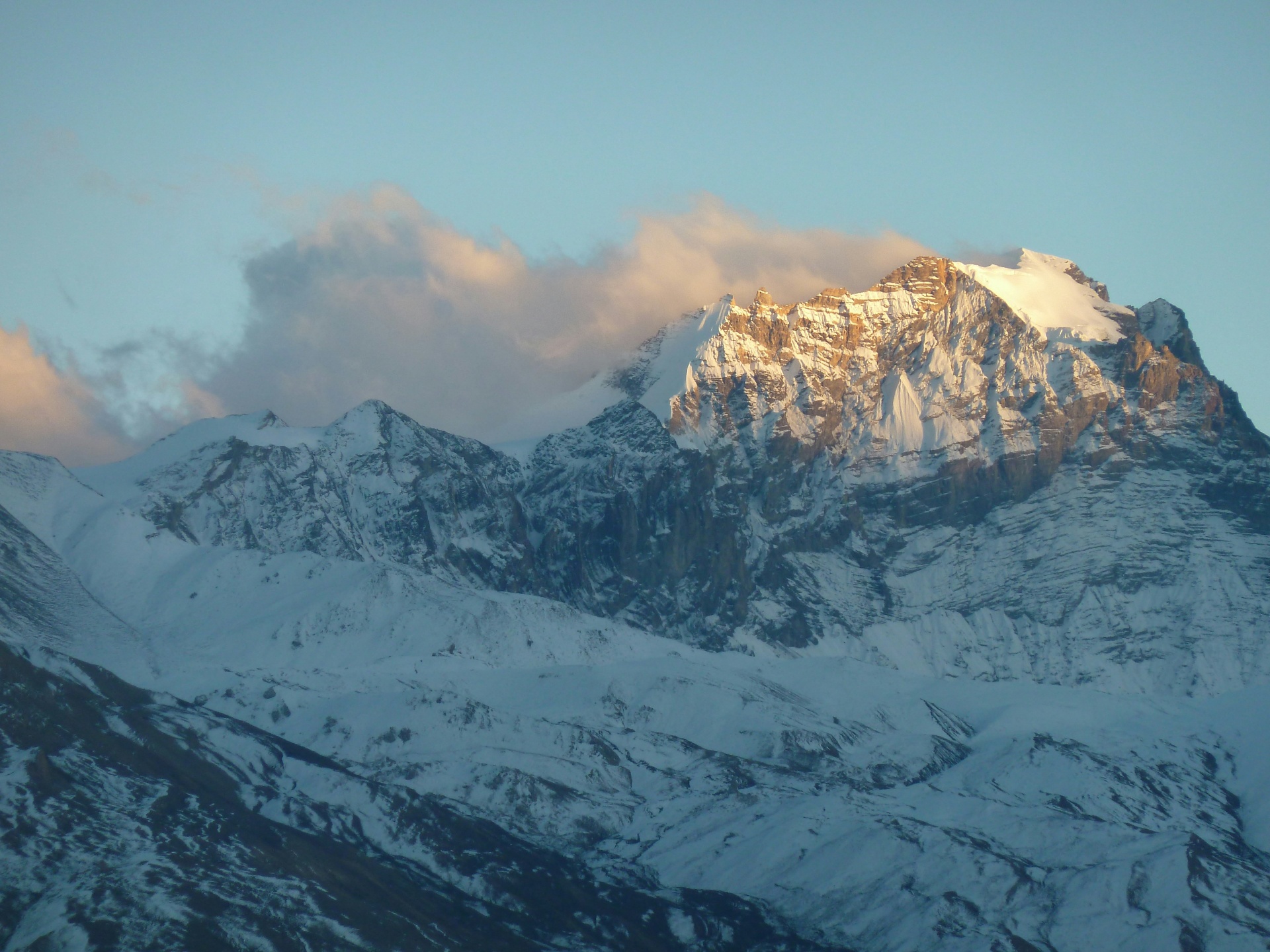

A Pilgrimage Through Nepal
12 Nights · Nepal
Sacred Valleys, Wellness, and the Kingdom of Mustang — threading The Dwarika's Kathmandu, Dwarika's Sanctuary Dhulikhel, Shinta Mani Mustang, and Tiger Mountain Pokhara Lodge.
Twelve nights threading four properties from the temple-laden valley of Kathmandu, into the wellness sanctuary of Dhulikhel, up to the windswept Buddhist kingdom of Lower and Upper Mustang, and down to the Annapurna ridge above Pokhara. The arc moves deliberately from cultural immersion to deep stillness, then to genuine remoteness, then to a slow descent.
The Dwarika's, Kathmandu
Newari heritage hotel
Dwarika's Sanctuary, Dhulikhel
Wellness retreat
Shinta Mani Mustang, Jomsom
Bensley high desert
Tiger Mountain Pokhara Lodge
Annapurna ridge
Kathmandu 1,400m → Dhulikhel 1,550m → Jomsom 2,700m → Muktinath 3,800m → Lo Manthang 3,840m → Pokhara ridge 1,000m. The Sanctuary acts as natural conditioning before Mustang.
12 Nights Across Nepal
From the carved courtyards of Kathmandu to the windswept kingdom of Mustang and the Annapurna ridge — each property chosen for its commitment to regenerative travel and deep Nepalese heritage.
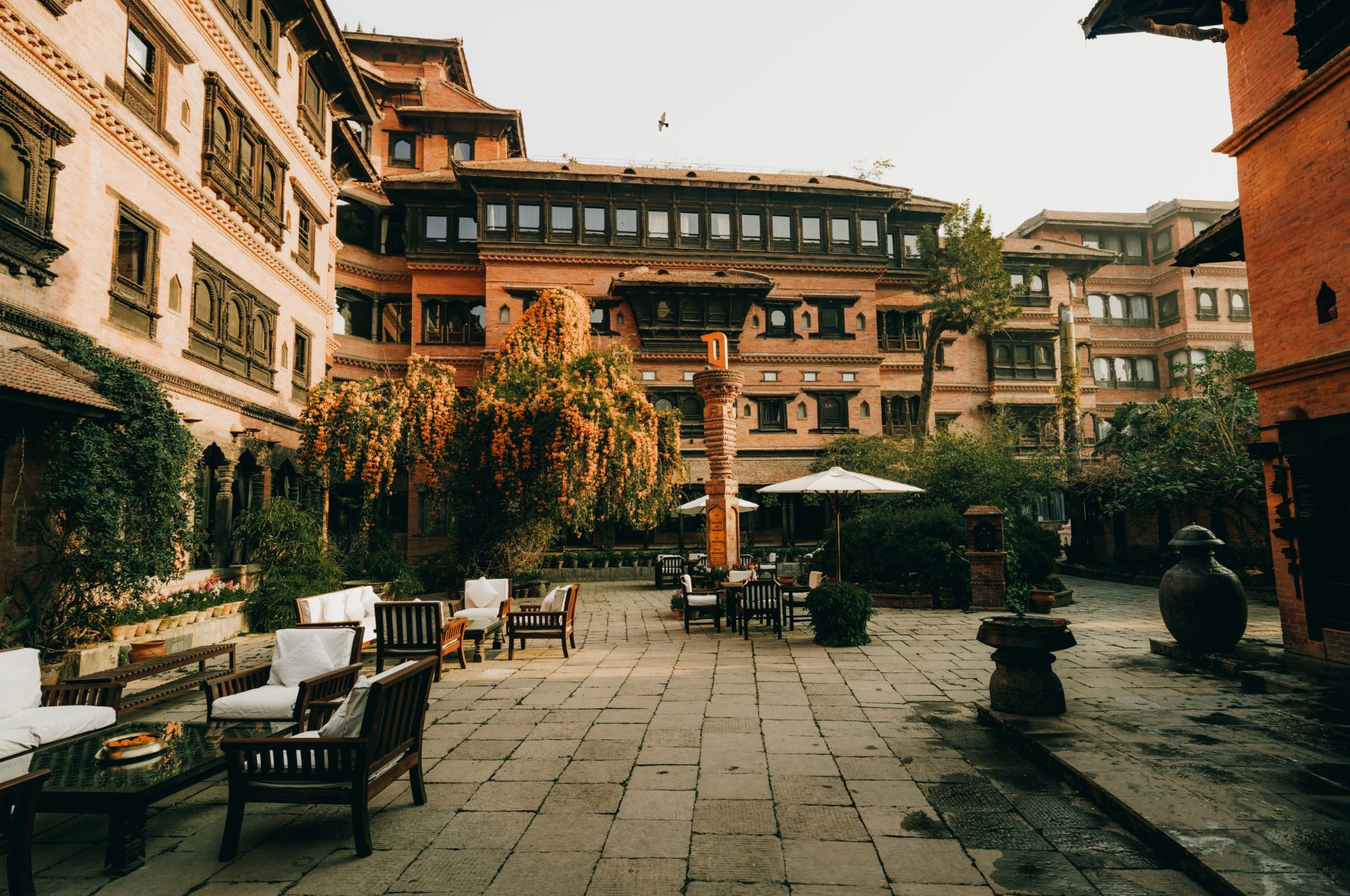
The Dwarika's, Kathmandu
Kathmandu, Nepal
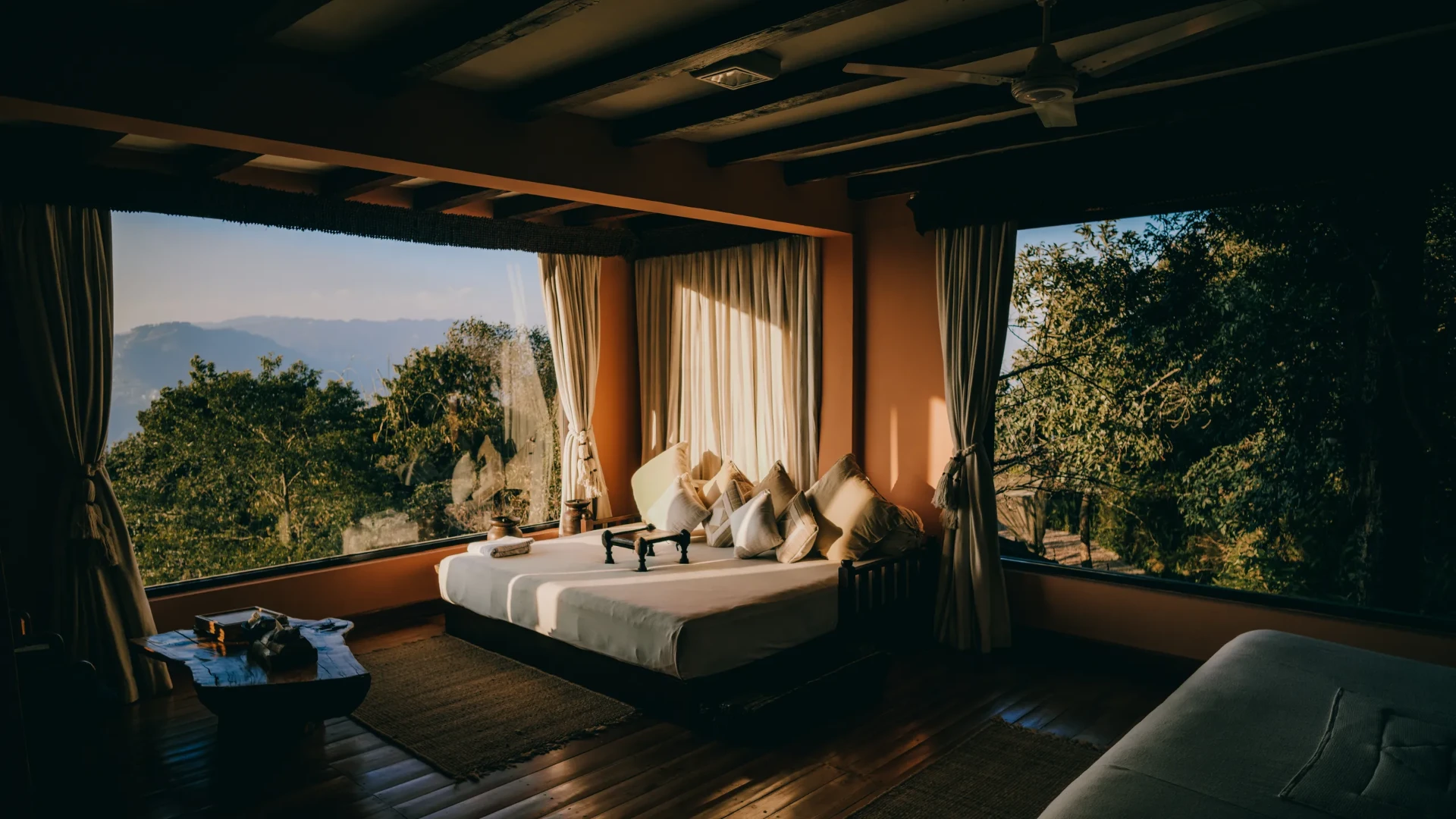
Dwarika's Sanctuary
Dhulikhel, Nepal
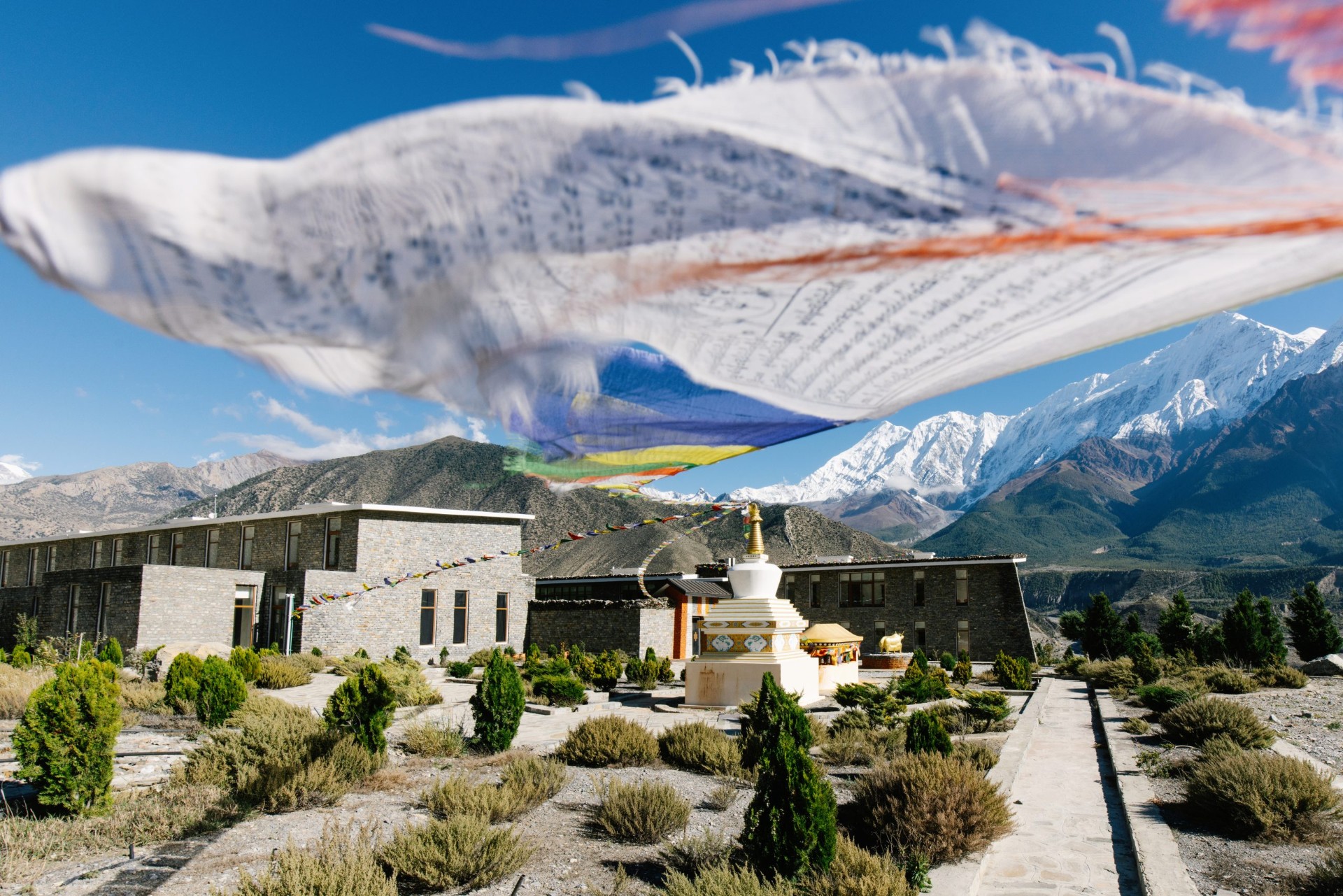
Shinta Mani Mustang
Jomsom, Nepal
Tiger Mountain Pokhara Lodge
Pokhara, Nepal
The Pilgrimage, Day by Day
Arrival — The Dwarika's Kathmandu
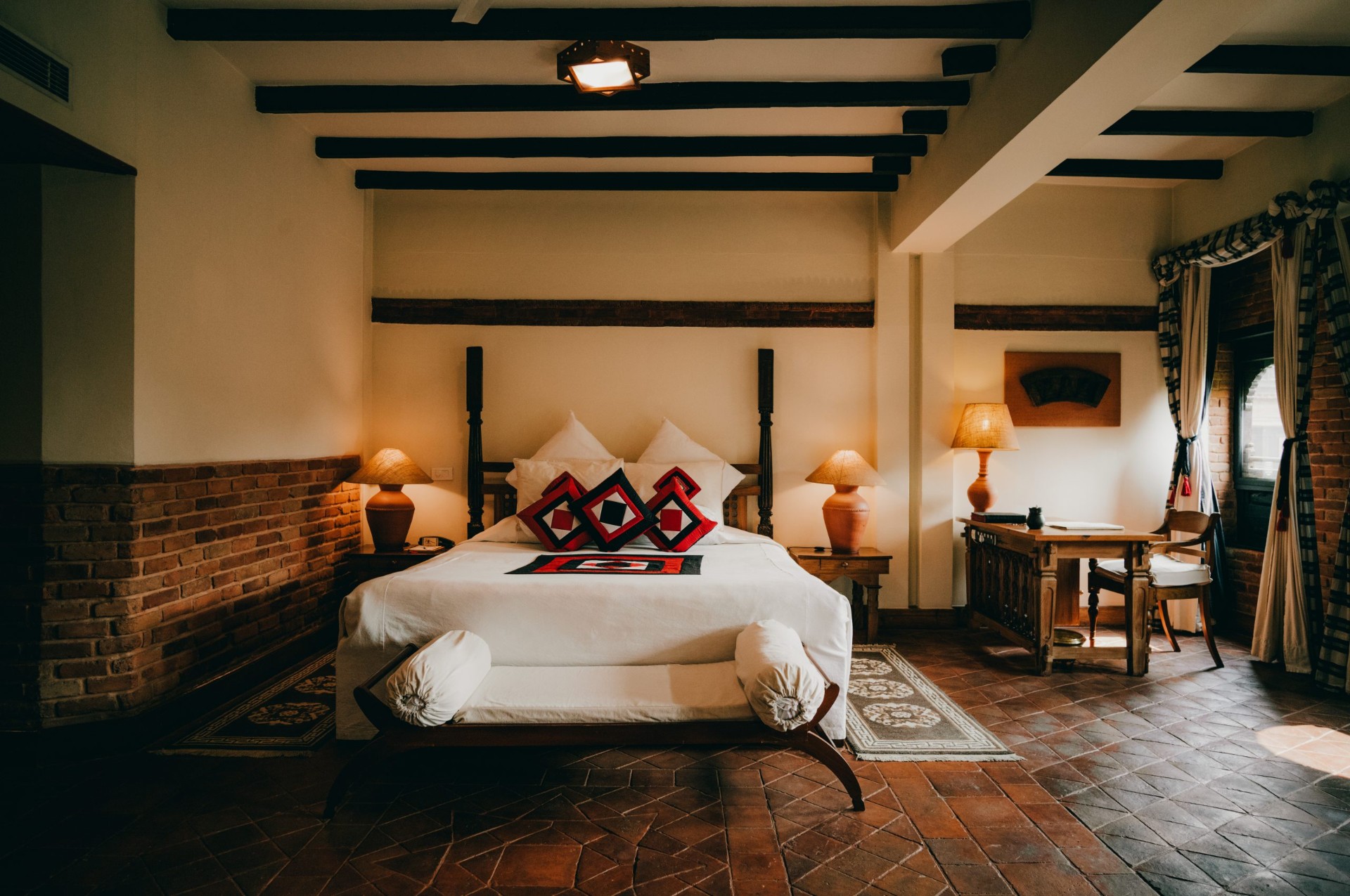
Land at Tribhuvan International and transfer the short distance to Battisputali, where the cobbled entrance of The Dwarika's opens into a living museum of Newari heritage. Every brick, lattice window, and carved tundal in the property was salvaged from demolished houses across the Kathmandu Valley over five decades by the late Dwarika Das Shrestha. Settle into a Heritage Suite around the main courtyard. The afternoon is for slow wandering — the small museum of carvings, the Pancha Kosha rooftop spa, and a Himalayan Healing ritual to ease the long flight. Dinner at Krishnarpan, the property's six-to-twenty-two-course Newari tasting menu. Book the six-course on arrival night and save the longer ones for tomorrow when your appetite returns.
Sacred Kathmandu Valley
A full day of UNESCO sites with a private guide and driver, paced around the light rather than the crowds. Sunrise at Boudhanath Stupa as the maroon-robed monks begin kora. Mid-morning at Pashupatinath Temple — Nepal's holiest Shiva temple on the banks of the sacred Bagmati. Afternoon at Patan Durbar Square with lunch at Café Swotha. Golden hour at Swayambhunath — climb the 365 steps to the hilltop monkey temple before dusk. Return for a quiet dinner of Newari momos in the courtyard.
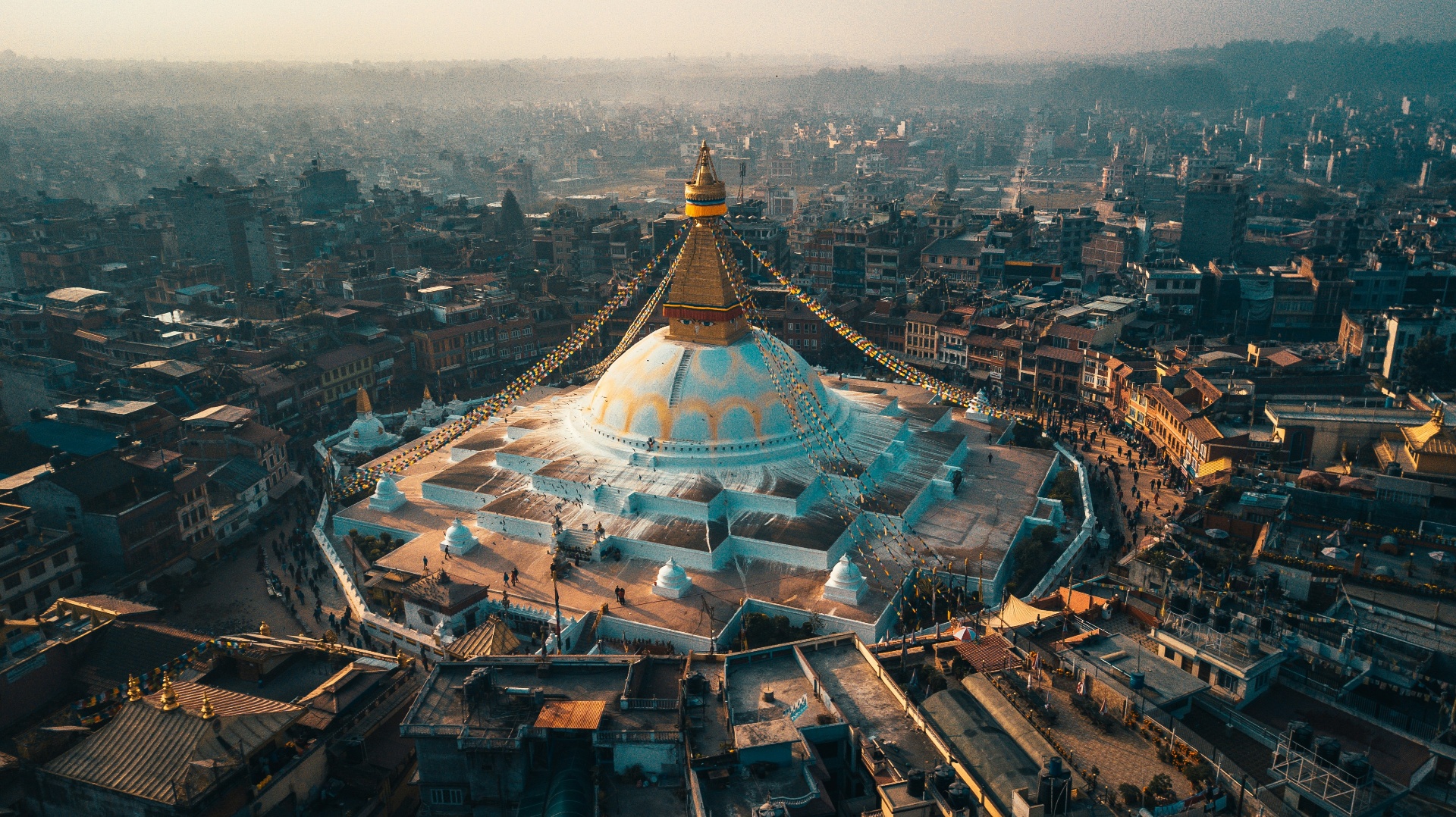
Boudhanath Stupa — the heart of Tibetan Buddhism in the Kathmandu Valley
Bhaktapur en route to Dwarika's Sanctuary
A late-morning departure from Kathmandu, deliberately broken at Bhaktapur — the best preserved medieval city in the valley. Three hours of slow wandering through the 55-Window Palace, the soaring Nyatapola Temple, and Potter's Square. A further hour east into the foothills brings you to Dwarika's Sanctuary, set on a forested ridge above Dhulikhel at 1,550m. A welcome ritual sets the wellness tone — and a sunset over the snow-capped range makes the case for everything that follows. A personalised consultation with the resident Ayurvedic doctor sets the programme for the next two days. Dinner at the Mahuli farm-to-table restaurant.
Sanctuary Wellness — Namobuddha Hike
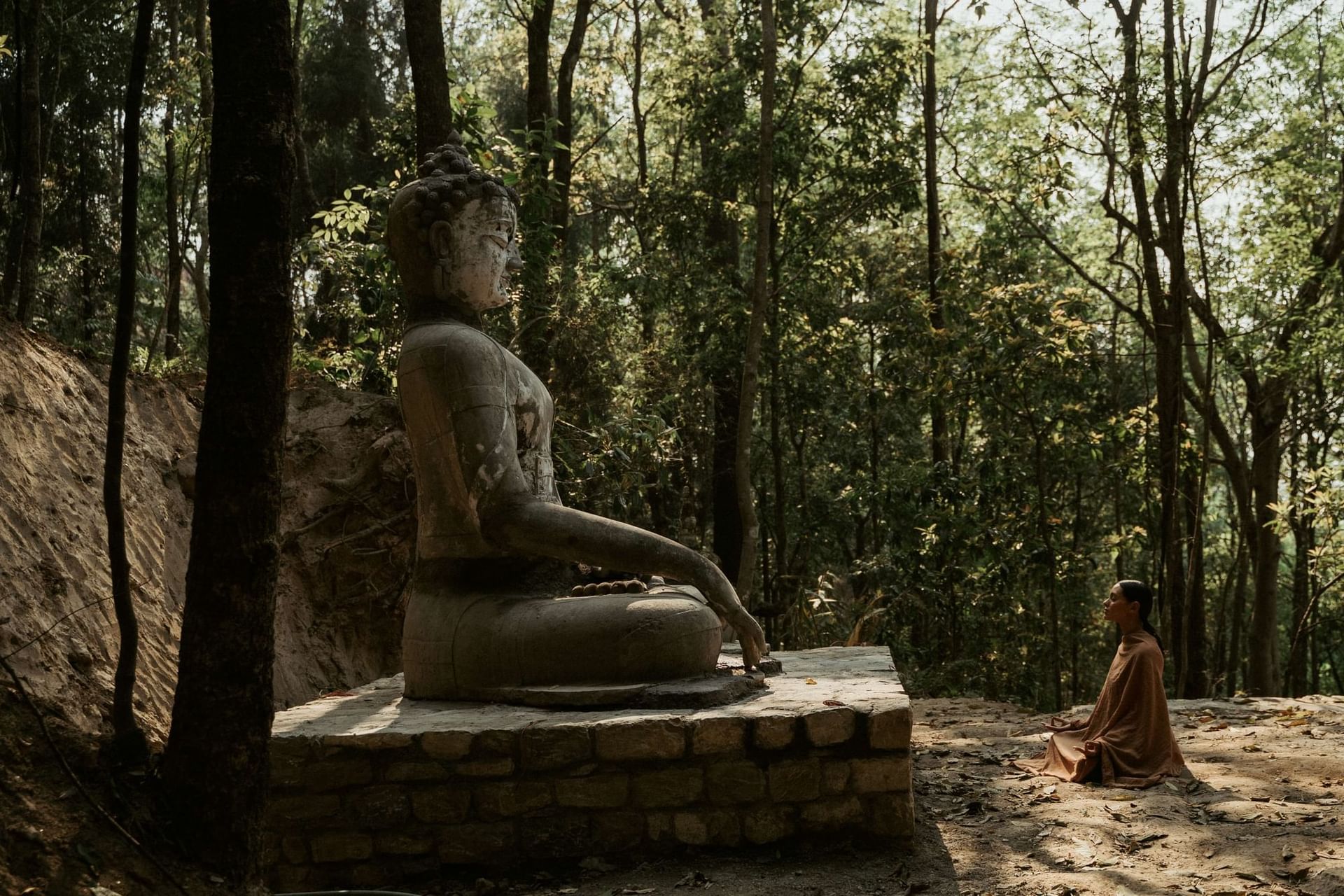
Sunrise yoga and pranayama on the terrace, then a guided two-hour hike through pine forest and terraced fields to Namobuddha Monastery — one of the three most sacred Buddhist sites in Nepal, where according to legend the Buddha in a previous life offered his own body to a starving tigress and her cubs. Return for lunch, then an Abhyanga followed by Shirodhara — the slow stream of warm oil over the third eye. Sound healing in the meditation room as the day cools. Dinner is light and Ayurvedic, attuned to your dosha.
Sanctuary — Reset Day
No transfers, no excursions. The whole point of this day is stillness — and the practical benefit is gentle altitude conditioning before tomorrow's flight to Mustang. Sunrise meditation. A long breakfast. A deeper Ayurvedic treatment — Pizhichil if your doctor recommends it, a four-handed continuous warm-oil bath. Lunch in the orchard. An afternoon of reading, the steam room, and a salt cave session. Pack tonight: Mustang baggage rules are strict — 10kg checked plus 5kg cabin on the Pokhara–Jomsom flight. Pack heavy layers, sunscreen, a wide-brimmed hat, and good walking shoes for the trans-Himalayan desert.
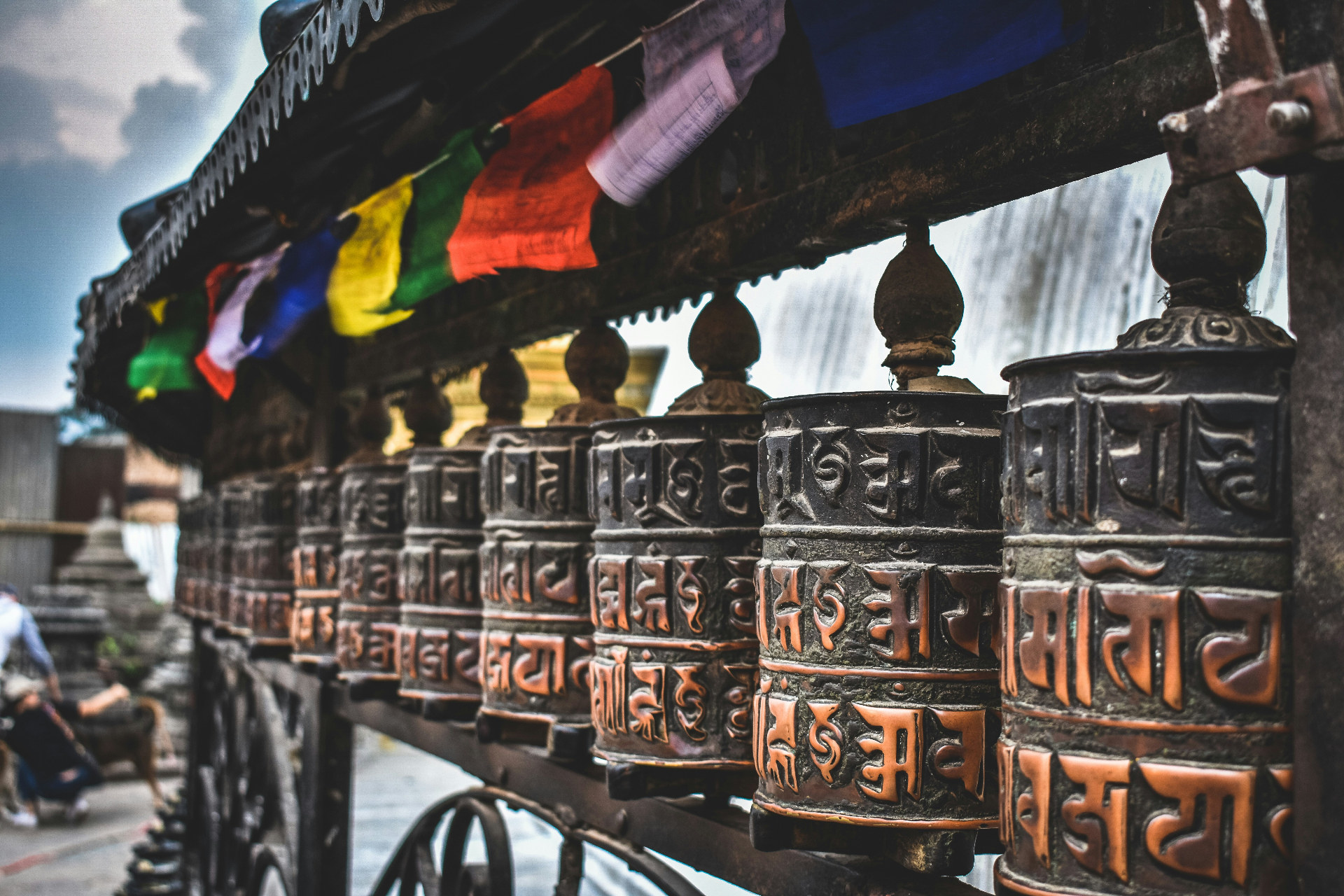
Prayer wheels and flags mark the threshold between the valley and the high Himalaya
Fly to Pokhara, then to Jomsom — Shinta Mani Mustang
Transfer back to Kathmandu airport for the 25-minute flight to Pokhara, then immediately board the iconic morning STOL flight to Jomsom — twenty white-knuckle minutes between Annapurna and Dhaulagiri, with the deepest river gorge in the world directly beneath you. The landing strip at Jomsom sits at 2,700m in a moonscape of ochre cliffs and prayer-flag-lined trails. A Bensley Butler meets you at the airfield. The hotel is a short drive away — a Bill Bensley fortress in stone and steel. Dinner at Nilgiri restaurant. Buckwheat, sea buckthorn, yak cheese — interpreted by chef Prabin Rai. Eat lightly tonight; altitude works on appetite.
Muktinath — One of the 108 Sacred Vishnu Sites
A Bensley Butler excursion to Muktinath, perched at 3,800m below the Thorong La pass. Sacred to Hindus as one of the 108 Divya Desams, and to Buddhists as one of the 24 Tantric power places. Bathe under the 108 stone water spouts that ring the temple. Visit the eternal flame fed by natural gas in the small Jwala Mai temple. Return south, stopping at Marpha — the whitewashed Thakali village famous for apple brandy. A spa treatment to ease the day's altitude. Star-watching from the rooftop — the sky here, clear of haze and light, is one of the best in Asia.
Kagbeni & the Sky Caves
A drive north along the Kali Gandaki to Kagbeni, the medieval mud-brick village that marks the official gateway to Upper Mustang. Wander Kagbeni's narrow alleys, visit the 15th-century monastery, and pay respects at the small Kali Gandaki shrine where pilgrims offer ammonite fossils — the saligrams sacred to Vishnu, found nowhere else on earth in this density. Continue to the cliffside sky caves at Chhusang — pre-Buddhist burial chambers carved hundreds of metres up vertical rock faces, containing 2,000-year-old human remains and Buddhist murals.
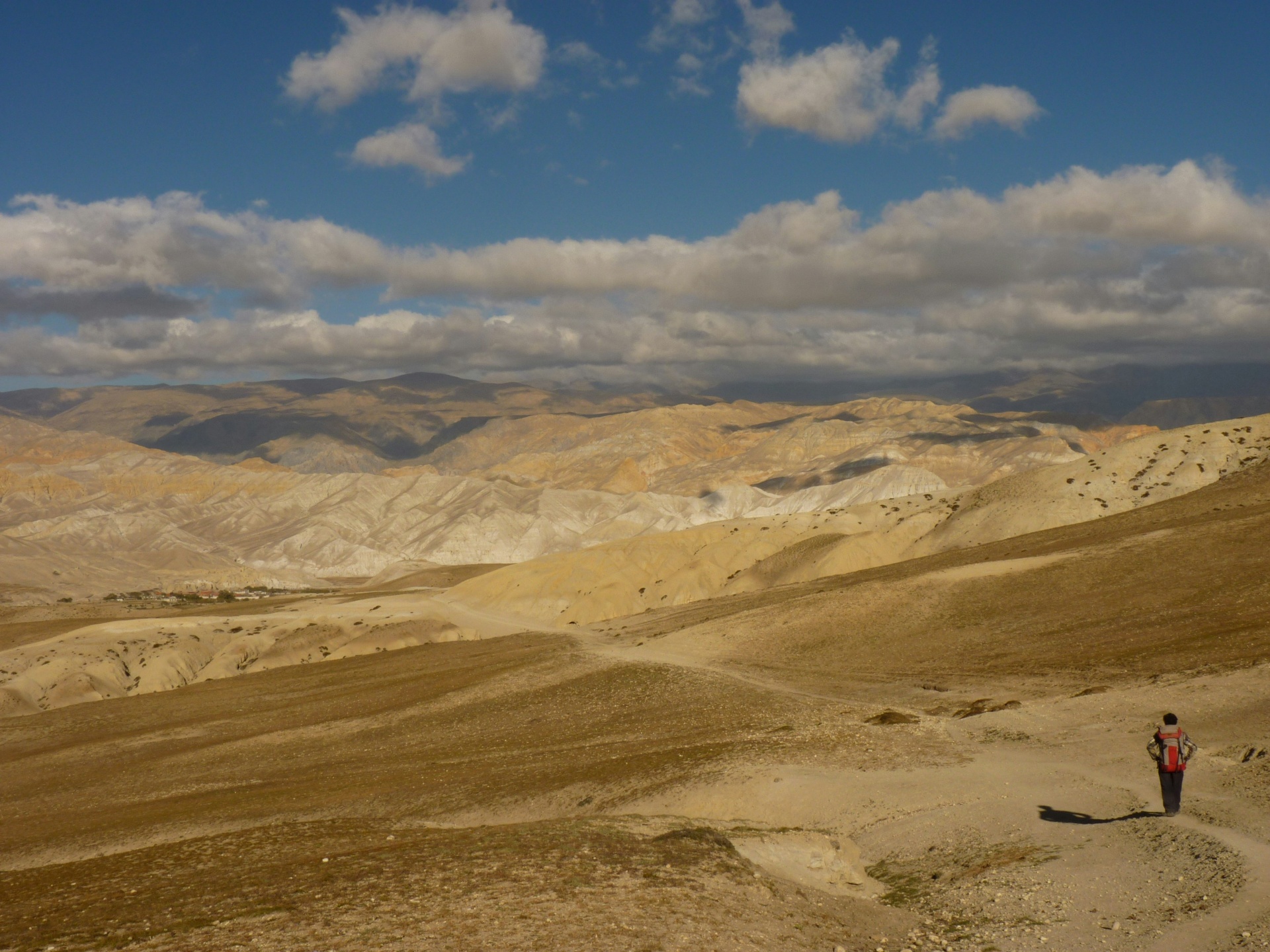
The trans-Himalayan desert of Upper Mustang — a landscape older than the mountains themselves
Lo Manthang — Walled Kingdom of Upper Mustang
The longest and most extraordinary day. A pre-dawn departure for the seven-hour drive deep into the restricted area of Upper Mustang to Lo Manthang, capital of the former Kingdom of Lo. The 25th king still resides here. Enter through the single gate in the still-intact mud walls. Visit Jampa Lhakhang with its three-storey Maitreya Buddha, Thubchen with its 15th-century murals, and Choede, the active monastery. Overnight in a basic but characterful guesthouse arranged by Shinta Mani. A simple Tibetan dinner of thukpa and butter tea at 3,840m. Note: Upper Mustang requires a special restricted-area permit, currently US$500 per person. Shinta Mani arranges this on your behalf.
Return to Shinta Mani — Closing Day in Mustang
A morning visit to the Choser caves north of Lo Manthang — a five-storey cave complex accessed by ladders, used for meditation and refuge for over a millennium. Then begin the long drive back south to Jomsom. Arrive in time for a long, slow afternoon. An altitude-recovery treatment at the spa. Sound healing in the meditation room. A private dinner curated by chef Prabin under Mustang's astonishing star field.
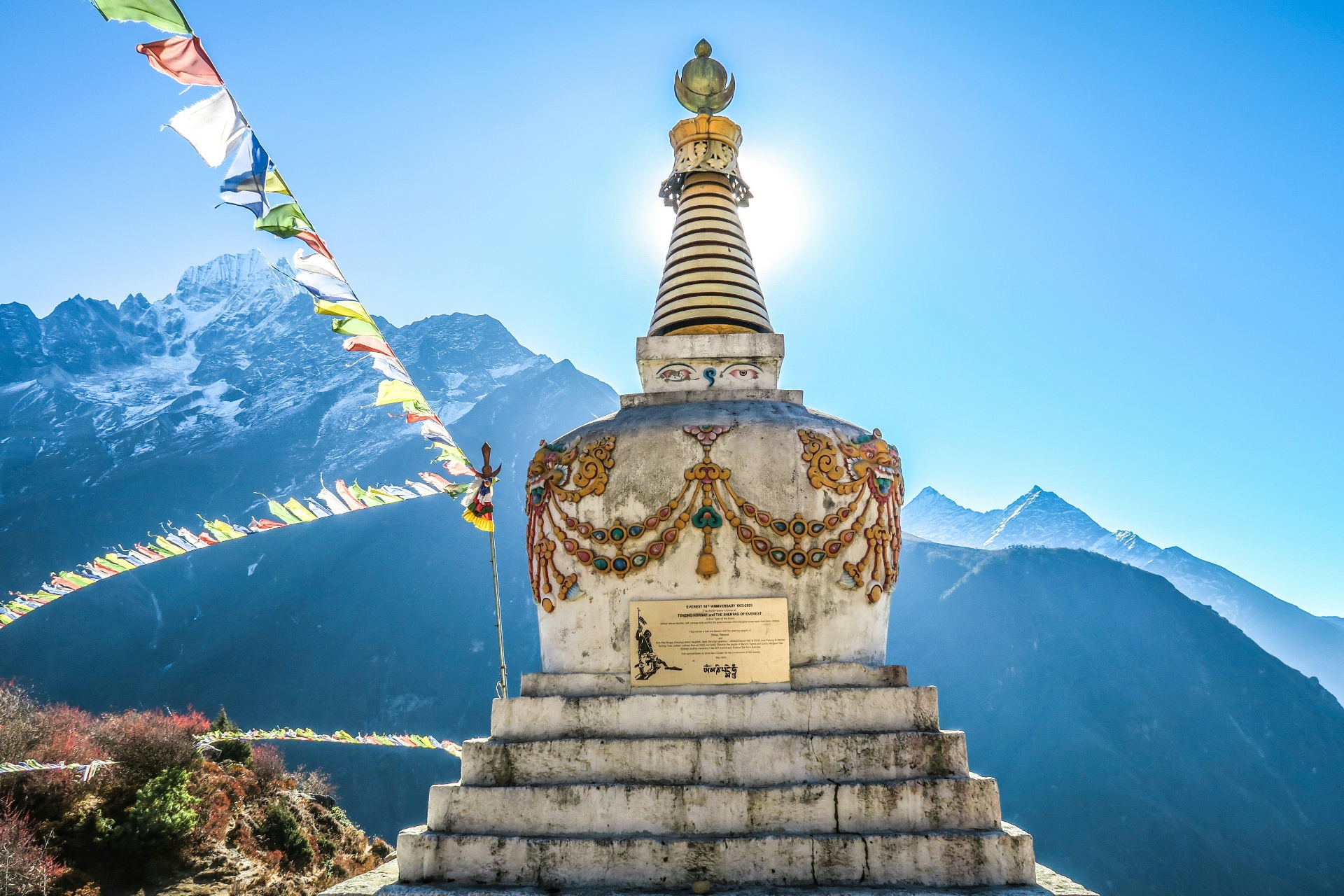
A stupa draped in prayer flags against the Himalayan skyline
Fly to Pokhara — Tiger Mountain Lodge
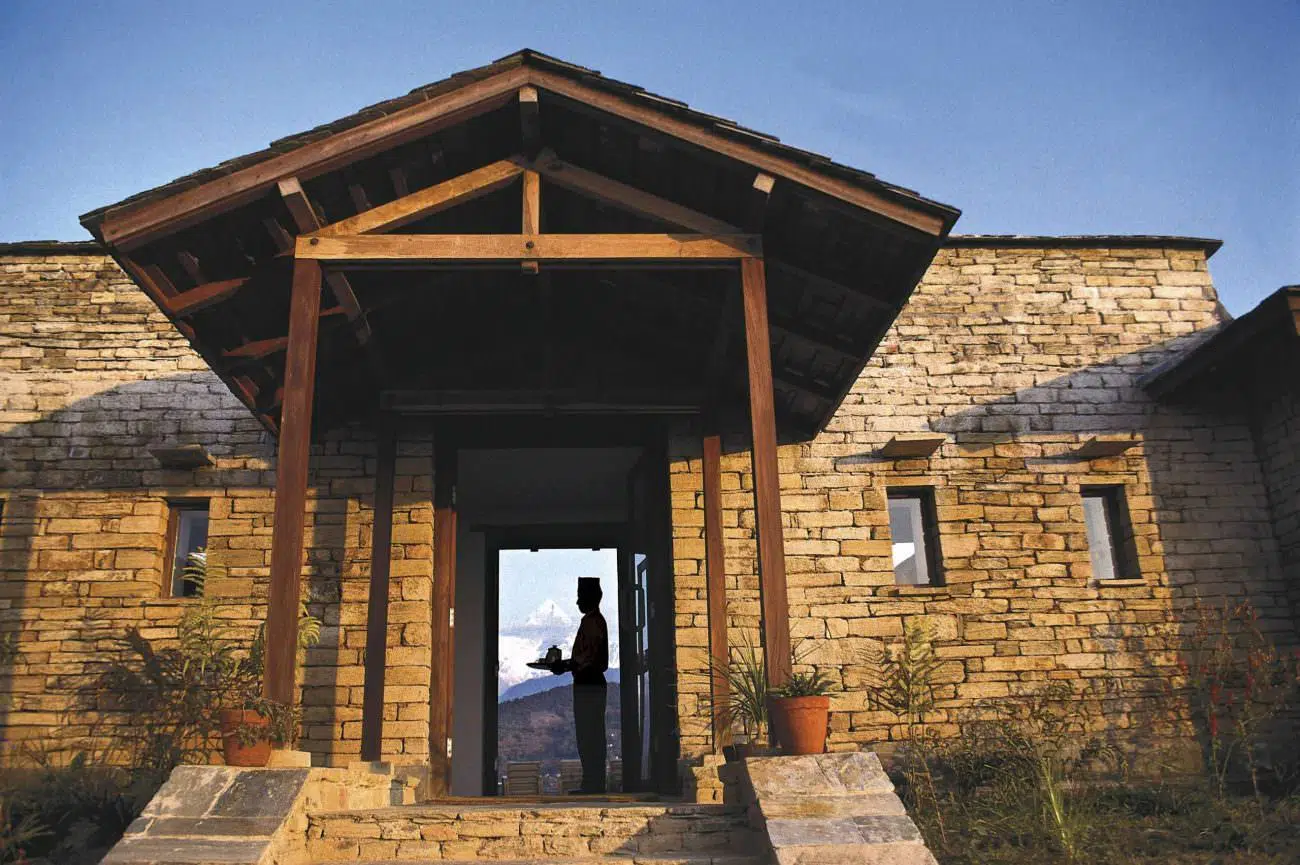
The morning STOL flight back to Pokhara, weather permitting. Then up the ridge — a 90-minute drive that climbs steadily out of the lakeside city into terraced country. The lodge sits at 1,000m on a ridge directly facing the Annapurna massif. Stone-and-slate cottages, every one with a private verandah and a view that takes in Machhapuchhre, Annapurna II, III, IV, and the Lamjung Himal. Owned by the family that opened Tiger Tops in Chitwan in 1965. A naturalist-led walk through surrounding Gurung villages. Sunset gin on the lawn as the Annapurnas turn pink. A simple dinner of fresh dal bhat with mountain herbs.
Annapurna Sunrise & a Day on the Ridge
Pre-dawn meditation on the lawn as the Annapurnas turn pink, then white, then gold — the best sunrise view in Nepal that doesn't require a trek. A long breakfast outdoors. A guided ridge walk to a Gurung village, returning by a different path through the forest. A final spa treatment. An hour with a book on the verandah. The last sunset of the trip. A farewell dinner with the small staff — many of whom have been with the lodge for 20 years and more.
Departure
A final breakfast on the lawn, then the transfer down to Pokhara airport for the morning flight back to Kathmandu and onward connections. Allow at least four hours between the Pokhara departure and any onward international connection from Kathmandu — domestic delays are common.
Practical Notes
When to Go
October to mid-November and March to April are ideal: clear Mustang skies, stable mountain flights, comfortable temperatures at altitude. Avoid the monsoon (June through September) when Mustang flights are routinely cancelled. December and January are clear but bitterly cold at Mustang.
The Mustang Flight
The Pokhara–Jomsom STOL flight is the single biggest variable. It operates only in the early morning before katabatic winds whip down the Kali Gandaki gorge, and cancellations are common in shoulder seasons. The safest planning builds in a flexible buffer night. Helicopter charter is the Plan B — typically US$4,500–6,000 for the leg.
Altitude
Jomsom is 2,700m, Muktinath 3,800m, Lo Manthang 3,840m. Altitude sickness is manageable with the gradual climb this itinerary provides. The three nights at the Sanctuary (1,550m) act as natural conditioning. Hydrate aggressively from Kathmandu onward, avoid alcohol on the day of the Mustang flight.
Upper Mustang Permit
Currently US$500 per person for ten days. Shinta Mani handles the application but requires passport copies at least two weeks before arrival. Lo Manthang sits in a restricted area — you cannot visit independently.
Packing
Layers above all. Mustang temperature swings can exceed 20°C between dawn and midday. A warm jacket, gloves, hat, sunglasses, high-SPF sunscreen, sturdy walking shoes, and a refillable water bottle. The properties provide everything else.
Travel That Gives Back More Than It Takes
Every property on this itinerary was chosen not just for its beauty, but for its commitment to restoring ecosystems, empowering communities, and preserving Nepal's rich cultural heritage.
Centuries of Newari craft
Heritage Preservation
From The Dwarika's rescued woodcarvings to Shinta Mani's stone-and-steel homage to Mustang's medieval architecture — each property actively preserves Nepal's built and cultural heritage.
Local artisans & villages
Community Partnership
All four properties employ locally, support artisan livelihoods, and invest in surrounding communities — from Gurung villages in Pokhara to the remote settlements of Upper Mustang.
Organic & renewable
Ecological Stewardship
Organic farming at the Sanctuary, passive solar design, reforestation at Tiger Mountain, and low-impact construction throughout — each property minimises its footprint while enriching its environment.
1 Country
Nepal
4 Regenerative Properties
Heritage to wilderness
12 Nights
Of purposeful travel
October–November and March–April offer the best conditions — clear Mustang skies, stable mountain flights, and comfortable temperatures at altitude. The Sanctuary's wellness programme runs year-round.
The Dwarika's
Nepal's living museum of Newari art and design. Every brick, lattice window, and carved tundal was salvaged from demolished houses across the Kathmandu Valley over five decades. Heritage Suites around the main courtyard, the Krishnarpan tasting menu, and the Pancha Kosha rooftop spa.
The Dwarika's has rescued and restored centuries-old hand-carved wooden artifacts, preserving Newari craftsmanship for future generations. The property supports local artisans, champions traditional construction methods, and integrates organic farming into its operations.
- AddressBattisputali, Kathmandu, Nepal
- Nearest AirportTribhuvan International Airport (KTM)
- Transfer Time10 min by car
Dwarika's Sanctuary
A forested ridge above Dhulikhel at 1,550m. The Pancha Kosha Himalayan Spa Village — a five-sheath approach to wellbeing drawn from Vedic philosophy — anchors three days of Ayurvedic treatments, sound healing, and organic farm-to-table dining. The Sanctuary acts as natural altitude conditioning before Mustang.
Dwarika's Sanctuary leads regenerative hospitality in Nepal through organic farming, renewable energy, artisan support, and traditional architecture restoration. Its mission goes beyond sustainability — reviving and enhancing both the environment and community.
- AddressDhulikhel, Nepal
- Nearest AirportTribhuvan International Airport (KTM)
- Transfer Time45 min by car
Shinta Mani Mustang
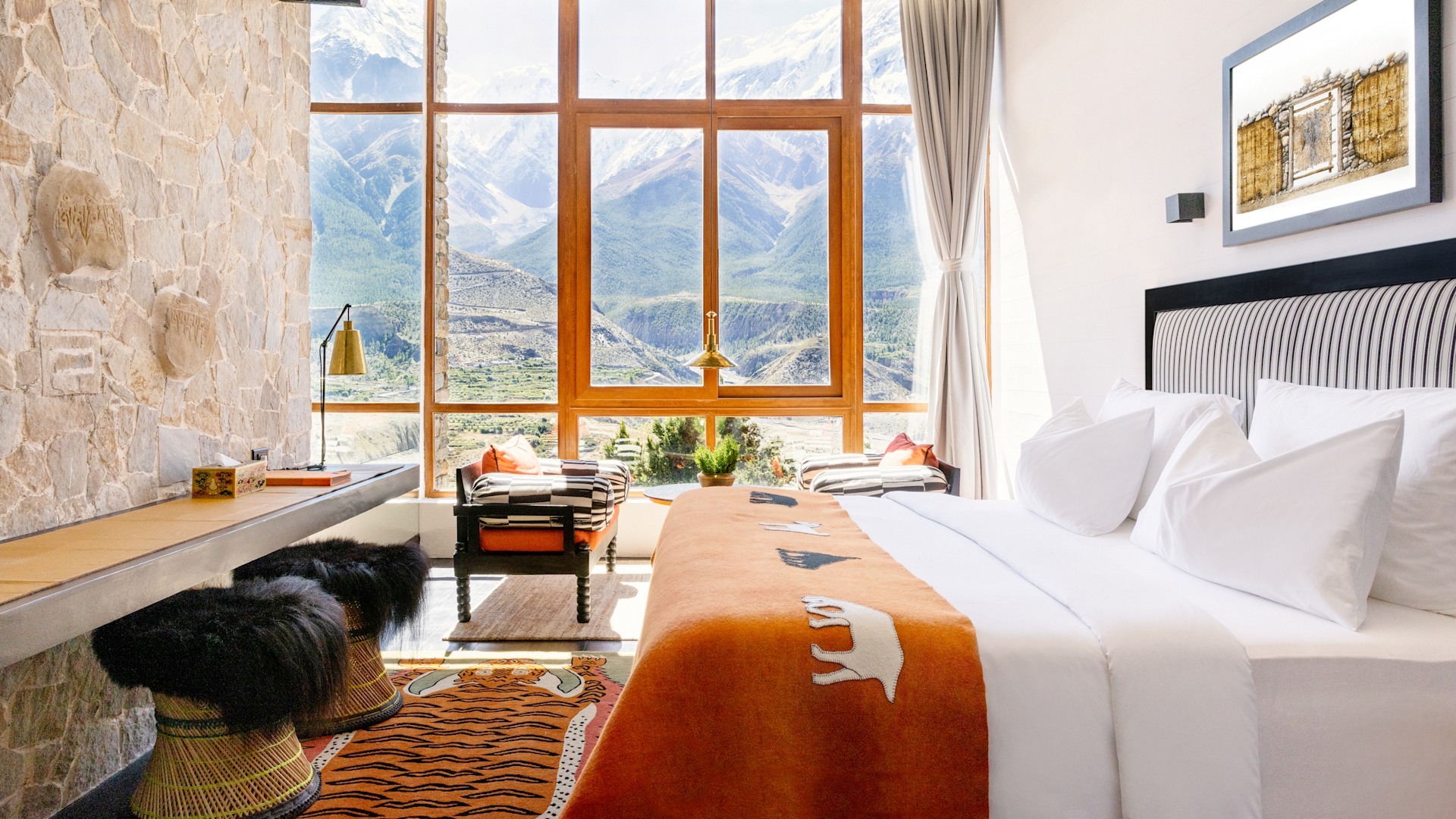
A Bill Bensley fortress in stone and steel at 2,700m in the trans-Himalayan desert. Every suite has a wall of glass framing Nilgiri. Bensley Butlers guide excursions to Muktinath (3,800m), Kagbeni's sky caves, and the walled medieval city of Lo Manthang in Upper Mustang. Chef Prabin Rai interprets buckwheat, sea buckthorn, and yak cheese.
Shinta Mani Mustang brings luxury hospitality to one of Nepal's most remote regions, creating employment, supporting local communities, and preserving the Buddhist cultural heritage of the ancient Kingdom of Lo.
- AddressJomsom, Mustang, Nepal
- Nearest AirportJomsom Airport via Pokhara
- Transfer Time25 min flight from Pokhara
Tiger Mountain Pokhara Lodge
Stone-and-slate cottages at 1,000m on a ridge directly facing the Annapurna massif. Over 200 bird species recorded on the property. The most respected eco-property in Nepal — owned by the family that opened Tiger Tops in Chitwan in 1965. Simple, famously good dal bhat, sunrise meditation, and the best non-trekking view of Machhapuchhre.
Tiger Mountain Pokhara Lodge pioneered conservation tourism in Nepal. The property champions reforestation, organic gardens, local employment, and community partnerships with surrounding Gurung villages.
- AddressAbove Pokhara, Nepal
- Nearest AirportPokhara Airport
- Transfer Time90 min drive from Pokhara
Ready to Explore?
Let us craft your bespoke Nepal pilgrimage. Every journey is tailored to your pace, your curiosity, and your purpose.
Your Travel Designer

Yeishan Goel
Himalayan Echoes
"Whether you come in search of adventure, cultural immersion, solitude, or a journey along a spiritual path, the Himalayas respond to you."