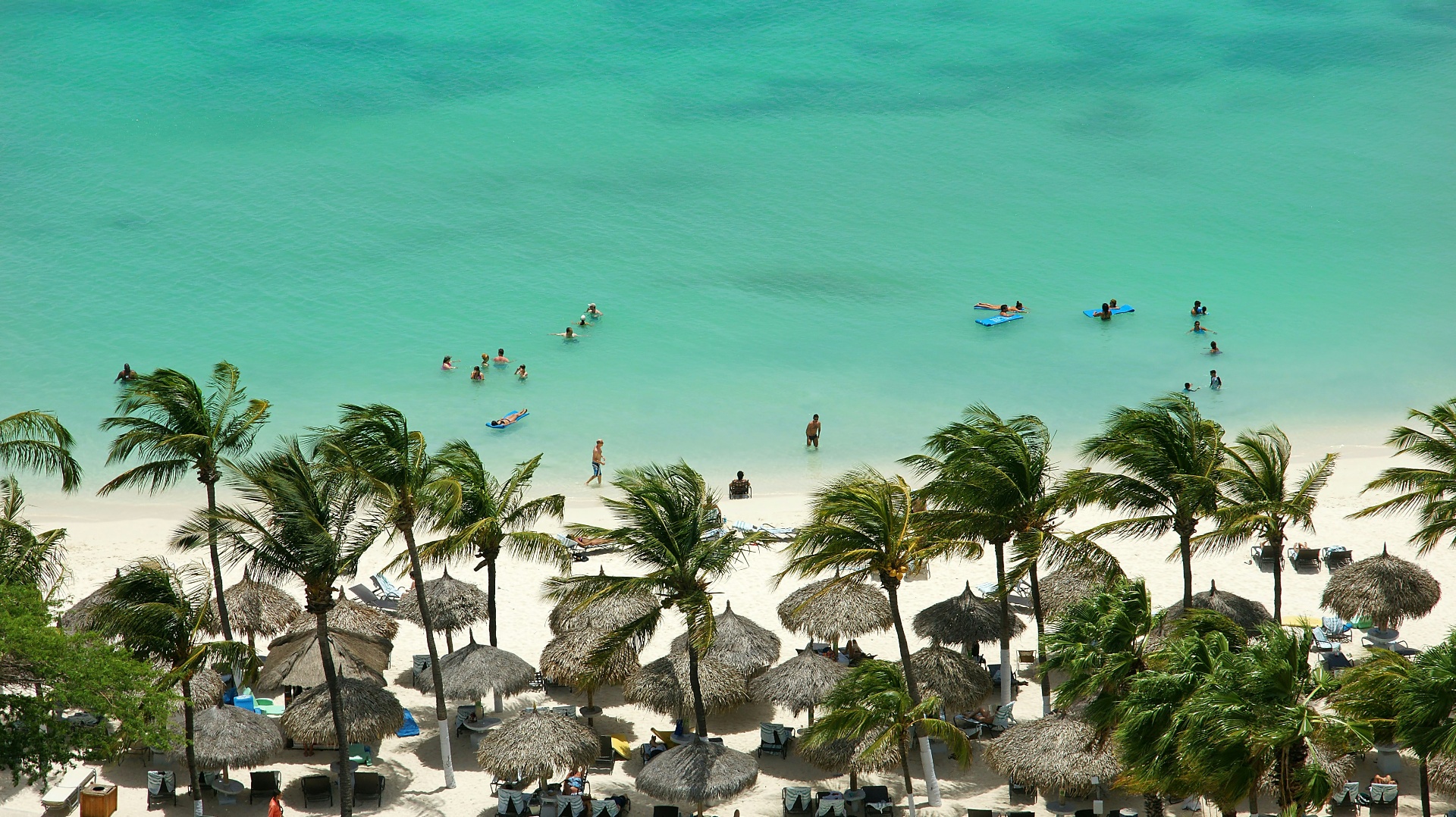

Salt, Seaweed & Sunrise
4 Days · Aruba
An Aruba less traveled. Foraging the windward coast with a chef who reads the rocks. Diving down to a coral nursery with the kids who built it. Walking Arikok at first light with a ranger named Rambo.
Boardwalk Boutique Hotel
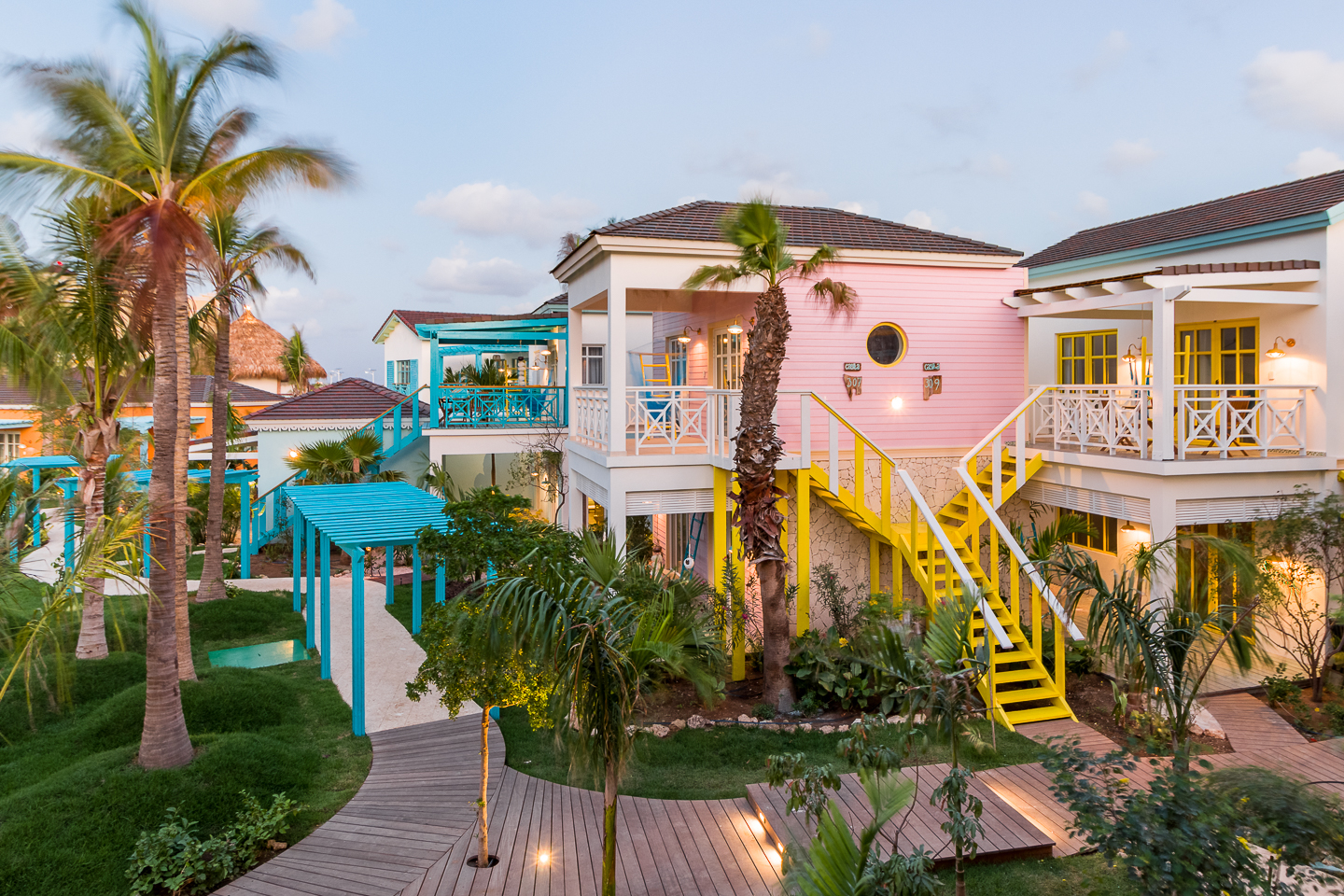
Forty-nine hand-designed casitas tucked inside a former coconut plantation called Plantage Tromp, where the Tromp family grew dates and coconuts for the local market in the 1890s. In 2008, Aruba-born twin sisters Kimberly and Stephanie Rooijakkers stumbled onto the property during a kiteboarding trip. They bought it in 2011. They've been shaping it, slowly, ever since.
Slowly is the operative word. The sisters describe their approach with a Papiamento phrase, Bai Poco Poco — go slow, take your time. A 32-casita expansion built as "Green Houses" with Nudura insulation, solar panels, and 100% LED lighting. A reverse osmosis system so guests never need a single-use plastic bottle. Local artists commissioned to paint the murals. A Treasure Map handed to every arriving guest — not starred restaurants but the bakeries, beaches, and roadside stands that locals actually love.
In October 2025, Boardwalk became the first and only hotel in Aruba to receive Two MICHELIN Keys — an honor extended to fewer than 600 hotels worldwide. The question driving every decision: how do we share Aruba's true spirit without using it up?
4 Days in Aruba
Salt, seaweed, and sunrise — an Aruba less traveled.
Arrival in the Coconut Grove
Boardwalk Boutique Hotel, Noord
Foraging & Coral Restoration
Northeast Coast & Reef
Sunrise in Arikok
Arikok National Park

Eagle Beach & Sunset Sail
Eagle Beach & Palm Beach
The Full Itinerary
Arrival in the Coconut Grove
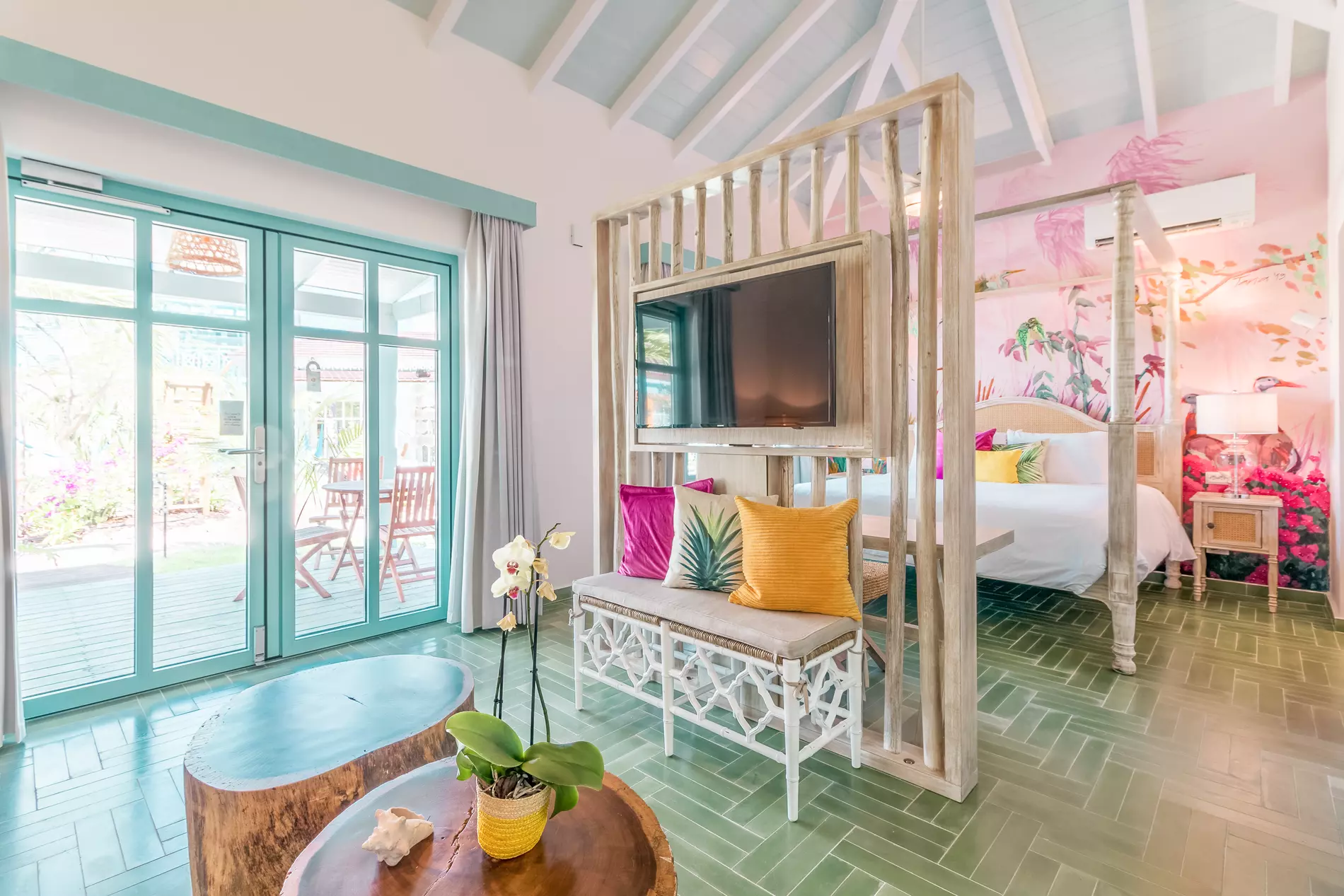
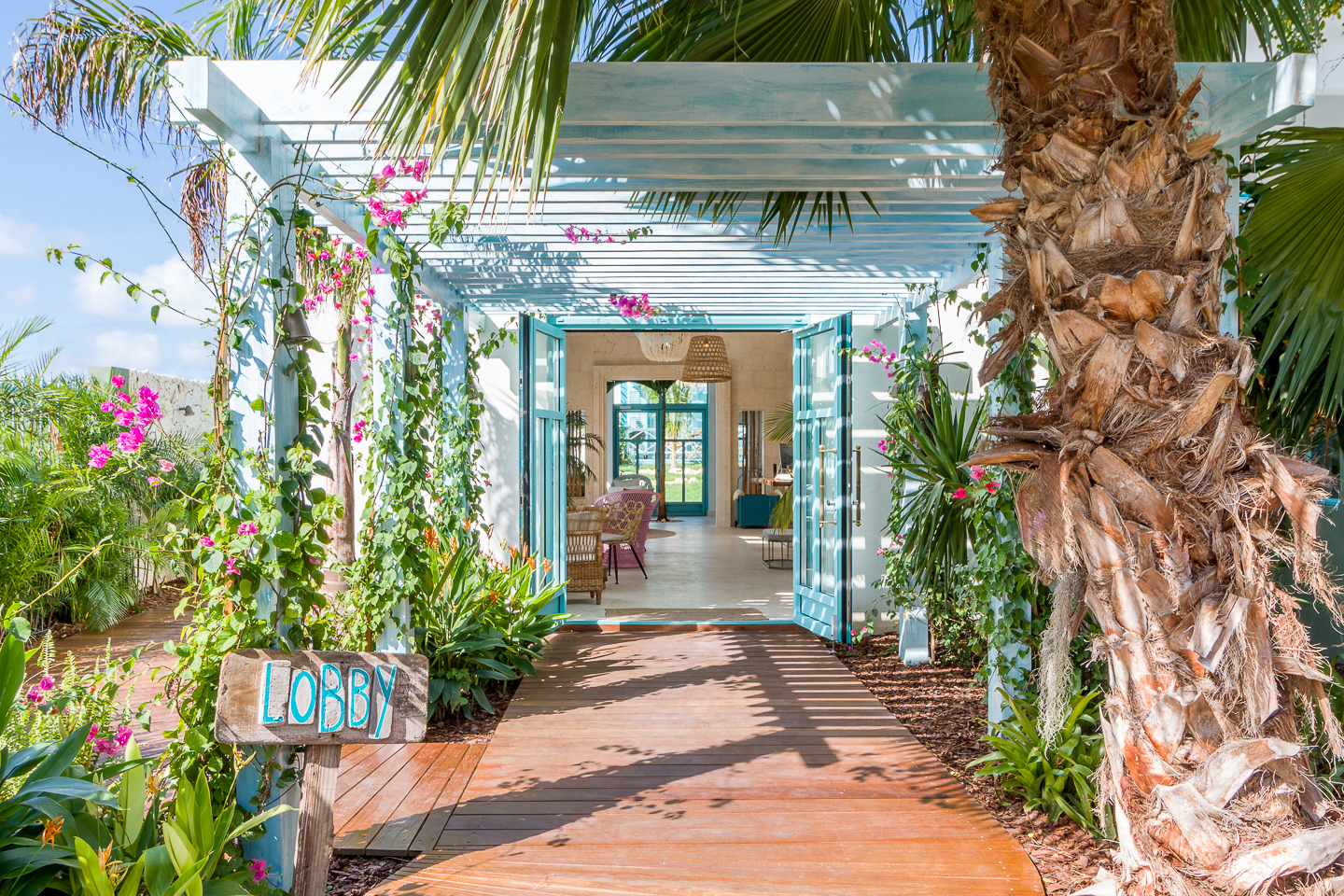
Land at Queen Beatrix International, twenty minutes from the property. Your casita is somewhere inside the grove — past the bougainvillea-draped lobby, down a path lit by lanterns, behind a private patio with a hammock and an outdoor shower. Inside: a full kitchen, a separate bedroom, a hand-painted mural of Aruba's flora running across one wall.
Join the Barefoot Nature & Sustainability Tour — an interactive walk through the property guided by a member of the Boardwalk team. You'll meet the troupials nesting in the palms, learn how the reverse osmosis system works, see the composting setup that feeds the gardens, and finish with a tasting of local rums and a coconut water served straight from the tree. It sets the frame: nothing here is decorative.
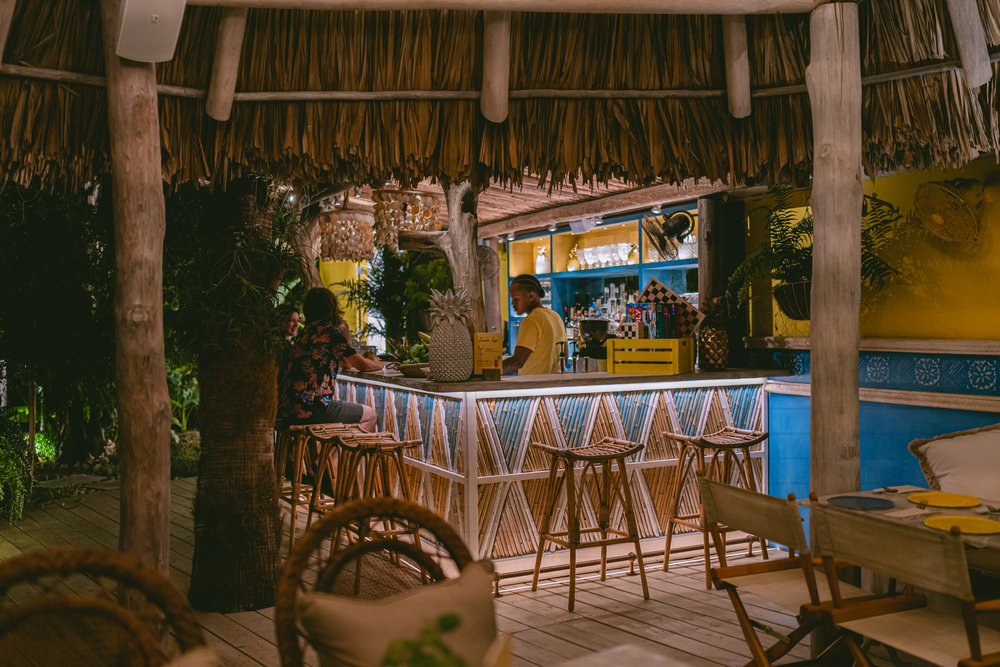
Dinner at Coco Café — the Tamarind Cooler, the vegan curry bowl, a slow last drink under the palms. Early night. Tomorrow begins on the windward coast.
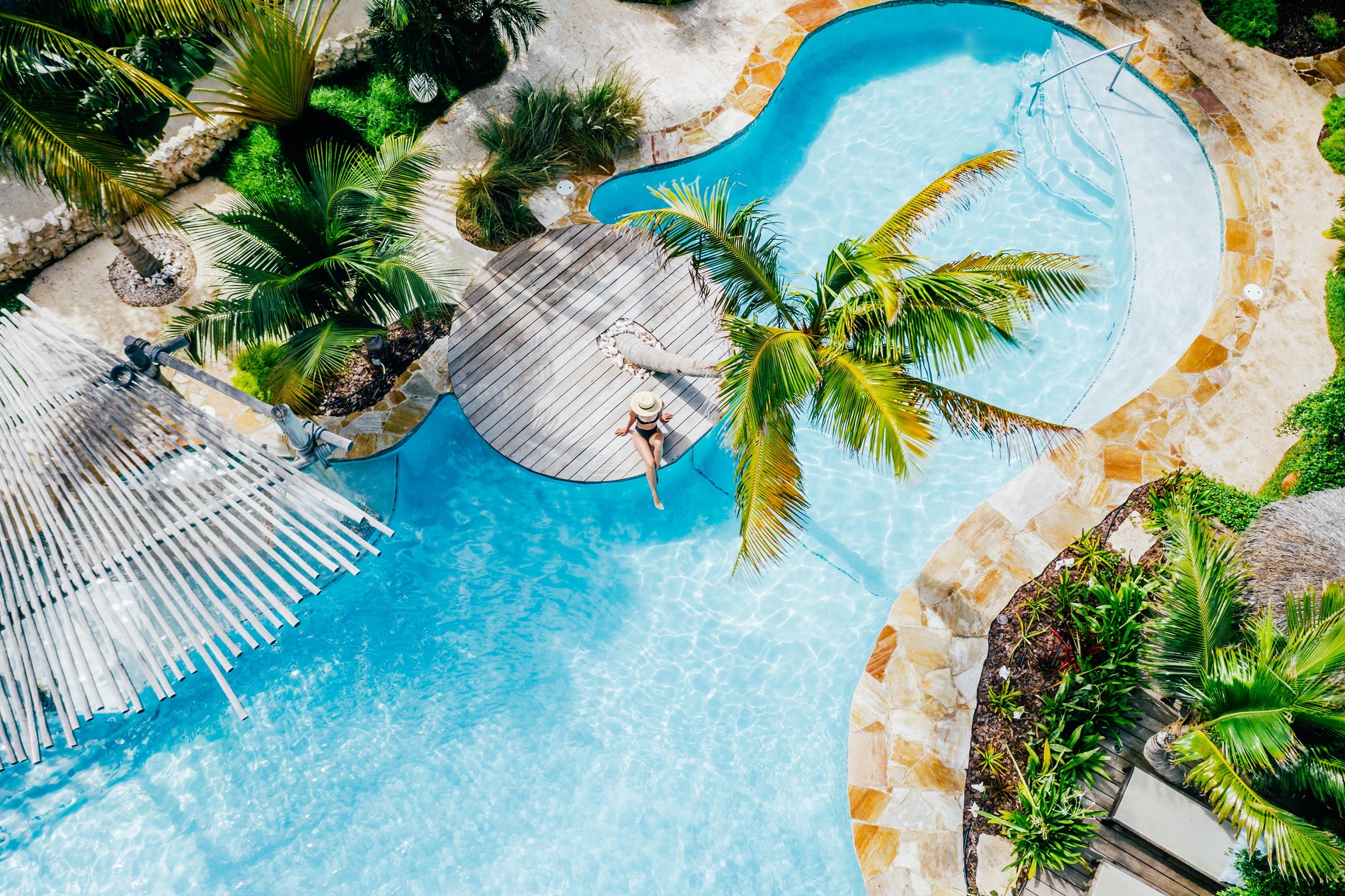
Plantage Tromp — casitas beneath the 130-year-old coconut palms
Foraging with Chef Taki, Diving with SCUBBLEBUBBLES
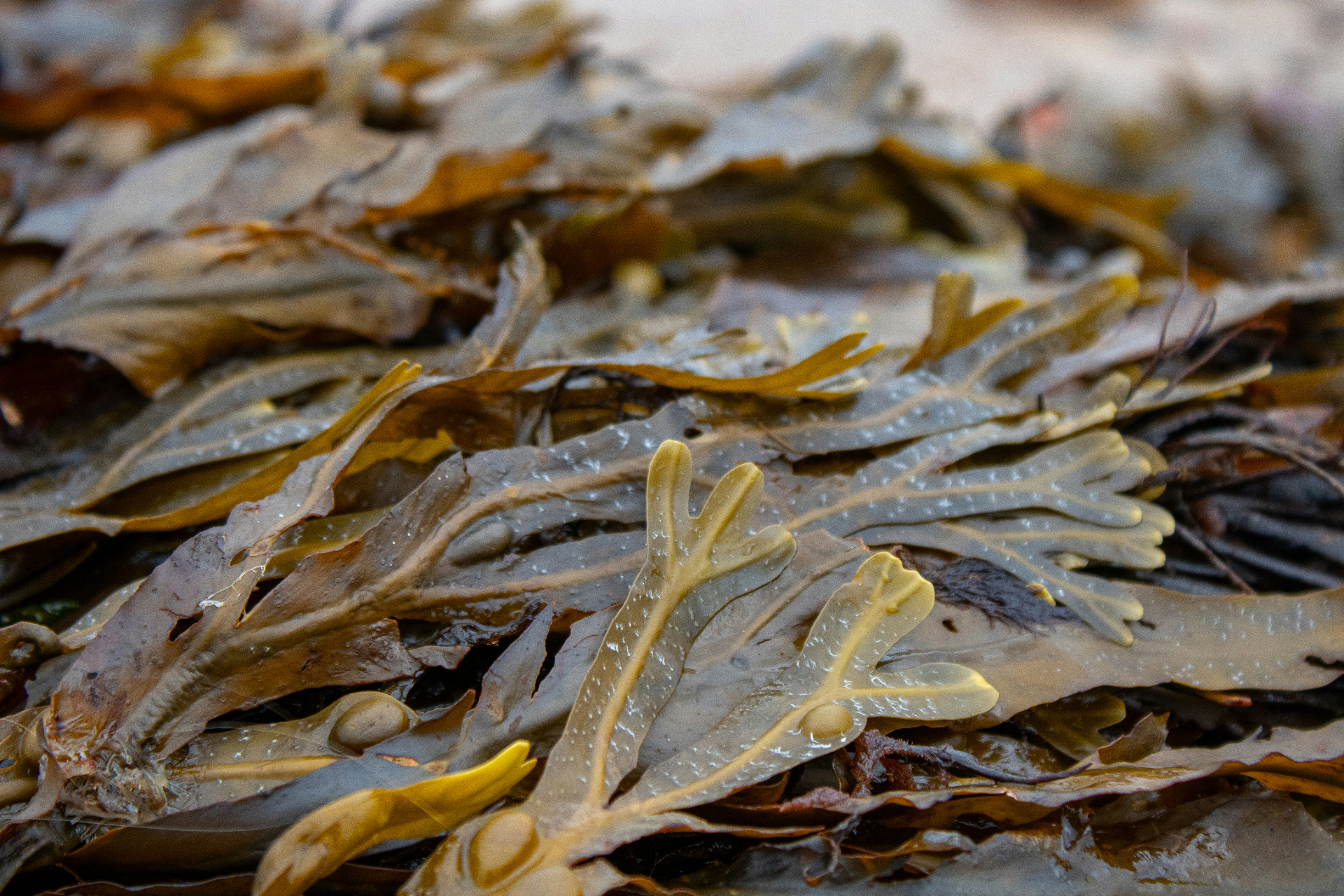
Foraging the northeast coast with Chef Taki. The excursion starts with off-roading across the black volcanic terrain — a part of Aruba most resort guests never see, where the trade winds hit the cliffs and the landscape turns lunar. You'll scour tide pools for salt deposits and seaweed, then drop down to a quiet local swimming spot where Taki dives for sea urchins. The afternoon ends on a third beach, combing the shoreline for the seaweed that will go into the soup he cooks for you that night.
Coral restoration dive with the SCUBBLEBUBBLES Foundation. Boat out to the dive site, suit up, and descend to a coral nursery where you'll help clean the structures and inspect new growth. The divers who guide you are the same young Arubans who built the nursery and check it weekly. You don't pay to watch them work. You pay to work alongside them. Open Water certification required.
Back at the property. Outdoor shower. Clean clothes. Dinner with Chef Taki — the seaweed soup, the urchin, whatever else came home from the coast. You will not eat a meal like this again until you come back.
The day's haul — octopus, jacks, and barracuda from the rocks
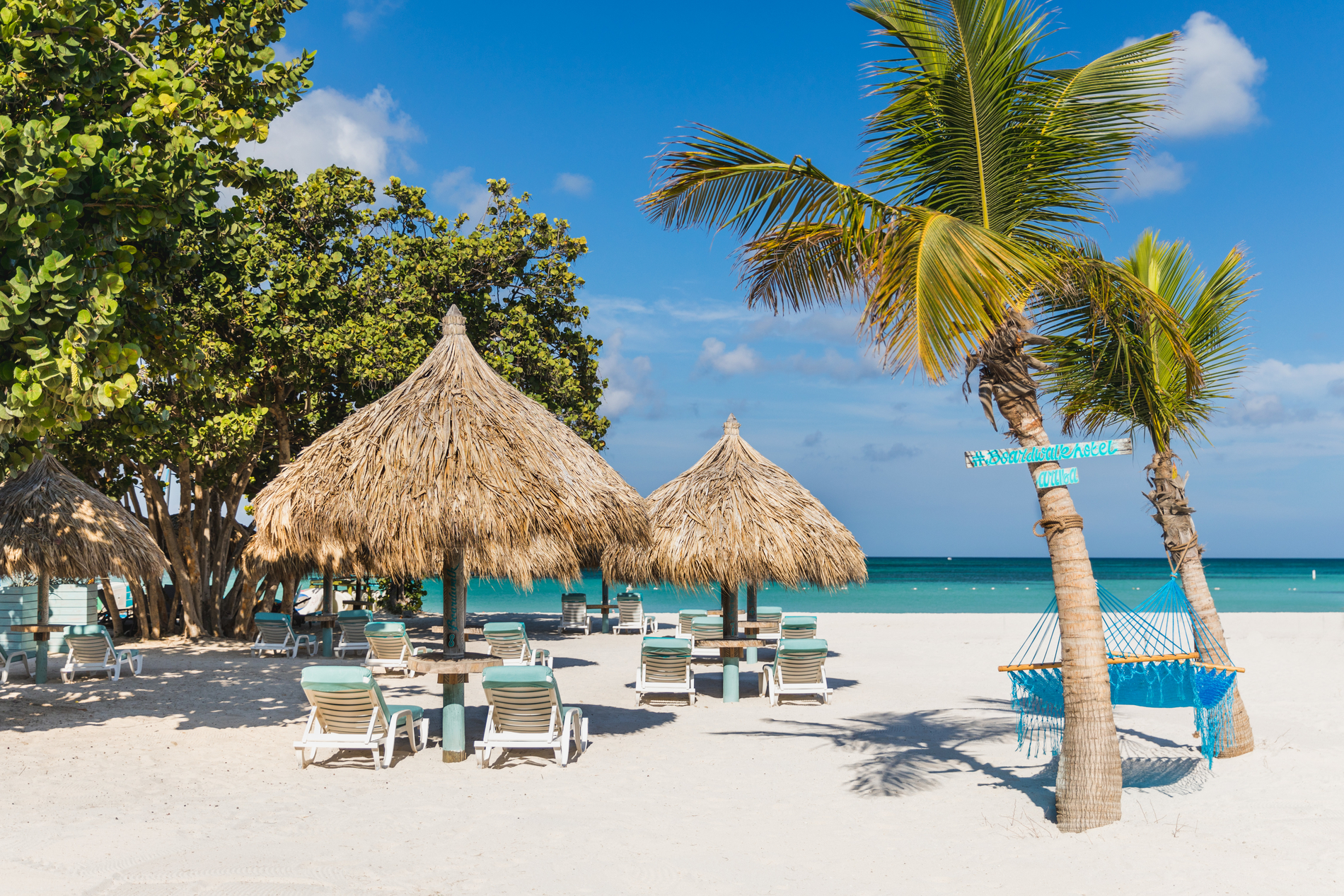
The windward coast — where Chef Taki reads the rocks
Sunrise in Arikok, Donkeys and Dogs
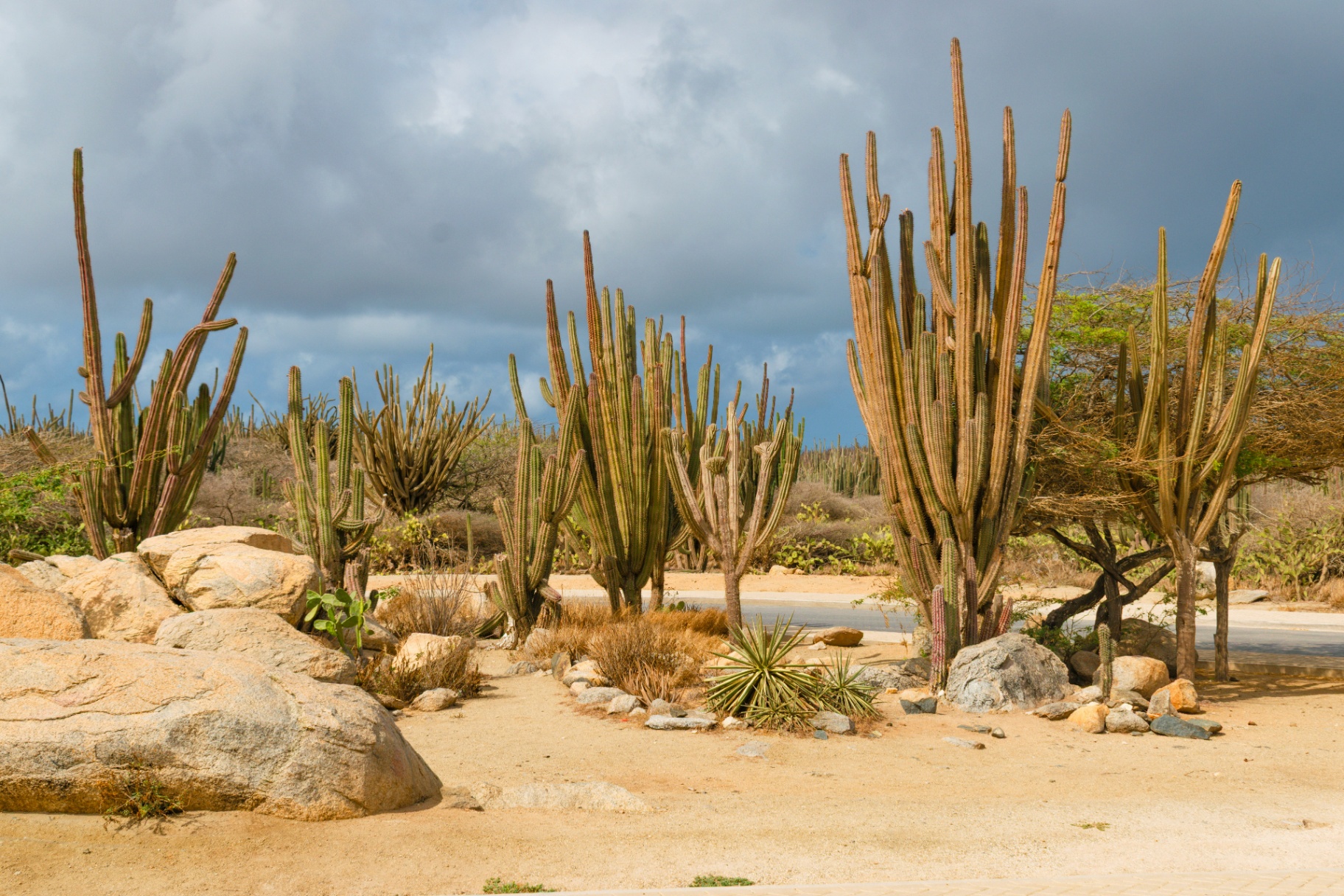
Arikok National Park with Ranger Rambo. A pre-dawn drive across the island to the park gates. Rambo is a well-known local ranger who has been walking these trails for decades. The walk moves through cactus forest, divi-divi groves bent permanently east by the trade winds, and the rocky volcanic interior. You'll visit the native plant nursery where the Aruba Conservation Foundation grows seedlings — guayacán, kibrahacha, mangroves — for replanting across the park.
The Donkey Sanctuary. Aruba's donkeys were brought over in the 1500s as working animals; with the rise of the automobile they were turned loose. The sanctuary cares for the most vulnerable — old, injured, orphaned — and your visit contributes directly to feed and veterinary costs. You can groom them. You can feed them. They will gently mug you for carrots.
Walk a shelter dog. Part of Boardwalk's Do Good program — the hotel partners with a local animal shelter on a 'walk, adopt, or transport a stray' initiative. Guests take a dog out for a walk on the beach for an hour. Light commitment. Significant impact. The dogs sleep through the night afterward, which is, in shelter terms, a miracle.
Hammock. Cocktail. Quiet.
Arikok's cactus forest — divi-divi groves bent east by the trade winds
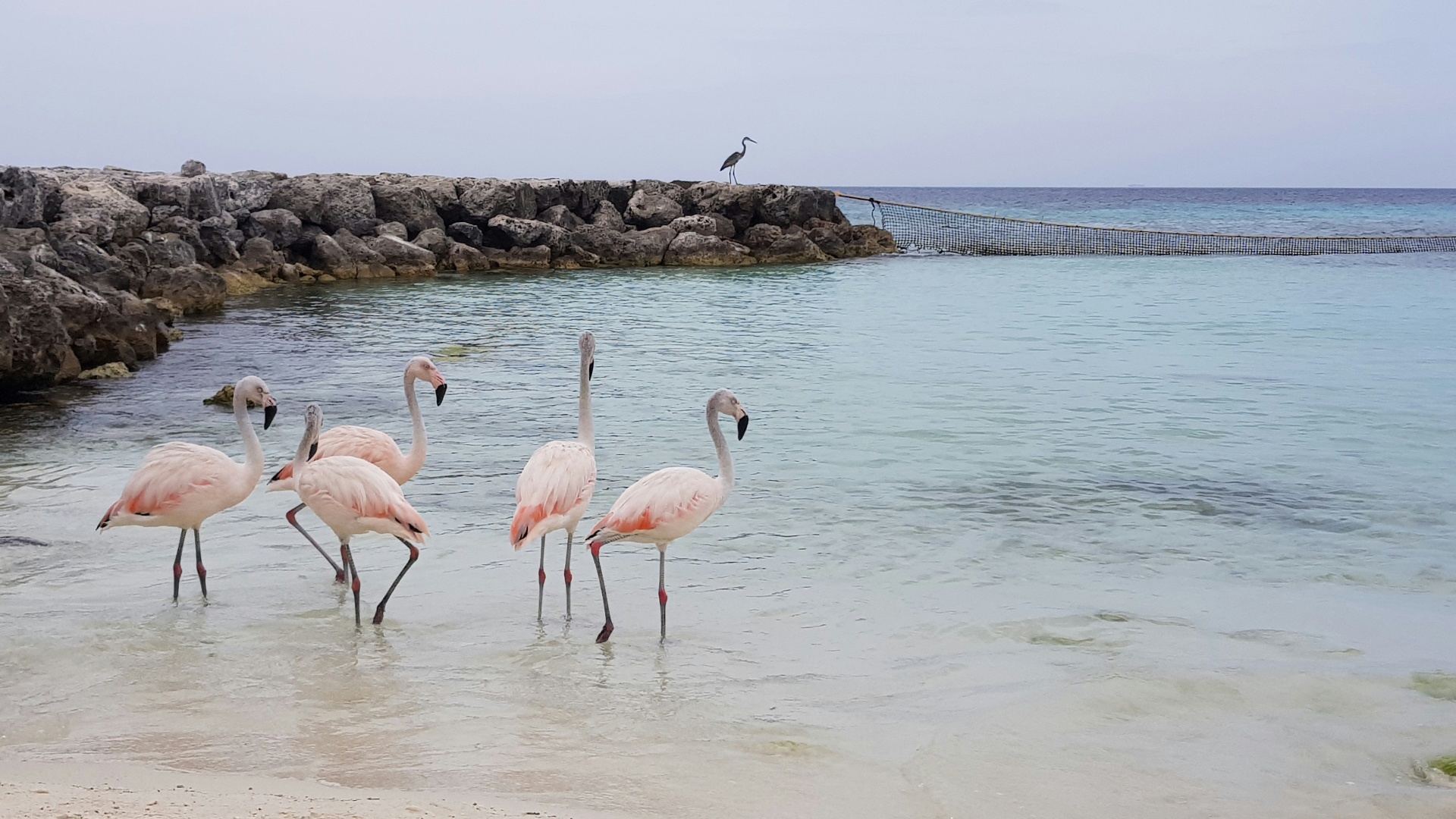
The flamingos came back — a quiet sign of recovery
Eagle Beach, Sunset Sail, Slow Goodbye
The trip's final day is open by design. A slow morning at the casita. Breakfast on your patio. A mindfulness or yoga session on the outdoor deck. The Mafela Healing Experience at the spa — a Dushi coconut body wrap, a facial, and an 80-minute massage delivered either in the spa treatment room or in your own casita.
Mid-afternoon at Eagle Beach in the section reserved for Boardwalk guests — beach huts, sun beds, the powdery white sand the island is famous for.
Board a sunset catamaran out of Palm Beach. The one classic Aruba experience the itinerary keeps, and it earns its place. A boat ride at golden hour is a chance to see the water from the perspective of the wildlife rather than the resorts — the same coastline, slightly emptier, slightly more itself.
A final drink in the grove. Departure the next morning.
Golden hour from the water — the coastline, slightly more itself
Travel That Gives Back More Than It Takes
Locally owned, every dollar of profit stays on the island. The question driving every decision: how do we share Aruba's true spirit without using it up?
Zero single-use plastic
Water Independence
On-site reverse osmosis purifies groundwater so guests never need a disposable bottle. Composting feeds the gardens. Solar panels and Nudura insulation power every casita.
SCUBBLEBUBBLES Foundation
Coral Restoration
Guest dives fund the coral nursery program — young Arubans building and maintaining reef structures that restore the marine ecosystem one fragment at a time.
100% locally owned
Community First
Aruban staff, local artists, shelter dog walks, donkey sanctuary partnerships, and a Treasure Map that sends guests to the bakeries and beaches locals love — not chain restaurants.
1 Country
Aruba
1 Regenerative Property
Boardwalk Boutique Hotel
4 Days
Salt, Seaweed & Sunrise
Go slow, take your time. This isn't an itinerary built for coverage — it's built for depth. Four days, one property, and a series of encounters that reveal an island most visitors never meet. The hotel is locally owned, the staff are Aruban, the food comes from the coast you walked that morning, and every experience puts something back into the place it came from.
Boardwalk Boutique Hotel
Forty-nine hand-designed casitas in a 130-year-old coconut plantation, five minutes from Eagle Beach. Two MICHELIN Keys. Solar-powered, plastic-free, locally owned — the first regenerative hotel in Aruba.
Zero single-use plastic, on-site water purification, solar power, coral restoration dives, shelter dog walks, donkey sanctuary partnerships, and a Do Good program that makes every guest a participant in island life.
- AddressBakval 20, Noord, Aruba
- Nearest AirportQueen Beatrix International Airport
- Transfer Time20 min. drive from the airport
Ready to Explore?
Let us help you discover an Aruba less traveled. Salt, seaweed, and sunrise — on your terms.